Get Full Government Meeting Transcripts, Videos, & Alerts Forever!
Get email alerts on the K 12 Education Reading Academies topic
No spam. Unsubscribe anytime.
Lewisville ISD officials say state'mandated Reading Academies have cost the district about $3.6 million and remain underfunded
Summary
District staff told the Board of Trustees that Reading Academies required by state law have cost Lewisville ISD roughly $3.6 million through 2025'26, require ongoing annual slots for new hires, and may expand if HB 123 passes, creating further un\-funded obligations.
The Lewisville ISD Board of Trustees heard a detailed update Monday on the statewide Reading Academies requirement and the local cost and staffing implications, with district leaders calling the program an unfunded mandate.
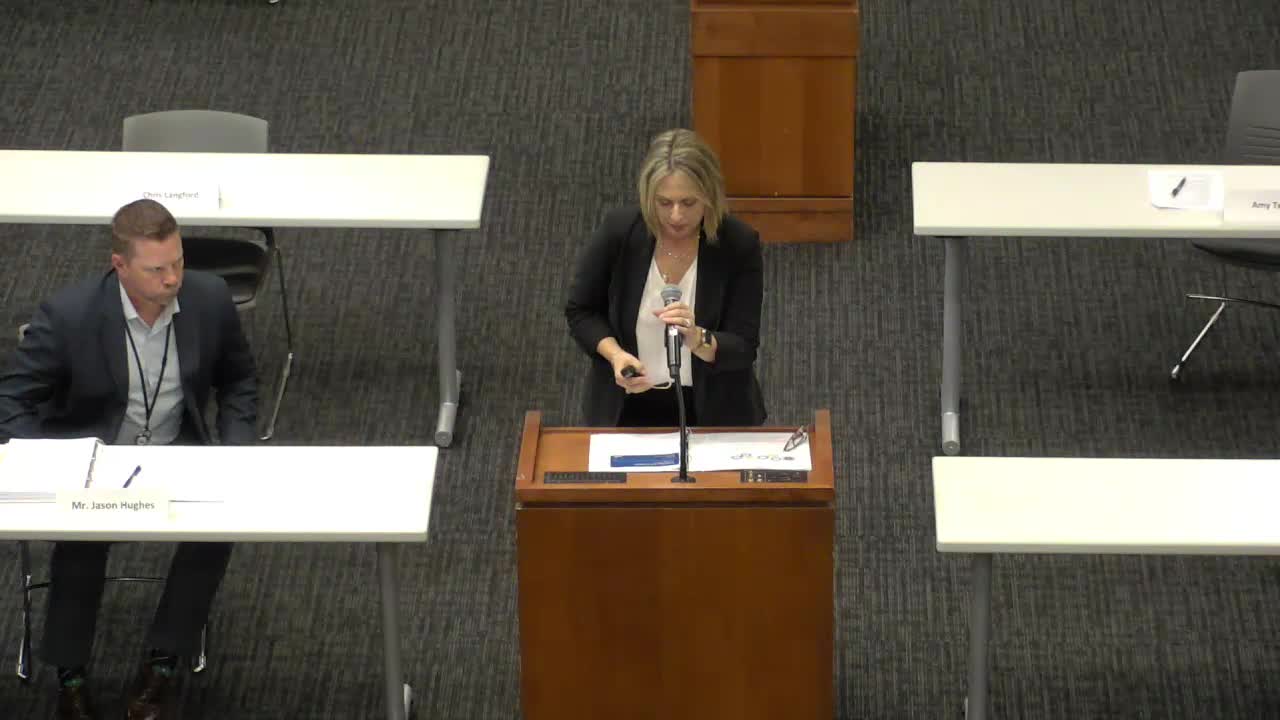
Amy Tevig, specialized support administrator for Reading Academies, told the board the training "was established by HB 3 in the 86th Legislature session requiring all K'through'2 teachers, including special education teachers and principals, to attend." She said the academy curriculum covers data-driven instruction, phonological awareness, decoding and encoding, fluency, comprehension and writing, and that by summer 2025 the district will have graduated nearly 1,300 teachers and administrators from the program.
The district estimate for total cost through the 2025'26 school year is approximately $3,600,000, Tevig said. Local funds for next year are estimated at $75,000 and the district must pay an assigned regional service center fee of about $400 for any new administrators required to enroll offsite. Because the program requires in-person cohorts, the district also pays for substitutes for teachers to attend six to nine days of training and coaching sessions.
District staff summarized why the program strains local budgets: the state intended that early education allotment funds would cover the cost, but district slides show those allotments have been insufficient. Board members repeatedly described the Reading Academies as a valuable training while pressing for clearer state funding.
Board member Sheila Taylor noted the budget tension: "We have required programs that we're required to do by law, and those mandates are unfunded," she said, pointing to several million dollars spent on the implementation. Trustee Stacy Barker asked whether cohort sizes would stabilize; Tevig said the current cohort of about 73 participants may fall to roughly 60 as summer hires and attrition settle.
Trustees also discussed proposed state legislation that would expand training obligations. Tevig and staff referenced HB 123, which, as drafted, would add reading intervention academies and extend math and intervention academies to more staff. District staff told the board the current fiscal note for the expanded academies runs in the hundreds of millions of dollars statewide and that HB 123 did not include full appropriation for implementation.
Administrators emphasized that teachers value the in-person model for collaborative planning, peer discussion and application of explicit, systematic instructional practices. Tevig said the district offers four coaching sessions per participant under the comprehensive model and expects continuing annual demand because of new hires and position changes.
Board members and staff asked the district to continue tracking cohort counts, substitute costs and principal enrollment fees and to include those figures in future budget planning. Tevig and the administration said they will return with ongoing cost and implementation updates as state rules or funding change.
The presentation came during the meeting's information items; no formal board action was taken on the Reading Academies at Monday's session.