Get Full Government Meeting Transcripts, Videos, & Alerts Forever!
Get email alerts on the Emergency Management topic
No spam. Unsubscribe anytime.
Butler County EMA director warns dissolution would disrupt hazmat, rescue and mutual‑aid services
Summary
Jim Bolin, director of the Butler County Emergency Management Agency, told West Chester Township trustees a county proposal to terminate the agency could dissolve mutual‑aid teams and jeopardize grant‑funded equipment and volunteer participation.
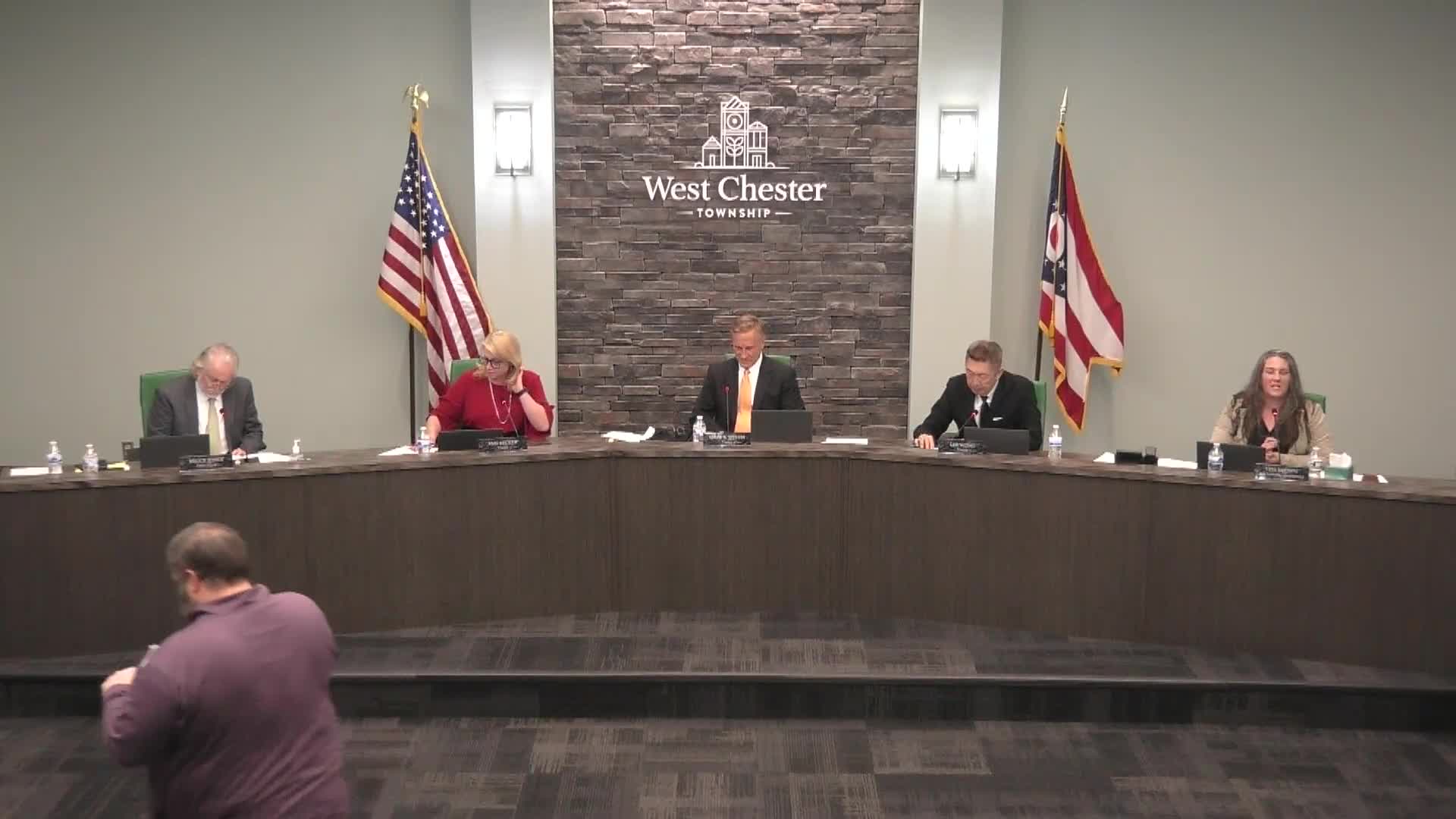
Jim Bolin, director of the Butler County Emergency Management Agency, briefed West Chester Township trustees on a county proposal that could dissolve the EMA's current executive board structure.
Bolin told trustees the Butler County Commissioners voted on a proposal in December that would terminate the interjurisdictional agreement that forms the agency and place emergency management oversight directly under the commissioners. He said the move "would have serious impacts on Westchester and Butler County at large" and could require any new structure to create programs from the ground up.
Key facts from the presentation and Q&A:
- Organization and funding: Bolin said the EMA is funded in part by a per‑capita charge of 55¢ per resident paid by participating jurisdictions; the agency's annual budget fluctuates with grant funding but is "typically right at $600,000 per year." He said per‑capita funding contributes about $156,000 annually while the remainder is largely grants.
- Capabilities at risk: The EMA manages a type‑1 regional HAZMAT team, a technical rescue team of about 60 personnel (countywide), and a roster of voluntary responders across multiple jurisdictions. Bolin said his team provides hazmat and technical rescue support, planning and consultation, and event coordination for municipalities and large events such as the VOA Country Music Festival.
- Personnel and volunteers: Bolin said the agency employs five full‑time staff and draws between roughly 120 and 150 volunteer responders across programs (HAZMAT, technical rescue, community emergency response and support units). He said volunteers are crucial to sustaining teams and that those volunteers might not remain if governance changes and local partners opt out.
- Recent activity: Bolin listed recent responses including flood damage assessments, two tornadoes, straight‑line wind events and a level‑A hazmat entry in Monroe. He said the EMA activated an emergency‑operations center for COVID‑19 response for roughly 100 days during the pandemic and coordinates personal protective equipment distribution and mass vaccination planning.
- Legal and operational concerns: Bolin warned that grant‑purchased equipment and multi‑jurisdictional agreements could be affected by a change in governance; he said it is unclear where equipment and agreements might be reassigned if the EMA were dissolved.
Trustees asked detailed operational questions about activation authority, liability and volunteer participation. Bolin clarified the EMA does not assume incident command on scene; it supports local incident commanders with resources, expertise and coordination. He also said workers'‑comp claims for volunteers responding under mutual‑aid arrangements are handled by the sending jurisdiction.
Bolin said he and his staff continue to engage local jurisdictions and provide information while there has been no public movement on the commissioners' proposal since December. He said he and several staff members would not want to operate the agency if it were reorganized under the commissioners, a comment Bolin linked to differences in the governance model under which he signed up to lead the agency.
The trustees heard the presentation and asked for no formal action at the meeting; Bolin said EMA staff will continue outreach and that local jurisdictions will be kept informed if the county moves the proposal forward.