Get Full Government Meeting Transcripts, Videos, & Alerts Forever!
Get email alerts on the School Finance topic
No spam. Unsubscribe anytime.
Lewisville ISD leaders warn state funding and enrollment declines could force program cuts
Summary
Superintendent and trustees said state school finance proposals and a projected decline in funded average daily attendance will leave the district with a multi‑million dollar shortfall unless lawmakers act; trustees also approved administrative contracts and consent items by unanimous votes.
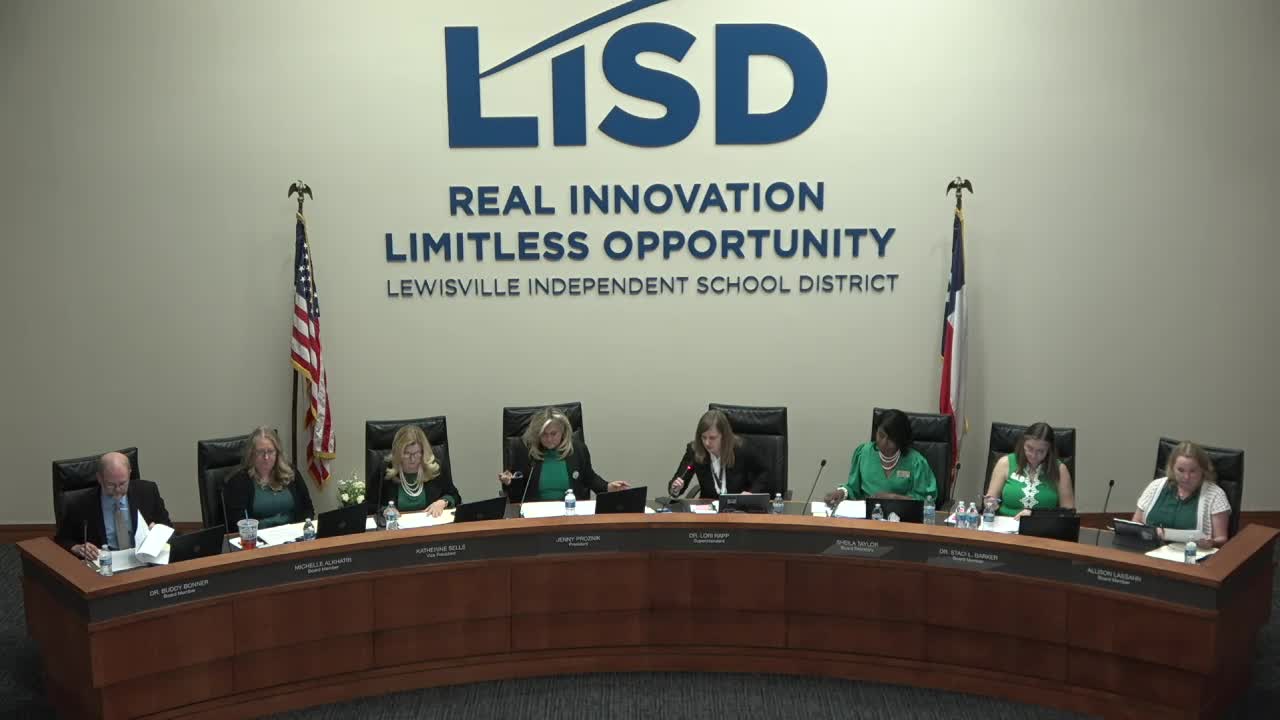
Lewisville ISD leaders told the board and the public that projected enrollment trends and current school‑finance proposals at the Texas Capitol could leave the district with a multi‑million‑dollar budget shortfall.
Superintendent Dr. Jared Rapp reviewed early legislative proposals and district budget assumptions, and said the district is modeling a fiscal‑year 2026 enrollment the district will use for staffing at 46,402 students with a funded average daily attendance (ADA) estimate of 43,154. Dr. Rapp said that difference contributes to a projected revenue loss of about $14.5 million under current House proposals and the district’s enrollment outlook.
Dr. Rapp noted the state’s 2025 budget discussions include proposals that would raise the basic allotment to the benefit of many districts, but he emphasized that a $220 increase to the basic allotment in one House proposal would produce roughly $13 million for Lewisville ISD — still about $1.5 million short of offsetting the district’s projected loss tied to enrollment and ADA differences.
“Over 500 school districts in the state of Texas are declining in enrollment,” Dr. Rapp said, and he urged advocacy to the Legislature to adjust the formula to account for districts with declining enrollment.
Board members responded with concern. Trustee Dr. Stacy Barker, referencing budget scenarios considered by the board’s budget workshop, said a scenario that included modest staff compensation increases could create an $18 million deficit and asked how the district could balance staff pay and program preservation. “If we don’t give our teachers something this year, we’re not gonna see the positive staff surveys that we see,” Barker said. She and other trustees said they worry that further reductions could affect classroom supports that produced the district’s academic and extracurricular successes.
Finance staff also highlighted district fiscal figures in the monthly financial report: general‑fund revenues received through late January were reported at approximately $401,000,000, including about $342,000,000 in property taxes; January expenditures were reported near $230,000,000. The packet also shows a recapture payment (payments to the state) of about $12,800,000 and a child‑nutrition fund surplus of $565,363.
Dr. Rapp and staff described past administrative reductions: “Over 136 FTE positions have been closed down,” he said, attributing reductions to efforts to match central‑office staffing to enrollment. Later in the meeting trustees reiterated the district’s limited ability to absorb further cuts without affecting classroom programs.
The board took two formal votes during the meeting. The board approved all administrative contract recommendations for the 2025–26 school year on a motion by Dr. Bonnie Bonner; a second was recorded as “Miss Octatib.” The motion passed unanimously, 7–0. The board also approved the consent agenda, with one item (J1C3, a 2024 bond first sale for a high‑school stadium scoreboard replacement) pulled by administration for further review; trustees approved the remaining consent items on a 7–0 vote. Administration said item J1C3 will return for additional discussion at the April 7 work session.
Trustees and district leaders urged continued community advocacy on school‑finance items at the Capitol and said they will monitor pending bills. Dr. Rapp summarized the district’s position: budget adjustments have included administrative reductions and program prioritization, but without a state funding change that appropriately addresses declining‑enrollment districts, the board will need to consider further cuts that could directly affect personnel and programs.