Get Full Government Meeting Transcripts, Videos, & Alerts Forever!
Get email alerts on the Gifted Education topic
No spam. Unsubscribe anytime.
District outlines gifted-and-talented expansion, universal screeners and staff training aimed at equity
Summary
District GT leaders reported expanded universal screening, new elementary curriculum and increased staff training designed to improve equitable identification and services for gifted learners.
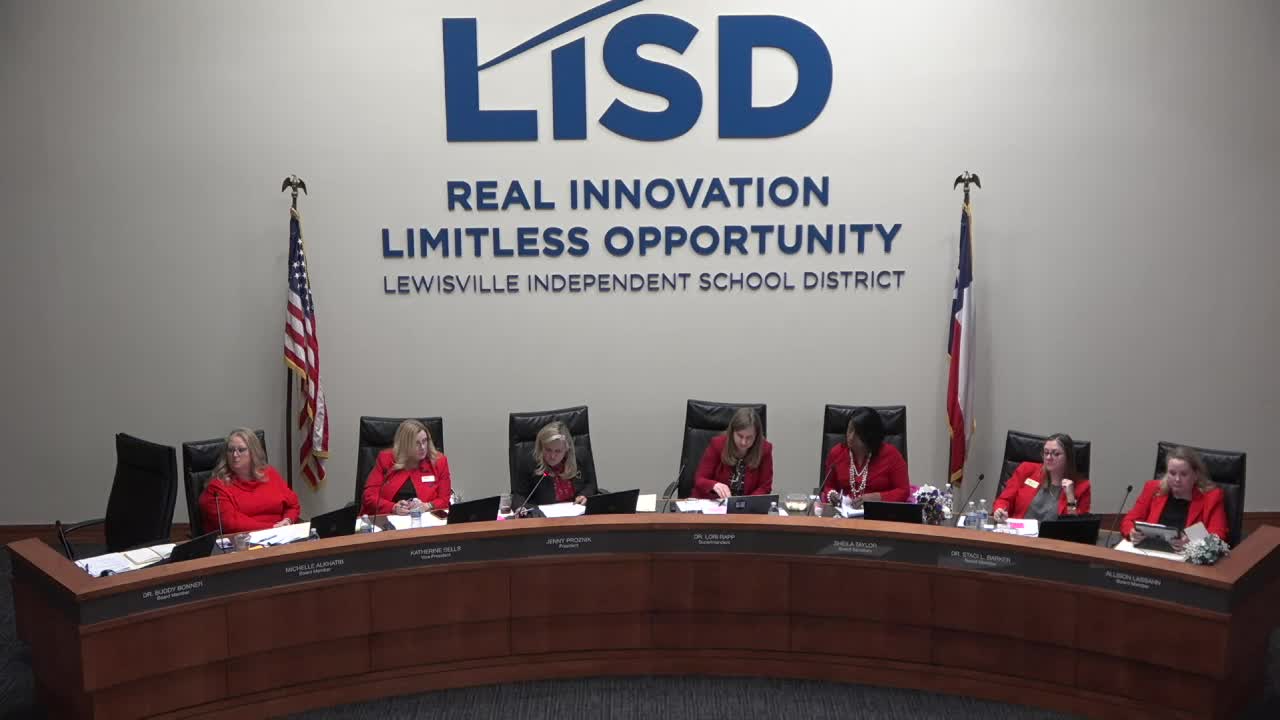
Lewisville ISD’s gifted-and-talented (GT) administrators presented an annual update on Feb. 18 that focused on identification reforms, curriculum development and targeted outreach to underrepresented student populations.
Elementary GT administrator Coby Stringer and secondary GT administrator Lori Evans told trustees the district follows the TEA/State plan and that LISD has shifted toward universal screening in second grade and a new fourth-grade screener to capture transfers and late bloomers. Administrators said the second-grade screener uses nonverbal items (diagrams, numbers, pictures) to reduce language and background bias, and last fall more than 300 second graders qualified on the screener alone.
GT staff said the district spends substantially above the state GT allotment: the state allotment equates to roughly $175.82 per qualified GT student (about $951,560 total), but LISD reports spending roughly $3 million annually on GT services (staff salaries, testing costs and program needs). Presenters described four main objectives—curriculum development, equitable identification, professional learning and family/community engagement—and highlighted in-class “push-in” lessons for K–2 and revised pullout curriculum for grades 2–5.
Administrators described training and identification improvements intended to close gaps for emergent bilingual, economically disadvantaged and other underrepresented groups. The district reported more than 7,000 hours of staff professional learning between June and January and continuing targeted training for campus GT facilitators and teachers.
Why it matters: Expanding universal screening and investing in staff training aim to reduce under-identification of gifted students in historically underrepresented populations and to provide services earlier and more equitably.
Next steps: The GT office plans continued roll-out of fourth-grade screening results, additional staff training, and ongoing family engagement measures including newsletters and online resources; administrators said they will use campus-level data reviews to target outreach and referrals.