Get Full Government Meeting Transcripts, Videos, & Alerts Forever!
Get email alerts on the School Finance Legislative Update topic
No spam. Unsubscribe anytime.
Superintendent outlines school-finance changes, ESA proposal and enrollment concerns
Summary
Lewisville ISD Superintendent Dr. Lori Rapp briefed the board on early developments in the 88th Texas Legislature, highlighting proposed funding changes in HB1/SB1, the Senate’s education savings account proposal (SB2) and the statewide challenge of declining enrollment versus attendance-based funding.
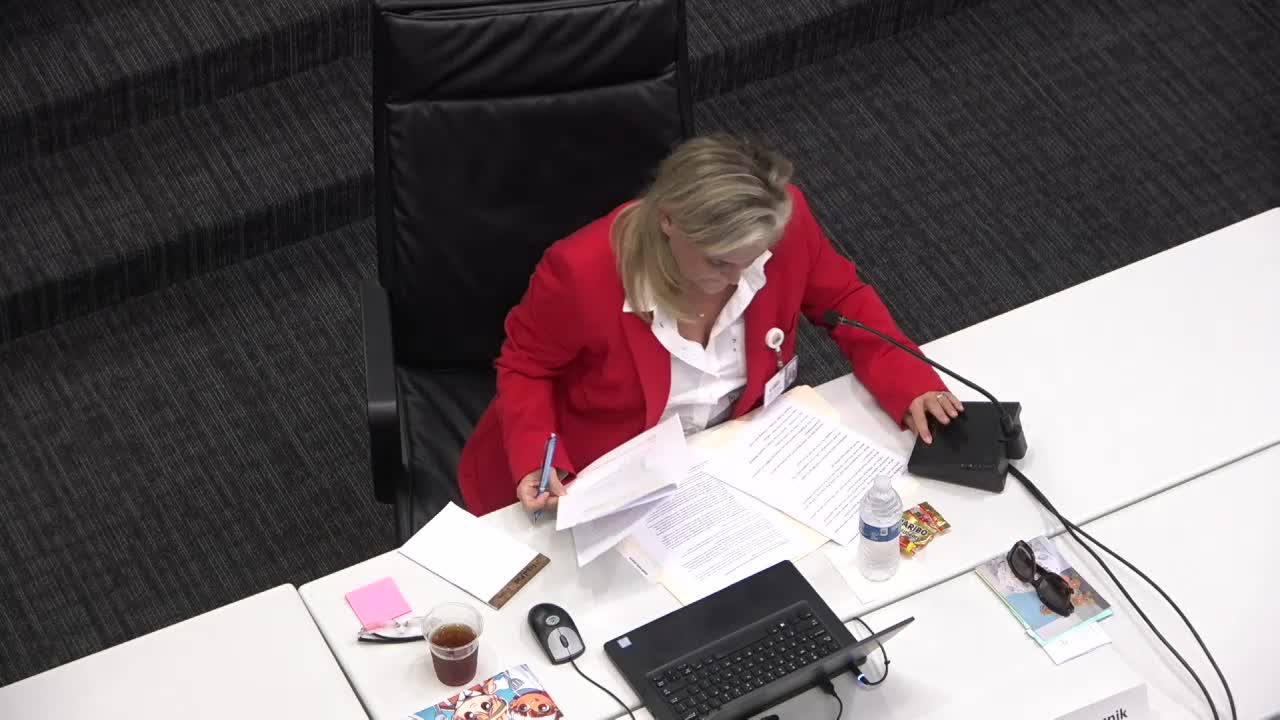
Dr. Lori Rapp, Lewisville ISD superintendent, gave the board a legislative update focused on early school-finance proposals and a Senate plan for education savings accounts.
She told trustees that “we have not yet heard who will be serving on the House Education Committee” and that the Senate Education Committee already includes local representation. Rapp said both House Bill 1 and Senate Bill 1 include large, matching dollar figures for property-tax relief and targeted education funding but that details and appropriation mechanisms remained to be resolved.
Why it matters: the district faces choices about how state-level changes would flow to campuses and employees. Rapp highlighted several dollar estimates discussed at education conferences: a $300 increase in the basic allotment would cost an estimated $4 billion statewide; a $100 increase would cost about $1.5 billion; and a $200 increase about $2.9 billion, figures she attributed to TASBO analysis shared at a TASA/TASBO event.
Rapp described Senate Bill 2, which had passed the Senate Education Committee 9–2, as a program that “allows every Texas student to apply for an education savings account,” with a $1 billion initial appropriation that could grow in later years under Senate projections. Under the Senate version, Rapp said, families could receive up to $10,000 per year for private school tuition, $11,500 for students with disabilities, and $2,000 for homeschool expenses. She added that program costs are projected to escalate over several years in committee documents she reviewed.
Trustees pressed for detail about how educator pay packages in proposed legislation would be funded and whether district-level expectations from past funding increases were met. Trustee Allison Masson and others noted that previous targeted increases tied to teacher pay did not produce the full effect the Legislature advertised. Rapp said she had not yet seen a clear “lower bill” (primary priority bill) that included a teacher-pay mechanism and that specifics would likely continue to change during the session.
Rapp also reviewed enrollment and attendance data presented at TASBO: while total enrollment in Texas rose by about 172,000 since 2017, average daily attendance (ADA) rose only by about 35,000, she said, creating a gap between enrollment-based funding and attendance-based funding. She cautioned that “more than half of the districts in Texas are facing declining enrollment,” which could magnify the effect of attendance-based funding for districts that are losing students.
Board members and district staff discussed program design concerns for ESA proposals, including whether the bills include attendance safeguards and administrative costs. Rapp said the Senate draft included an administrative allowance of 3% for the comptroller’s office plus additional administration and marketing funds for the administering agency. Trustee comments noted the absence of accountability provisions for nonpublic providers receiving public dollars under SB2.
Rapp said she would provide follow-up updates to trustees as the session proceeds and track bills as they move through committee and to the floor.
Ending: The superintendent said she will brief the board again the following week and urged trustees they would be updated as committee assignments and bill language solidify.