Get Full Government Meeting Transcripts, Videos, & Alerts Forever!
Get email alerts on the Comprehensive Plan Review topic
No spam. Unsubscribe anytime.
Ann Arbor Planning Commission opens sustained review of draft comprehensive land use plan amid concerns over outreach and zoning changes
Summary
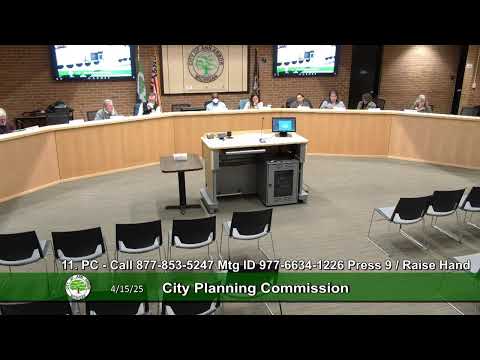
The Ann Arbor Planning Commission spent its April 15 meeting on Chapters 1–3 of the draft comprehensive land use plan, taking public comment and directing staff to clarify outreach, data and wording about how the plan would affect single‑family neighborhoods and future zoning.
The Ann Arbor Planning Commission spent a lengthy session Thursday discussing Chapters 1–3 of the city’s draft comprehensive land use plan, hearing dozens of public comments and directing staff and consultants to clarify outreach results, data sources and wording in multiple places.
The draft lays out the city’s vision, background history and values that will guide later policy and regulatory revisions. Senior Planner Bennett and other staff said the draft is intended to guide decisions on future land use, not to replace or immediately change zoning; subsequent code changes would implement the plan if the City Council adopts it. Commissioners and members of the public repeatedly pressed for clearer signposting about what the plan does and does not do, how the plan’s definitions (for example “gentle density”) map to practical zoning allowances and what engagement data underpins the draft’s claims.
Public comment highlighted three recurring concerns. First, multiple residents said they did not know the process had begun or felt outreach had been too limited: “You needed thousands more of us to have been involved,” said Rajiv Batra, identifying himself as a long‑time Ann Arbor resident. Second, several speakers said the draft does not clearly explain how proposed changes would affect single‑family and duplex neighborhoods; Mary Durfee and others urged stronger protections for local independent ground‑floor businesses and suggested mechanisms such as land trust commitments for first‑floor commercial space. Third, residents pressed the commission for clearer quantitative evidence that densification will improve affordability; critics said the plan’s early explanatory paragraphs relied on assertions that need citations.
Commissioners repeatedly asked staff and the consultants to tidy language and documentation. Specific changes the commission either directed or reached early agreement on included removing unattributed or cherry‑picked direct quotes that appear in the draft, clarifying how the comprehensive plan interacts with the Unified Development Code (UDC) and the zoning process, adding or linking to the consultant‑produced survey materials and engagement data in an appendix, and clarifying terminology such as “exclusionary zoning” and “gentle density.” Commissioner Mills also urged that maps be labeled with street names and offered in higher‑resolution versions so residents can find their neighborhood on the maps.
Commissioners raised several technical and policy issues they want staff or the consultant to address in the next draft: consolidation of public comments into a thematic appendix; explicit citations for claims about how housing supply affects affordability (the planning team agreed to identify relevant literature and, where appropriate, council‑approved reports to support assertions); clearer descriptions of what the plan will and will not do (for example, how code changes will follow plan adoption); and improved accessibility of the document and its images for people who use assistive technologies. At the meeting the commission also removed one paragraph that staff and several commissioners judged unsupported — language that suggested commercial development must be preserved because it generates greater value per acre than residential uses — and voted to remove a small group of “pull quotes” from an early spread of the draft.
Staff said the draft will go through at least two more rounds of revision and public review. Senior Planner Bennett told the commission the team wants to keep the public engagement process open and to hold dedicated sessions on later chapters (goals, strategies and the future land use map) in coming weeks. The commission agreed to a chapter‑by‑chapter review approach and instructed staff to bring back clearer supporting data and an engagement synthesis.
The session produced no formal vote to adopt any chapter. Commissioners emphasized this was the commission’s first round of edits and that the public will have additional opportunities to review later drafts and the future land use map when the commission dedicates meetings to those specific sections.