Get Full Government Meeting Transcripts, Videos, & Alerts Forever!
Get email alerts on the Historic Preservation Demolition topic
No spam. Unsubscribe anytime.
Developer outlines 80-unit 'B on Burdick' plan; commission raises demolition and preservation concerns
Summary
Bogan Developments presented plans for an 80-unit workforce housing project on Burdick that would replace four contributing houses in the Vine Historic District. Commissioners pressed the developer on property ownership, demolition-by-neglect, absence of detailed drawings and the sequence of city approvals; no formal action was taken.
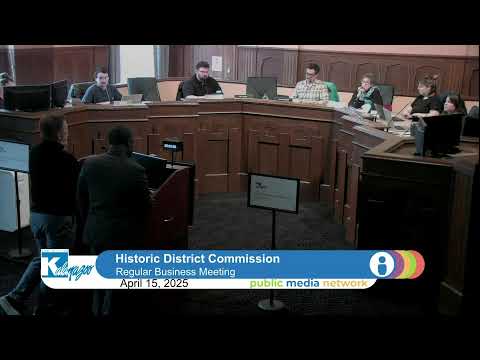
Jamari Bogan, chief executive officer of Bogan Developments, told the Kalamazoo Historic District Commission that the firm is proposing the “B on Burdick,” a project that would include 80 workforce housing units and an early learning center and would remove several houses on the block in the Vine neighborhood.
The proposal drew sustained questioning from commissioners about ownership of the parcels, whether the properties have been neglected, the lack of architectural drawings and what would replace the houses if the commission allowed demolition. Commissioner Underwood said the application lacked evidence needed to approve demolition under the commission’s criteria and called the request “premature” without zoning, financing and environmental approvals.
Why it matters: The parcels sit inside the Vine Historic District and the commission’s approval would allow demolition of contributing historic resources. Commissioners said that once demolished, the buildings would be lost permanently and the decision could set a precedent for future loss of historic fabric in the district.
Bogan said the development would remove a neighborhood liquor store the company purchased and add housing close to a major employer, Bronson Hospital. “This project will be 80 workforce housing units,” Bogan said. Jason Novotny, director of design at Tower Pinkster, told the commission the design team envisions community recreation space and other neighborhood amenities and asked the commission to consider the “larger picture” of neighborhood revitalization.
Commissioners and staff described a multi-step municipal review process the developer will face. Luis, a city staff member in the Community Planning and Economic Development Department, said the application sequence discussed with staff begins with the historic district commission’s demolition decision, then moves to the Planning Commission (rezoning), then to City Commission and site-plan review. Novotny said the rezoning application had been submitted and that the Planning Commission hearing is set for May 1.
Several commissioners said they were sympathetic to revitalization goals but wanted more concrete assurance of the replacement project before permitting large-scale demolition. “You would have to have really good evidence that the project … is a good project,” Commissioner Underwood said, adding the applicant had produced no sketches or renderings the commissioner considered sufficient. Another commissioner pointed out that the commission could require the developer to return with detailed drawings for the new construction if demolition were allowed.
The developer said some parcels are already under the company’s control and that closings on other lots were expected in the coming days; Bogan characterized the holdings as “site control.” The applicant also announced a neighborhood charrette with the Vine Neighborhood Association on April 29 to solicit community feedback and said the master plan vision calls for a five‑story mixed‑use corner building.
No formal vote or permit decision was made at the meeting. Commissioners discussed options including requiring drawings or considering redrawing district boundaries, but did not approve demolition or any other action. The matter will return to the city’s review sequence, including the Planning Commission hearing on May 1.
The commission’s concerns focused on four lines of inquiry raised in the meeting: who currently owns the parcels and when they were acquired; whether properties qualify as blighted or have been unoccupied long enough to meet local definitions; whether demolition would be justified under the commission’s criteria given the lack of concrete replacement plans; and whether the proposed timeline and sequence of city approvals are appropriate.