Get Full Government Meeting Transcripts, Videos, & Alerts Forever!
Get email alerts on the Internal Audit topic
No spam. Unsubscribe anytime.
Internal auditor urges risk-based rewrite of charter audit section; commissioners ask for follow-up with municipal audit committee
Summary
Charles Randall, Lansing City internal auditor, recommended rewriting the charter’s internal-audit section to emphasize risk-based planning, clearer reporting lines and possible staffing expansion; the commission asked staff and the municipal audit committee to review and return with recommendations.
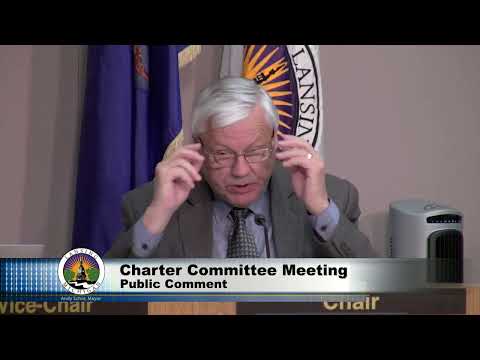
Charles Randall, the city council’s internal auditor, presented to the Lansing Charter Commission recommendations to update the charter’s internal audit language and modernize how the function operates.
Randall said the existing charter passages on internal audit contain the essential elements but are dated, repetitive and inconsistent. He recommended rewriting the charter language to: adopt a risk‑based audit model rather than an annual checklist of every department; clarify organizational placement and reporting for the chief audit executive; permit selective confidential routing of sensitive audit reports (for example, to HR or law rather than the city clerk) to avoid reports being suppressed; and plan for possible additional staff (a plus‑one) and IT outsourcing support to address control and general-computer-control gaps as the city’s systems mature.
Commission questions and follow-up: Commissioners asked how a risk-based rotation could work in practice and whether an auditor should own the audit plan without administrative veto. Randall said professional practice (Institute of Internal Auditors guidance) supports an auditor-owned, risk-based plan while still considering governing-body concerns. He suggested that, given Lansing’s size and complexity, a staff increase might be reasonable by fiscal year 2027.
Next steps: Commissioners asked the municipal audit committee to review Randall’s packet and to return recommendations to the Charter Commission. Randall said he had provided materials to the municipal audit committee but only 24 hours in advance, limiting their feedback; he agreed to follow up with the committee and the commission agreed to reconsider the charter language after that review.
Ending: The commission took no final vote on audit charter language at this meeting and asked staff to bring back committee feedback and any suggested redrafts.