Get Full Government Meeting Transcripts, Videos, & Alerts Forever!
Get email alerts on the Police Body Worn Cameras topic
No spam. Unsubscribe anytime.
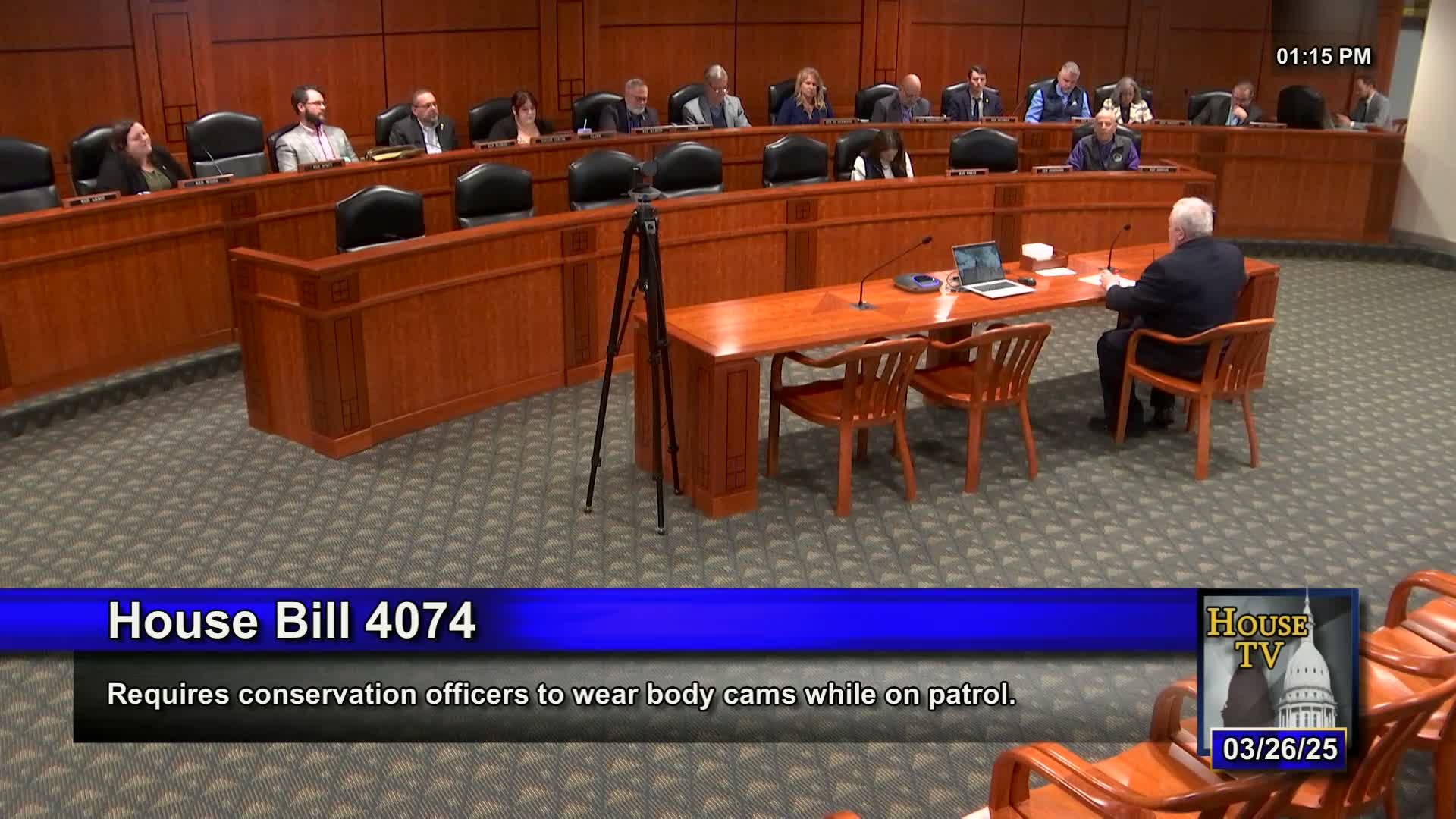
House debate spotlights DNR body‑worn camera rollout and whether statute should enshrine use
Summary
Lawmakers heard supporters call for a statutory requirement that DNR conservation officers wear body‑worn cameras; the DNR said it has already rolled out a statewide program but warned the proposed language is unfunded and risks singling out one agency.
Representative Markkanen urged the House Natural Resources, Environment, Tourism and Outdoor Recreation Committee to require body‑worn cameras for Department of Natural Resources conservation officers, saying cameras “enhance transparency,” “promote accountability” and improve safety. Markkanen said enshrining a requirement into law would prevent a future director from reversing the practice.
Chief Jason Haines, head of the DNR law enforcement division, described a multi‑year rollout the department has been executing. Haines said the DNR began work on body‑worn cameras in early 2019, piloted in 2021, paused while legislation was pending, secured funding in fiscal years 2023–24, and “full rollout of the program began in November of 'twenty‑four,” with “the final two field districts” (the Upper Peninsula) to be equipped shortly. Haines said the division adopted a policy consistent with the state’s Law Enforcement Body‑Worn Camera Privacy Act (2017) requiring officers to activate cameras for many routine and enforcement contacts while allowing narrow exceptions. He said supervisors conduct monthly random reviews to verify use and to inform training.
Despite the rollout, Haines said the committee bill raised operational and legal concerns. He told the committee the draft language lacks necessary flexibility and is unfunded; if interpreted strictly it could require cameras for administrative tasks and compel the department to buy and manage devices and data for staff who perform only administrative duties. “This is an unfunded bill,” Haines said, adding the department had already invested in hardware, software and contracts specific to its program and that singling out one agency while leaving others unaddressed could be problematic.
Lawmakers asked technical questions. Representative Wood asked whether the bill requires recording or only wearing cameras; Representative Markkanen said the statute would enshrine continued use and that the Michigan State Police would manage preservation for the DNR under the current plan. Vice Chair McFall and others asked whether amendments could resolve DNR concerns; Haines said he and the department would review proposed amendments but reiterated concerns about a one‑size‑fits‑all statutory approach.
Supporters at the hearing and members of the public said body cameras would address recurring complaints about unrecorded encounters. Public commenters who testified on the companion warrant bill also told the committee they believed cameras would protect homeowners and document interactions when they perceived improper DNR conduct.
No committee vote on a statutory camera requirement was recorded during the session.