Get Full Government Meeting Transcripts, Videos, & Alerts Forever!
Get email alerts on the Property Rights topic
No spam. Unsubscribe anytime.
Michigan bill would require warrants for DNR officers to enter private land; supporters and DNR clash on enforcement effects
Summary
Representative Preston reintroduced House Bill 4073 to require Department of Natural Resources conservation officers to obtain warrants before entering private property, with supporters citing private-property rights and critics — including DNR leadership — warning the change would hamper enforcement and create operational burdens.
Representative Preston introduced House Bill 4073, a reintroduction that would require Michigan Department of Natural Resources (DNR) conservation officers to obtain a warrant before stepping onto private property, with limited exceptions for consent, hot pursuit or exigent circumstances.
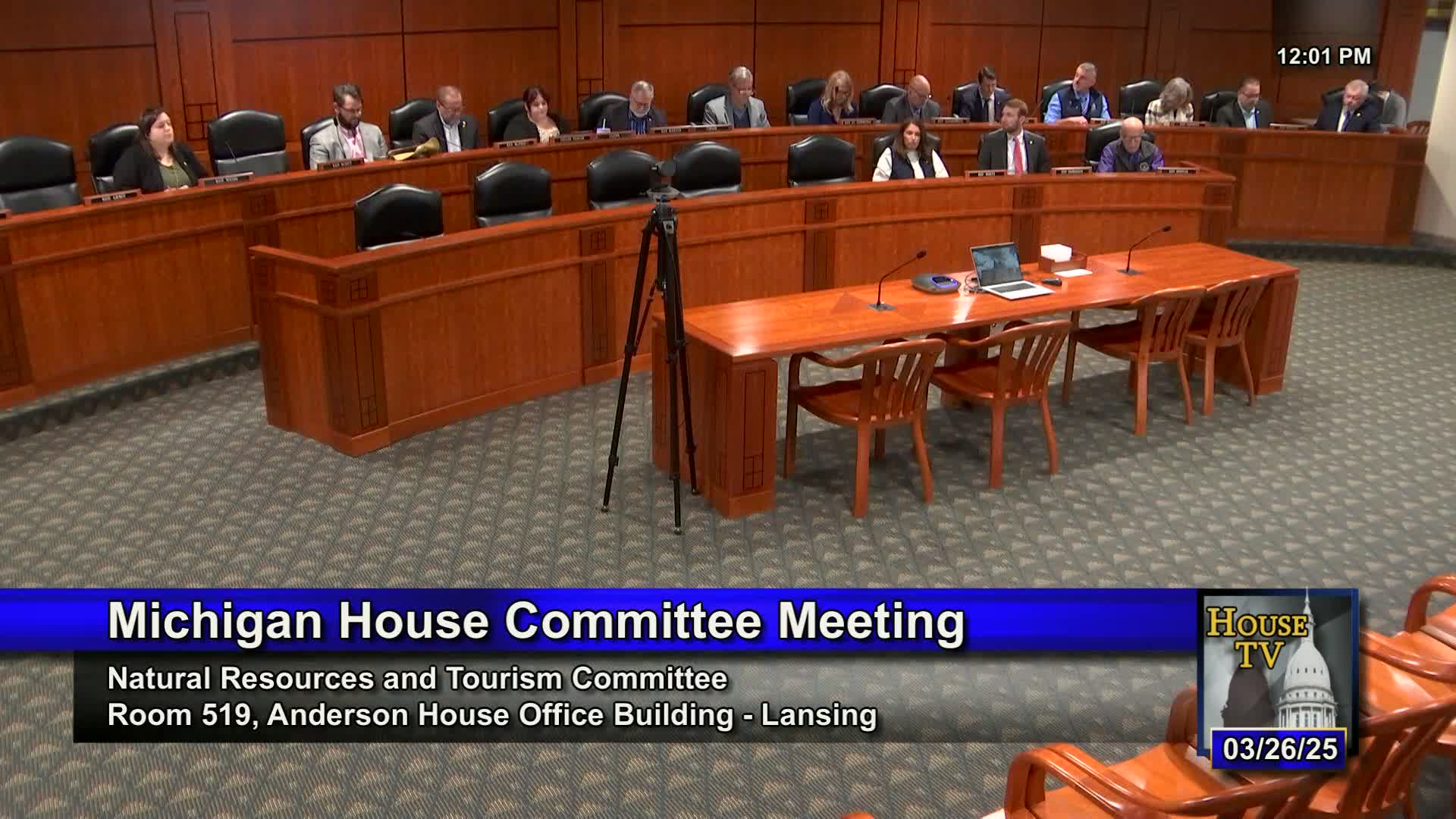
The bill’s sponsor told the House Natural Resources, Environment, Tourism and Outdoor Recreation Committee the proposal is designed to “find a balance” between conservation enforcement and private property rights. Representative Preston said the bill “would require DNR conservation officers to obtain a warrant before entering private property,” and that courts in several other states have interpreted state constitutions to restrict warrantless entry when landowners have signaled their intent to keep property private.
The measure drew immediate questions from committee members about frequency, operational effects and legal precedent. Vice Chair McFall asked whether there is research quantifying how often officers enter private land; Preston answered that much of the evidence presented so far is anecdotal and that the issue appears particularly acute in the Upper Peninsula, where privately owned parcels are adjacent to large amounts of state and federal land. Preston told the committee the proposal preserves exceptions for “hot pursuit” and witnessing criminal acts so officers would not have to “wait.”
Chief Jason Haines, chief of the DNR law enforcement division, told the committee the bill “goes far beyond the open fields doctrine” established by the U.S. Supreme Court. Haines summarized the open fields precedent in Hester v. United States (1924) and United States v. Dunn (1987) and said DNR officers already receive academy training and internal guidance on when entering private property is legally justified. He argued the bill, as written, would “essentially translate into little to no enforcement and protection for those resources on those private lands” because routine responses to reports of poaching or baiting — including follow-up to anonymous tips — would require the time and personnel to obtain and serve search warrants.
Haines illustrated the operational impact with examples: an officer who sees an illegal bait pile from an adjoining property could be required to draft an affidavit, seek prosecutorial review, secure a judge’s signature and then return with additional personnel, turning a 30-minute response into several hours. He also warned the bill would create a double standard if other police agencies retain the ability to use the open fields doctrine while conservation officers did not, complicating joint operations.
Two public testifiers during the committee hearing described personal experiences they said justify the bill. Mark LaBeouf of Ishpeming said two uniformed men entered his gated property without identifying themselves after he had field‑dressed a deer, and he said the officers never identified themselves during the encounter. LaBeouf added he later learned the officers had been on his property previously and said they were “trained to do this.” Dan Harrington, who identified himself as owner of UP Propane and a county commission chair, described DNR vehicles and officers repeatedly entering his gated lands over an extended period and said the department had disabled his security camera during at least one incident.
Senator McBroom, speaking by phone to the committee, urged support for the bill and framed it as restoring protections that private landowners expect. He said DNR practices have generated widespread complaints across the state and argued that legal clarifications are appropriate.
Committee members pressed for clarifications about curtilage (the area immediately surrounding a home), the open fields doctrine and how the bill’s wording aligns with other law‑enforcement language for exigent circumstances and hot pursuit. Representative Myers Phillips and others noted the open fields doctrine is longstanding federal precedent and asked how the proposed law would affect timely enforcement.
No vote on HB 4073 occurred during the hearing. The committee heard the DNR’s testimony and public comment and then moved to other bills on the agenda.