Get Full Government Meeting Transcripts, Videos, & Alerts Forever!
Get email alerts on the Health Insurance Market Overview topic
No spam. Unsubscribe anytime.
Michigan Association of Health Plans briefs committee on market structure, drug costs and affordability pressures
Summary
The Michigan Association of Health Plans presented an overview of the state's insurance markets, highlighting concentration in the employer market, Medicaid managed-care enrollment, rising prescription drug costs (particularly specialty and GLP-1 drugs) and the potential effects if federal APTC subsidies expire.
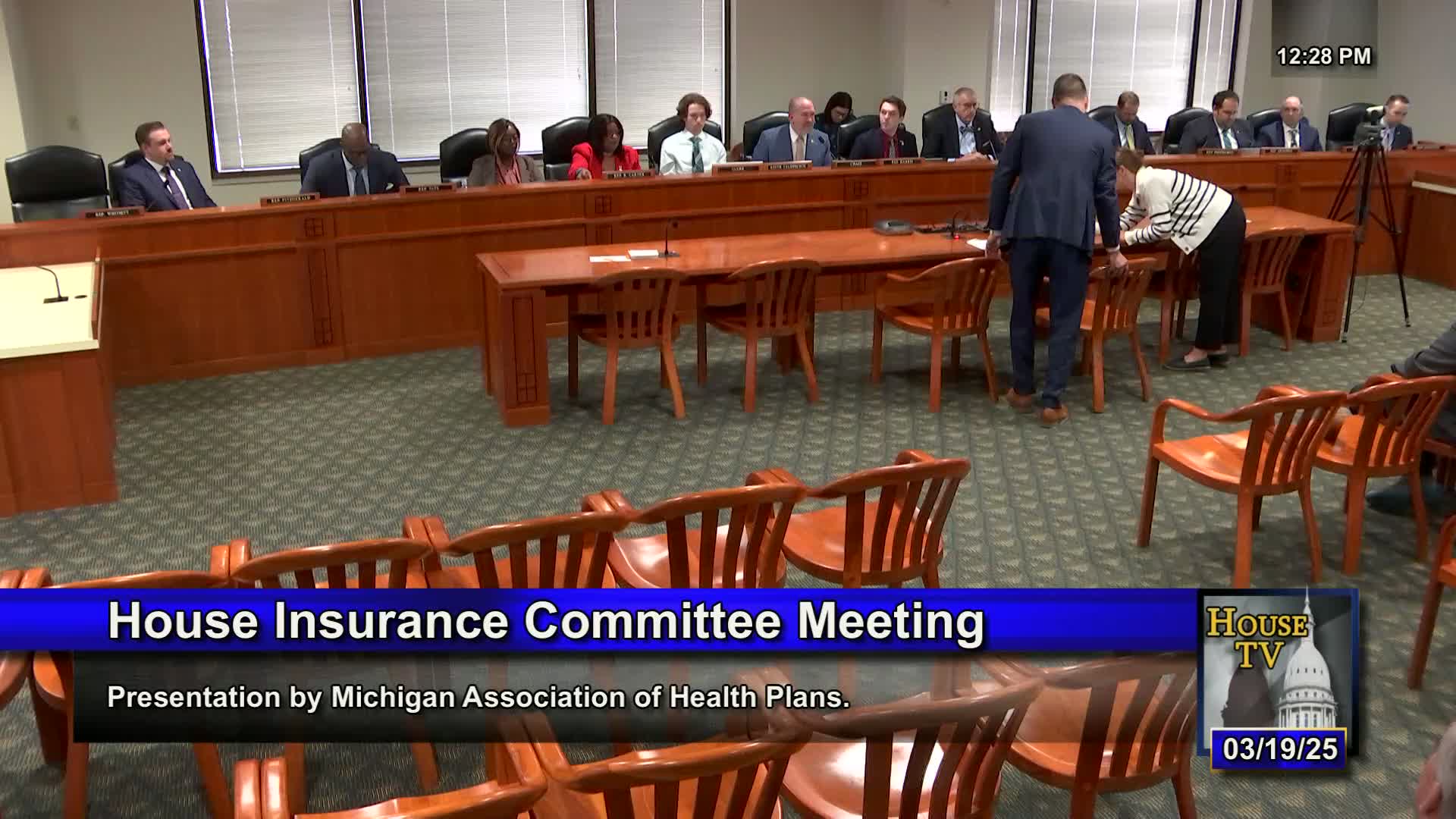
The Michigan Association of Health Plans (MAHP) presented to the House Insurance Committee on the structure of Michigan's health insurance markets, trends driving premiums and policy options for affordability.
Dominic (presented as executive director of MAHP) told the committee MAHP represents 11 carriers that together cover more than four million Michigan residents and that most state residents with coverage receive it through employer-sponsored plans. The association said roughly 2.3 million Michiganders were enrolled in Medicaid during the public-health emergency period, with approximately 1.9 million now in managed care; Medicaid remains payer of last resort in coordination-of-benefits scenarios.
MAHP highlighted the growing share of prescription drugs in premium dollars, citing an industry figure that 24.2 cents of every premium dollar now goes to prescription drugs and that specialty drugs account for 55% of total drug spending. The presentation emphasized rapid growth in GLP-1 (weight-loss) drug spending in Medicaid managed-care plans and noted a per-member-per-month spend exceeding $14 on those drugs in the data cited.
On the individual market, MAHP noted recent growth and warned that the scheduled expiration of enhanced advanced premium tax credits (APTC) could significantly raise costs for consumers who buy coverage on the exchange absent federal action. MAHP also discussed market concentration: the association said a dominant carrier holds a substantially larger market share in the state employer market than dominant carriers in other lines (for example, an historical comparison to auto insurance market share was provided).
MAHP asked lawmakers to avoid enacting new mandates that would increase premiums without offsets, and to consider long-term approaches such as mandate review, drug-manufacturer reforms (importation, transparency, affordability review) and state-based subsidy/reinsurance options if the state pursues them. Committee members asked about state-based exchange options, mandate impacts on uninsured/underinsured populations and the effects of 340B and uncompensated care on commercial rates.
MAHP emphasized collaboration with the Department of Insurance and Financial Services and urged the committee to weigh the budgetary and competitive trade-offs before enacting coverage mandates.