Get Full Government Meeting Transcripts, Videos, & Alerts Forever!
Get email alerts on the School Based Mental Health topic
No spam. Unsubscribe anytime.
MOSAIC Counseling urges expansion of school-based outreach, highlights rapid access and veteran services
Summary
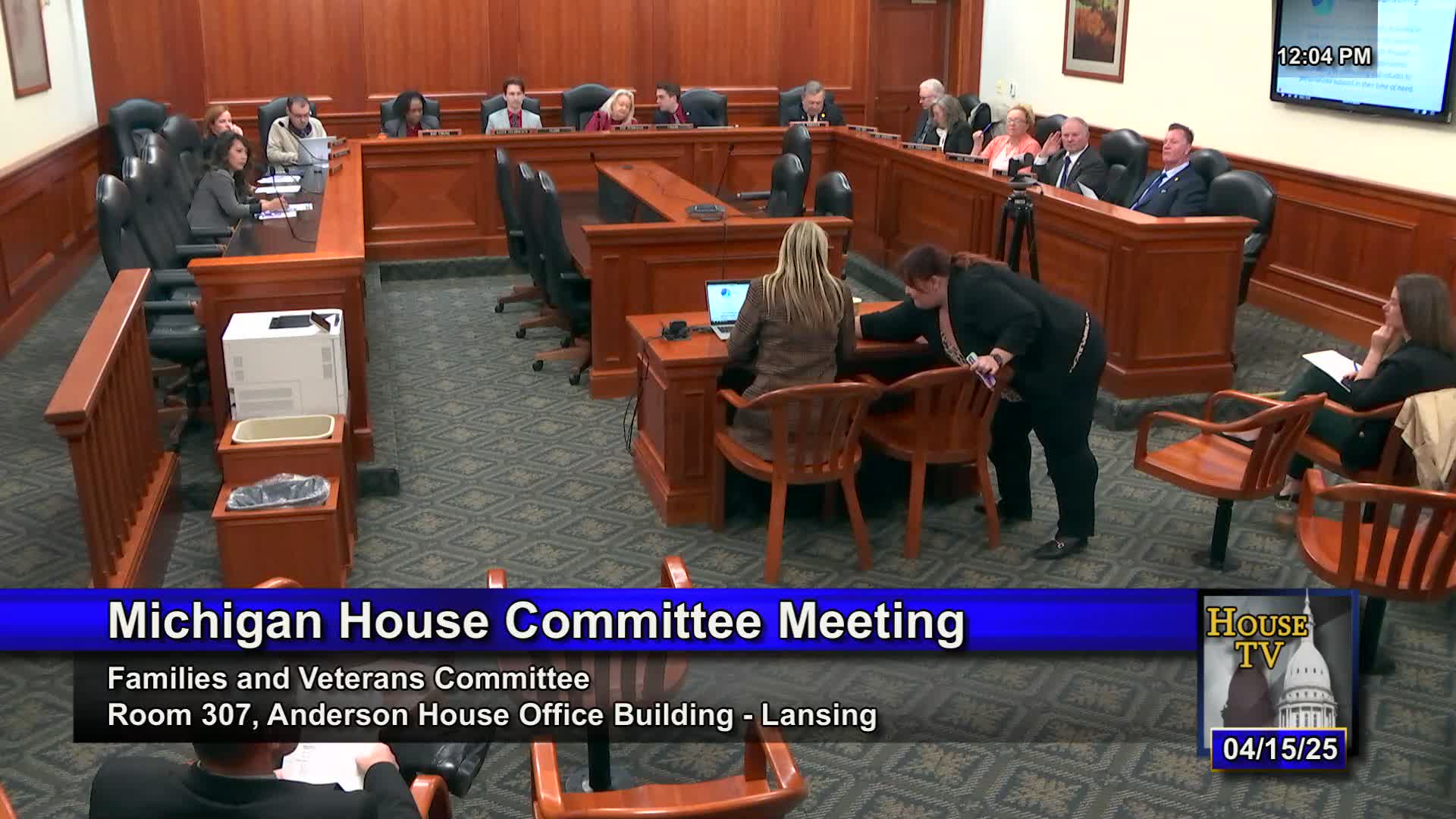
Sarah Lewikowski, executive director of MOSAIC Counseling, told the Families, Children and Seniors Committee that MOSAIC’s school outreach places therapists in schools, can begin care within days, serves veterans and underinsured residents, and is seeking state funding to expand into five counties.
Sarah Lewikowski, executive director of MOSAIC Counseling, told the Families, Children and Seniors Committee that the agency’s school outreach program places contracted therapists directly in schools and can start students in counseling "within a week or 2." Lewikowski said the model removes common barriers to care and that "we don't turn anyone away."
Mosaic’s model, Lewikowski said, relies on a centralized intake and a panel of private-practice clinicians. "We have 270 therapists on our panel," she said, and the agency operates with a small central staff — "10 staff and 3 interns." Lewikowski said 56 of the panel therapists have expertise serving veterans and that seven panel clinicians are veterans themselves. She also said MOSAIC works with two psychiatrists to provide limited medication management when needed.
Why it matters: committee members pressed on access, outcomes and funding during a question-and-answer period. Rep. Johnson asked about parental consent and benchmarks of success; Lewikowski replied that school-based therapy requires parental consent and that MOSAIC sends a client-satisfaction survey about four to five months after therapy begins and has recently hired a staff member to improve data collection. "We collect so much, but to put that together to be able to present to you that what we do does make a difference using data," she said.
On suicide prevention, Lewikowski told Rep. Song that MOSAIC both conducts QPR (Question, Persuade, Refer) trainings and uses county- and state-level suicide data from local coalitions. "We've already trained 12,000 people in QPR," she said, and the organization surveys training participants about knowledge and resource awareness.
On payer mix and logistics, Lewikowski told Rep. Rankins the agency functions primarily as a referral facilitator: therapists on the MOSAIC panel bill insurers directly or accept sliding fees. She estimated "20% are uninsured, underinsured," "probably 25% are Medicaid, Medicare," and the remainder carry other insurance. Lewikowski said MOSAIC’s intake staff will, in a single call, assess insurance, ability to pay and clinical urgency and match clients to clinicians accordingly. She gave an example of a suicidal 12-year-old who was seen immediately after MOSAIC bypassed insurance barriers by arranging a private-pay appointment at the family's co-pay rate.
Lewikowski described school outreach as a complement to existing school social-work services rather than a substitute: "We're going in and providing the therapy for the students. We first pitched it to the social workers in the schools like this: we're coming in to see the students that you refer to us because they need ongoing care, ongoing professional therapy." She also said MOSAIC therapists file Child Protective Services reports when required and that therapists participate in meetings with school staff, parents and students when appropriate.
Funding and expansion: Lewikowski said the state returned MOSAIC to the 2024 budget with $200,000 and that the agency is proposing a five-county expansion to provide services in Ottawa, Kent, Muskegon, Jackson and Washtenaw counties. "We are ready to grow, which would require additional funding to help more people," she told the committee. Lewikowski said MOSAIC aims to scale its referral-and-panel model while keeping overhead low so most funding goes to direct services.
Committee members asked about partnerships with 211, involvement in the IEP (Individualized Education Program) process and serving justice-involved populations. Lewikowski said MOSAIC helped start the 211 service in Ottawa County and that the agency works with courts, police and hospitals as referral sources. On IEPs, she said school outreach therapists meet with school staff and parents to coordinate plans but cautioned that not all private clinicians have the time budgeted to attend school meetings.
The presentation concluded with committee members expressing support and asking staff to consider MOSAIC for future funding discussions.