Get Full Government Meeting Transcripts, Videos, & Alerts Forever!
Get email alerts on the Disaster Recovery Debris Fema topic
No spam. Unsubscribe anytime.
Pike County approves state master contracts for debris removal, urges residents to follow FEMA rules as recovery continues
Summary
Pike County Fiscal Court voted to approve state master-agreement contractors to manage debris removal after severe flooding and provided residents guidance on FEMA eligibility, burn bans, temporary housing registration and fraud warnings.
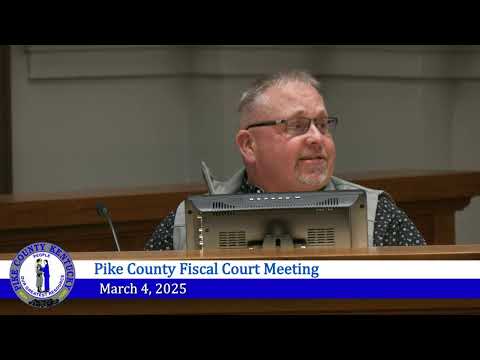
Pike County Judge Jones told the fiscal court on the meeting record that the county has contracted with state-approved firms to oversee debris removal and FEMA public-assistance claims after the recent flood, and he urged residents to follow FEMA rules for debris separation and documentation to ensure reimbursement.
The motion to acknowledge and approve state master-agreement contracts with Title Basin Group (to oversee federal public-assistance processing), DRC Emergency Services (debris removal), and Thompson Consultants (monitoring) was made by Judge Jones and seconded by Commissioner Atkins; the roll call was unanimous (Commissioners Ronald Scott, Atkins, Freddie Lewis and Judge Jones voted yes). Judge Jones said the firms were on the state master agreement so they did not require local bidding and that the county would hold contractors accountable for any charges not FEMA‑eligible.
Why it matters: The contractors will manage debris removal and monitoring that FEMA requires for reimbursement, a major step for recovery. Judge Jones noted that the county will be financially responsible only for amounts not covered by federal and state programs and stressed the paperwork and eligibility rules that determine reimbursements.
The court and staff described eligibility and operational details the public should know. Judge Jones warned that a federal disaster declaration and a presidential emergency declaration are separate steps: only a major disaster declaration triggers FEMA individual assistance and public-assistance programs. He repeatedly urged residents to place eligible flood debris where boom trucks can reach from the county or state right-of-way and said private‑property removals require extra authorization and a “massive amount of paperwork” that can delay cleanup for months.
“...if you just leave it in your yard and the truck can't sit on the state or county right away and reach over and get it, then it's your responsibility under federal law to remove the debris,” Judge Jones said on the record.
FEMA eligibility details and household waste: County staff and the judge repeatedly told residents not to use black garbage bags for flood debris. Judge Jones said, “If you use black garbage bags, in order to get FEMA to cover the pickup of that, you've got to open the bags up so they can see that it's eligible debris from the flood event,” because household garbage is not reimbursable. He said the county initially planned to avoid the landfill because of limited air space, but shipping debris to distant landfills and paying tipping fees (the county would shoulder a local share) made using the county landfill a likely short‑term option while seeking an emergency expansion permit.
Temporary housing, registration and disaster-recovery centers: County staff described travel‑trailer and temporary‑housing registration. Residents with major damage or destroyed homes were told to register with Kentucky Emergency Management at (502) 607‑6665, with FEMA at +1 806‑213‑362, online at disasterassistance.gov, or at the FEMA app. Disaster recovery centers were listed as the Pike County Library (126 Lee Avenue) and Belfry Live Public Library (24371 US‑119 North); mobile registration trailers were scheduled to rotate through locations including Marlbone Fire Department, Long Fork Park, Mouth Card Community Center and potentially Phelps (or the Phelps Fire Department) on a Thursday–Saturday rotation.
Burn ban and safety warnings: Emergency-management staff announced a countywide burn ban that took effect the afternoon of the meeting because forecast low humidity and 40–50 mph winds created a significant fire risk. The county asked residents to stop outdoor burning until further notice.
Fraud and scams: The court warned residents about scam solicitations and unsolicited links. Officials cautioned that anyone seeking passwords, Social Security numbers, bank information, or asking for upfront cash to begin repairs without verifiable references and insurance should be treated as suspicious. The court encouraged residents to get contractor references and proof of insurance before paying in advance.
Operational scale and timeline: Road department and solid‑waste staff reported extensive overtime and damage. Court members estimated county recovery and repair costs—without final damage assessments—could reach an initial estimate in the tens of millions. Judge Jones said FEMA typically covers the majority of eligible costs but the state and county would share non‑federal portions; he cited differing percentages in discussion (remarks included both “75%” and “87%” language when describing federal/state shares and later stated the county’s customary share could be about 13% after state contributions). The court said bridge and road rebuilds will require bids and substantial work; multiple county bridges were reported as destroyed or requiring full replacement.
A formal motion to approve the state master agreements was recorded and carried unanimously.
Ending: County officials closed by stressing cooperative recovery. Emergency-management staff said teams are conducting door‑to‑door assessments, coordinating with volunteer organizations and federal partners, and will continue rotating mobile registration and support sites while debris removal and infrastructure repairs proceed.