Get Full Government Meeting Transcripts, Videos, & Alerts Forever!
Get email alerts on the Animal Control topic
No spam. Unsubscribe anytime.
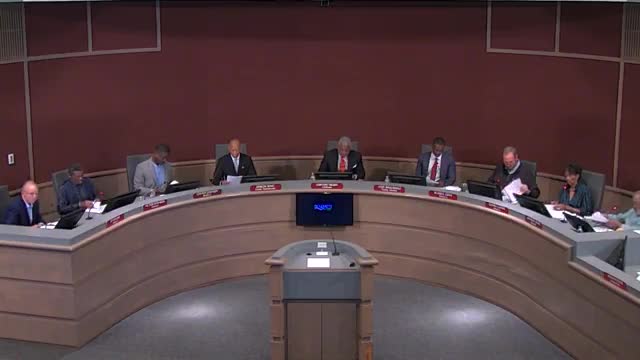
County attorney outlines proposed code changes for animal control, including tethering limits and 'community cat' provisions
Summary
County legal staff presented draft amendments to the Dougherty County animal-control code April 14 to add tethering limits, clarify impoundment and cruelty standards, add disturbing‑the‑peace provisions and incorporate state-authorized dangerous/vicious‑dog procedures.
Dougherty County staff presented proposed amendments to the county’s animal-control code (Chapter 2‑3.5) on April 14 that clarify definitions, add a disturbing-the-peace provision, restrict long-term tethering, address rabies-control and impoundment procedures, and add a process to classify dangerous and vicious dogs.
County Attorney Alex Shali introduced the ordinance consultant, Molly Eswine, and Animal Control Officer Tamara Piercy, who together reviewed the draft changes and answered questions. The proposed ordinance tightens language describing when an animal is 'at large,' adds detail on animal cruelty and neglect, provides standards for adequate shelter and confinement, and makes it unlawful to use tethering, chains or ropes as the "primary method of restraining" a dog (the draft permits short-term, attended tethering but prohibits long-term unattended tethering that leaves animals continuously restrained).
State law and recent legislation: Eswine told the board that HB 331 — a state bill that passed the legislature the prior week but had not yet been signed by the governor at the time of the meeting — includes a restriction on roadside animal sales; Eswine said staff will monitor the final signed language and update the local code as necessary. The consultant also explained that state law authorizes local classification procedures for dangerous or vicious dogs; the proposed ordinance adds implementing language and procedures for registration and owner responsibilities where a dog has bitten or attacked.
Feral/community‑cat guidance and enforcement: Staff explained that the draft treats free‑roaming "community cats" differently from owned animals: community cats will not be treated as 'at large' for the purpose of impoundment unless injured or ill, reflecting common municipal practice and the practical effects of trap‑neuter‑return strategies. County staff and the consultant noted that a low‑cost spay/neuter program or TNR initiative would be helpful to reduce feral-cat populations and that county resources or partnerships could be explored.
Noise, chickens and nuisance enforcement: The ordinance adds disturbing‑the‑peace language to address chronic barking and other animal-caused nuisances; officers said enforcement is possible if repeated complaints are documented, but commissioners raised questions about practical enforcement (identifying owners, impoundment options, and remedies for recurring problems such as free-roaming chickens or neighborhood cats).
Ending: The draft ordinance will be revised based on feedback and returned for formal consideration. Staff advised commissioners they will refine enforcement language and fee/impoundment details and continue to consult on potential implementation resources (for example, spay/neuter programs).