Get Full Government Meeting Transcripts, Videos, & Alerts Forever!
Get email alerts on the Transportation Safety topic
No spam. Unsubscribe anytime.
City and county present Safe Streets for All plan to qualify for federal construction funding
Summary
The city and county presented a joint Safe Streets for All comprehensive safety plan April 14 that identifies priority corridors and countermeasures and was described as necessary for Dougherty County to compete for newly announced federal SS4A construction funds.
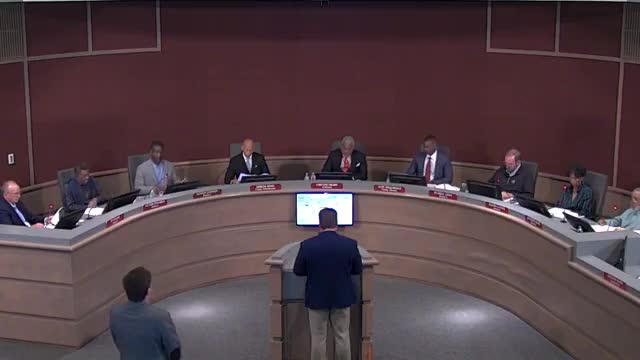
The city of Albany and Dougherty County presented a joint Safe Streets for All (SS4A) Comprehensive Safety Action Plan to the Board of Commissioners on April 14, a strategic safety document county staff say is needed to pursue newly announced federal SS4A construction funding.
Eric Stevens, transportation practice leader with the Foresight Group, told the commission the plan synthesizes five years of crash data, local police reports and public outreach to identify a "High Injury Network" (HIN) of priority corridors and intersections, and recommends policy, education and infrastructure measures targeted at vulnerable road users and high-severity crash locations.
Why it matters: Stevens said the Federal Highway Administration, through the bipartisan infrastructure law, is offering competitive SS4A construction funds; communities with an adopted SS4A plan are eligible to apply for the Notice of Funding Opportunity (NOFO) with a stated deadline in late June. Adoption of the plan and a county resolution committing to its goals were presented as prerequisites to being competitive for the June funding cycle.
Plan highlights and local priorities: The consultant described a mix of near-term countermeasures (speed-feedback signage, targeted enforcement), mid-term measures (lighting reassessment, photometric analysis after LED conversions), and long-term projects (pedestrian facilities, targeted roundabouts and corridor redesigns). Stevens emphasized behavioral issues — low seat-belt use, underage driving, and signal noncompliance — as principal contributors to serious crashes in Dougherty County, and recommended combining enforcement and education campaigns alongside engineering changes.
Implementation and next steps: Stevens said the plan was assembled on an accelerated schedule (ten months’ work compressed into roughly ten weeks) using stakeholder sprints that included MPO, public works, police, the Marine Corps base and other community partners. The consultant described an online dashboard and GIS layer to track crash data and recommended the county adopt the CSAP and Vision Zero resolution to enable grant applications. Staff indicated the MPO and public works would help integrate CSAP priorities into regional project programming and pursue grant applications.
Questions from commissioners focused on lighting gaps after LED retrofits, how to engage the Georgia Department of Transportation for state‑owned corridors, and whether SS4A funds could be used for measures such as speed tables (consultant advised against speed humps for emergency-response reasons and recommended design alternatives such as 'road diets'). Commissioners and staff discussed working with the Governor’s Office of Highway Safety and other partners for education and enforcement funding.
Ending: County staff said they will bring an adoption resolution and implementation plan for the commission to consider; adoption is intended to meet the federal plan requirement and allow the county to pursue SS4A construction funds this funding cycle.