Get Full Government Meeting Transcripts, Videos, & Alerts Forever!
Get email alerts on the Mental Health topic
No spam. Unsubscribe anytime.
Midland County OKs amended mental‑health services agreement with Premier Care to expand co‑responder program
Summary
County commissioners authorized the county judge to sign an amended fiscal‑year 2025 agreement with Premier Care to expand a law‑enforcement co‑responder program; the state will cover most recurring costs for deputies and vehicles, but county match funding is required up front.
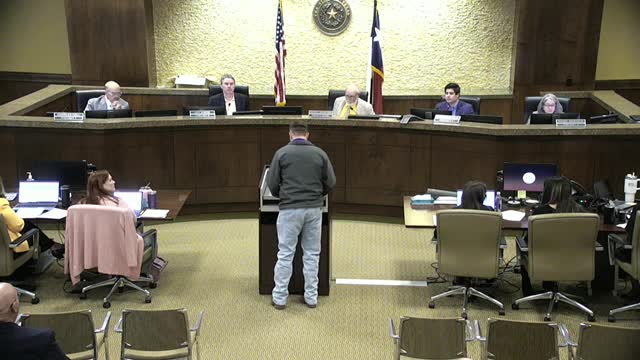
Midland County commissioners on March 4 authorized the county judge to sign an amended fiscal‑year 2025 mental‑health services agreement between Premier Care (the local mental‑health authority) and the Midland County Sheriff’s Office to expand a co‑responder program that pairs mental‑health staff with law‑enforcement deputies.
Commissioners approved the amendment after presentations from Premier Care CEO Chris Barnhill and Judge Litter, who urged support for embedded mental‑health professionals with first responders. Barnhill said the state awarded a grant that will fund a large portion of equipment and personnel costs but requires a county match. “The state will fund two thirds of everything that we purchase here,” Barnhill said during the discussion.
The amendment allocates county match funds to cover a six‑month portion of salaries, equipment and two law‑enforcement vehicles so Premier Care can order vehicles and hire or transition staff into the co‑responder program. Barnhill told commissioners the amendment on their packet represented roughly $149,000 in county match funding for the initial period; the state award totals several hundred thousand dollars that must be spent on a shortened timeline. Barnhill said Premier Care will seek reimbursement from the state after the county pays eligible costs.
Supporters said the program will tighten response times and allow social workers and deputies to travel together in the same vehicles, rather than having crisis workers respond remotely. Judge Litter described the approach as a model for diverting people with mental‑health needs from jail and emergency rooms: “This really is the gold standard in responding to mental‑health emergencies,” she said.
Commissioners voted to authorize the county judge to sign the amended agreement. The motion passed by voice vote.
County staff and Premier Care said the expanded co‑responder arrangement uses existing deputy positions initially, with the potential to add deputies later as demand grows; state funds will cover roughly two‑thirds of eligible vehicle and equipment costs and recurring personnel costs once the grant is executed.
Implementation steps discussed at the meeting included issuance of purchase orders for vehicles before the state’s grant deadlines and transitional staffing arrangements so current deputies can be funded under the grant as the program begins. Premier Care and sheriff’s office representatives said they will return to commissioners if additional county funding or a change in scope becomes necessary.
The agreement will be executed by the county judge as authorized by the court.