Coweta commissioners approve rezoning for ‘Project Peach’ data center campus near Palmetto amid heavy public opposition
Loading...
Summary
The Coweta County Board of Commissioners approved a developer request to rezone roughly 326 acres near Palmetto from rural conservation to light industrial for an eight‑building data center campus. The approval includes staff-recommended conditions plus additional requirements added by commissioners after public comment.
The Coweta County Board of Commissioners on April 1 approved rezoning petition 24-014 (branded by the applicant as “Project Peach”) to allow a data‑center campus on about 326 acres near the intersection of State Route 29 and Weldon Road, adjacent to Johnston Circle and Palmetto.
The rezoning changes the site from Rural Conservation to Light Industrial and was approved with the 21 conditions recommended by county staff plus additional conditions read into the record by commissioners. The county’s staff presentation and the applicant’s consultants described the project as an eight‑building campus totaling roughly 2.1 million square feet under roof, with a planned on‑site electrical substation and staged construction over multiple years. The board approved the rezoning motion and set multiple follow‑up requirements before full buildout proceeds.
Why this matters: The project is large in scale and raises infrastructure and quality‑of‑life questions for nearby Palmetto and rural neighborhoods. The applicant estimated a roughly $1 billion construction value (excluding tenant server equipment), about 500 construction jobs over the build period and roughly 50 permanent operations jobs at full buildout. The proposal includes an estimated electrical load of about 700 megawatts and a developer‑planned 13‑acre pad for a substation. Opponents warned of light, noise and traffic impacts and potential effects on property values; backers emphasized tax revenue and the project’s limited demand on county services.
Staff and applicant presentations: Assistant Community Development Director Ben Sewell told commissioners the site is an assemblage of seven tax parcels totaling approximately 326 acres and reviewed the county’s Comprehensive Plan guidance and applicable zoning standards. Sewell noted the plan’s development character and growth‑tier maps do not generally favor new industrial uses in that location, but he presented the staff report and a set of 21 recommended conditions should the board choose to approve. The staff conditions included mandatory right‑of‑way donations and a $1,000,000 contribution toward relocating Palmetto‑Tyrone Road at Weldon Road, road‑work and turn‑lane requirements, municipal water and sewer service, 100‑foot buffers adjacent to RC zones, a 75‑foot roadway setback along Highway 29 and Weldon Road, stormwater design per county code, full‑cutoff lighting, and a requirement that the applicant obtain a land‑disturbance permit within 18 months of board approval or the board may initiate rezoning the property back to Rural Conservation.
Applicant representatives from North Coweta Investors LLC and CyrusOne (the proposed campus operator) presented the development concept and economic case. Arthur Edge, representing the applicant, said the campus is proposed to be constructed in phases, and that the applicants have completed the DRI (Development of Regional Impact) process. Brad Hout of CyrusOne described the company as “a global data center owner, operator, and developer based in Dallas, Texas,” said CyrusOne has deployed similar campuses elsewhere, and outlined company sustainability goals and expected local tax revenues. Traffic and civil consultants described proposed driveway locations, berms and planting buffers to screen views, and agreed to off‑site traffic contributions identified in the staff report; the applicant also proposed a 2.6‑mile water line extension and said the buildings would use air‑cooled systems rather than evaporative water cooling.
Public comment and concerns: The board heard lengthy public comment. Dozens of people signed up to speak; Palmetto Mayor Theresa Thomas Smith and multiple Palmetto residents opposed the rezoning, saying the proposed campus is too close to historic downtown Palmetto and adjacent neighborhoods. Speakers raised concerns about light pollution, noise from cooling equipment and emergency generators, long construction windows, potential blasting or vibration during grading, requests for more rigorous independent noise and water‑use verification, and risks to property values and community character. Supporters — including company representatives and consultants — emphasized job creation during construction, long‑term tax revenue, and CyrusOne’s engineering and environmental commitments.
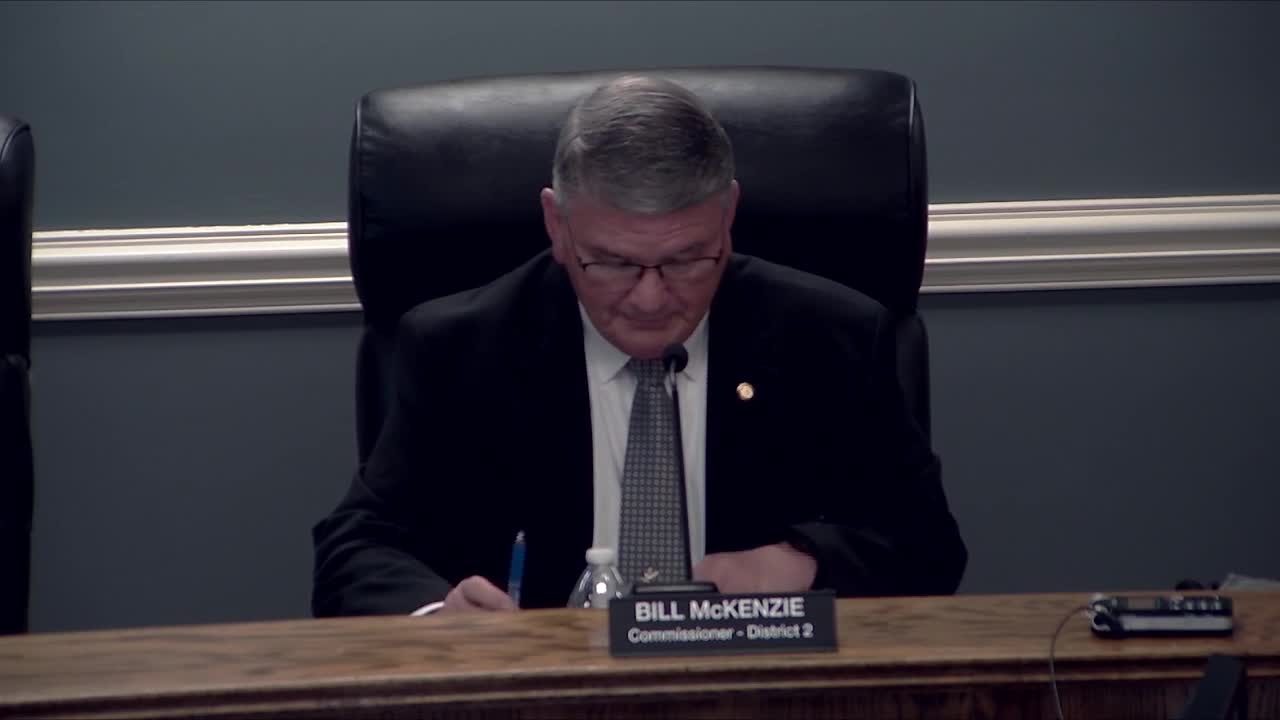
Board action and conditions: During deliberations commissioners said they were torn between locating industrial uses in already‑industrial areas and the county’s need for revenue. Commissioners adopted the staff’s 21 conditions and added a set of extra requirements read into the public record. Those extra items, recited on the record by the motion maker and accepted by the applicant, include requirements that the applicant provide a will‑serve letter and a power purchase or service agreement from Georgia Power (or the serving utility) within a defined period following approval, annual reporting to Community Development on waste and recycling performance, a requirement that the visible substation and buildings be bermed and buffered and that the applicant consider swapping the substation location with Building 1 to move the substation away from Highway 29, and a board‑recorded condition that all buildings on the site be used as data centers (as proposed). Other conditions in the staff report remain in place: right‑of‑way dedication and construction of roadway improvements before certificate of occupancy, municipal water and sewer service, stormwater controls per Chapter 30, and required buffers and screening.
Outcome and next steps: The board voted to approve the rezoning motion; the motion carried and the rezoning was authorized with the conditions described on the record. The record shows the board required the applicant to obtain utility commitments and to meet the listed permit and construction conditions before site buildout progresses. The approval begins the permitting and review stages: engineering, utility agreements, land‑disturbance permitting, and construction plan review must follow the zoning decision.
Speakers (attributed in this article): Ben Sewell, Assistant Community Development Director (Coweta County staff); Arthur Edge, representative for North Coweta Investors LLC (applicant counsel); Brad Hout, CyrusOne (applicant/business); Zach Randolph, Kimberly‑Horn (civil engineer); John Walker, Kimberly‑Horn (traffic engineer); Laurel Cottrell, CyrusOne (environmental compliance); Matt Fortier, CyrusOne (sustainability); Theresa Thomas Smith, Mayor of Palmetto (opposition); Shalondra Henry, Palmetto resident (opposition); Nathan Slayton, Palmetto mayor pro tem (opposition); Laurie Newsome, resident (opposition); Jess Wilbanks (Palmetto neighbors/organizer, opposition); numerous other Palmetto residents (opposition).
Authorities cited during discussion: Coweta County Zoning & Development Ordinance (Article 29 — map amendment standards; Article 25 — roadway setbacks and buffers); Coweta County Code Chapter 30 (stormwater); AASHTO standards; Georgia Department of Transportation (GDOT) standards; Development of Regional Impact (DRI) process and associated DRI notice of decision (staff referenced the DRI requirements). These authorities were cited by staff and consultants during the presentation and are conditions for future permitting.
Clarifying details (from the record): total site ~326 acres; conceptual plan proposes eight buildings ranging roughly 150,000–350,000 square feet each, totaling ~2,100,000 square feet; a roughly 13‑acre substation pad is shown; applicant presented an estimated construction value of about $1,000,000,000 (excluding tenant equipment); applicant estimated ~500 construction jobs and ~50 full‑time operations jobs at full buildout; applicant stated electrical load estimate ~700 MW; applicant estimated 80,000–100,000 gallons per day of water for facility operations but emphasized air‑cooled systems and that most water use would be ordinary non‑process use (toilets, kitchens); developer agreed to proposed roadway contributions including $1,000,000 toward Palmetto‑Tyrone Road relocation and specific turn‑lane construction and other traffic mitigation identified in the GRTA/DRI notice of decision.
Community relevance: The rezoning affects Palmetto and surrounding unincorporated Coweta neighborhoods and involves utility, transportation and stormwater infrastructure that will require coordination with Coweta Water & Sewage Authority, GDOT, and Georgia Power and has been the subject of significant public comment.
Ending: The board’s approval starts the project’s county permitting pathway. Staff and applicants will return with engineering plans, utility commitments and the permits required by the conditions the board set for the site; neighbors said they will follow those next steps closely.