Get Full Government Meeting Transcripts, Videos, & Alerts Forever!
Get email alerts on the Building Renovation topic
No spam. Unsubscribe anytime.
Trempealeau County committee reviews remodel bids, debates $597,000 asbestos allowance; vote postponed
Summary
County staff presented bids for a courthouse renovation, reporting a roughly $4.0 million base estimate and a large asbestos allowance; committee members discussed shifting bonding/highway funds to cover costs and postponed a final funding decision until a follow-up meeting.
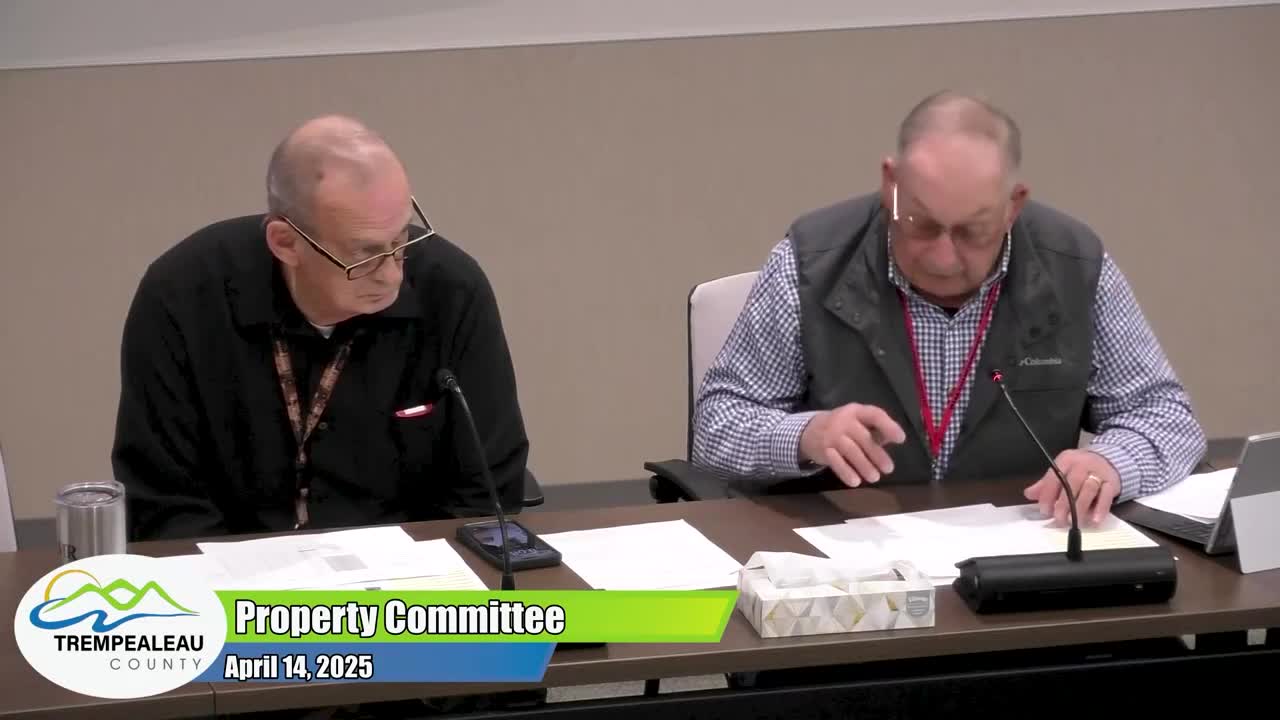
Trempealeau County property and executive finance committee members reviewed contractor bids and funding options for a long‑planned remodel of the county building during a joint meeting April 14, 2025, and postponed a final decision until a follow‑up session.
The meeting focused on bid tabulations for multiple trade packages, cost‑saving ideas from the county’s construction manager as agent, and an alternate priced at about $597,000 to abate asbestos found above ceiling areas in the older, southern half of the building. Rebecca (staff member), who presented the bid tabulation and schedule, told the committee that the project does not yet have conditional state review and that significant design changes required repeated resubmissions to the state reviewer.
The issue mattered because the bids and contingency lines exceeded earlier budget assumptions. Rebecca said the base construction subtotal of the low bidders across trade packages came to roughly $3,056,000; adding the construction manager’s general conditions and fees produced a $3.99 million figure “that does not include any of the alternates.” She told the committee alternates for corridor wall remediation, terrazzo floor refinishing, LED lighting retrofits and a broad asbestos removal allowance would raise the total further.
County project managers and contractors gave itemized figures. For bid category 6 (general construction) low base bids read aloud were about $1,000,003.23 (Samuels), $1,000,004.41 (Jurowski/Juralski) and $1,000,004.94 (Fowler & Hammer). Alternate prices for corridor wall rework ranged from roughly $42,000 to $107,000 across bidders; terrazzo patch/refresh alternates ranged from about $7,900 to $36,007.50. One plumbing base bid reported was $57,000.61 (Barton Gale). The presenter said electrical subcontract pricing came in “significantly higher” than budgeted: prior internal estimates were cited in the $459,000–$469,000 range (before fire alarm/camera work), with expectations after additions of roughly $650,000–$700,000; the actual received electrical/low‑voltage numbers pushed the package substantially above that.
Kurt Schleicher, identified in the meeting as the senior project manager on the county’s construction team, explained the asbestos pricing. He said a $90,000 allowance was included in the base bid for targeted abatement where crews would open spaces and encounter asbestos mastic, plumbing elbows or ductwork insulation; alternate number 4, priced at about $597,000, was an allowance to remove and replace the sprayed/coated material that sits on the underside of the concrete deck above mechanical and electrical runs across the older southern half of the building. Kurt said that work would require wetting, containment and removal, plus replacement of ductwork, ceilings and other elements.
Jeremy (county staff) described the coating as “flaky” and said the older southern section—built in the 1950s—is where the material is most prominent. He noted that the county’s routine maintenance and room‑by‑room repairs would be more disruptive and potentially more expensive over time if crews had to abate small areas repeatedly rather than take the work on now while large areas are open.
Finance and funding options drew the most debate. The county had previously designated $3,488,980.18 under Resolution 2024‑05‑02 for the project; additional long‑term financing and bonding work identified another $700,000 for building renovations. Presentation materials provided new totals showing the base bids plus alternates ranging into the low‑to‑mid $5 million range (several figures were discussed in the meeting documents; presenters noted a difference of roughly $933,531 between available funds and the bid totals as presented). The county’s finance staff recommended identifying an additional contingency and proposed moving a portion of funds that had been set aside for highway projects into the building account to fully fund the work.
Becky (county staff) summarized the funding proposal: moving a portion of highway‑designated bonding dollars to the renovation account would make the project fundable today, but doing so would delay at least two highway projects that committee members said cannot proceed this year and would push that work into next year’s schedule. Neil (highway department) and other highway representatives had notified staff that land acquisition and other external approvals had forced those projects into the next fiscal year; Becky said those funds would likely be available next year but acknowledged the trade‑off.
Committee members expressed divided views. Several members argued that full abatement now would make the building safer and avoid repeated, disruptive spot repairs later; others said borrowing or shifting bonding away from highway projects would create a consequential burden for next year’s road program. One committee member asked whether grant funding for asbestos abatement exists; staff said they were not aware of grants that would cover this scope in prior experience.
A motion introduced on the floor to move up to $1.5 million from highway‑designated funds (later discussed in several arithmetic permutations during the meeting) was amended. The amendment—to postpone final action on a funding transfer and return with a clear resolution and line‑item figures—carried. Exec Finance voted to postpone the decision until a follow‑up joint meeting the next morning; the motion passed by voice vote and the matter was set for reconsideration with written figures provided to members before the reconvened session.
What remains unresolved are: (1) conditional state review for the construction documents; (2) how much of the alternates the county will accept if it proceeds; and (3) the precise mix of bonding, county reserves and redirected highway funds that will be used if the committee approves the full scope. Rebecca and the county’s project team said they would supply revised budget pages and a draft resolution for the committee to review before the reconvened meeting.
The county’s next action is procedural: committee members asked staff to post a concise resolution and clear line‑item numbers, circulate those to members, and reconvene at a follow‑up meeting (scheduled for the morning following the April 14 session) to vote. The presenters also said they will continue value‑engineering efforts (rebidding electrical, vendor negotiations for low‑voltage work and minor reductions to general conditions) while the funding question is pending.
Ending note: committee members asked staff to provide several funding scenarios — including an option that preserves more highway dollars — and to show the effect on next year’s highway program if funds are shifted. Staff committed to providing those numbers prior to the reconvened meeting.