Get Full Government Meeting Transcripts, Videos, & Alerts Forever!
Get email alerts on the Municipal Budget topic
No spam. Unsubscribe anytime.
North Ogden budget advisory committee opens season with training; pool deficit, snowplow fees and contracts flagged for review
Summary
At an introductory meeting, the North Ogden City budget advisory committee reviewed budget basics, agreed on next steps and raised major topics for follow-up including the aquatic center subsidy, possible snow-plow fee zoning, interlocal service opportunities and several vendor contracts.
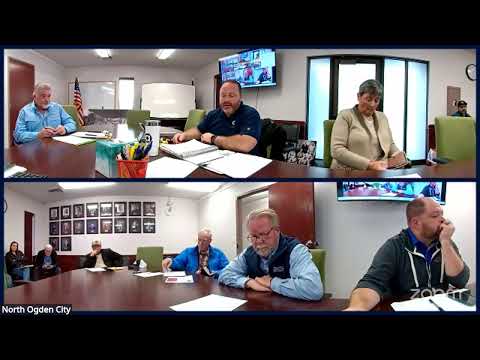
Chris Pulver, a member of the North Ogden City Council, opened the committee’s first meeting of the budget season with introductions and a review of the group’s mission: to “explore and recommend the city council options for cost savings.” Pulver told attendees he would circulate prior committee materials and that the group’s first substantive work would be a primer on the city’s budget documents.
The session doubled as training for two new citizen members and a staff briefing on the city’s fiscal structure. John Collin, identified in the meeting as city manager, and Jamie Jones, finance director, walked members through the difference between general, enterprise and capital funds; how sales tax is allocated; and the limits on moving money between funds. Staff described a typical general-fund reserve target near 25% of annual spending, a capital-improvement fund for projects, and the separate enterprise funds used for utilities.
Why it matters: committee members will advise council during a budget cycle that staff said is sensitive to sales-tax volatility and competition for retail development. Committee members said they want to prioritize topics that can move the needle — programs, contracts and interlocal agreements — instead of minute line-item cuts.
Key discussion points
- Pool and parks subsidy: Members discussed the North Ogden aquatic center’s annual shortfall, repeatedly referenced in the meeting as roughly $90,000, and the council’s recent decision to raise admission fees. Staff and committee members said the pool’s bond payments have been retired but operating subsidies remain. Several participants urged examining differentiated pricing for residents and nonresidents, rental opportunities and other ways to reduce the net subsidy. "If the pool is losing a hundred grand on this pool every year," one member said, "posting these numbers so people know might focus the debate." (Attribution: committee discussion; exact speaker not specified in the transcript.)
- Snow removal and targeted fees: Members proposed studying zone-based fees or a special street/plowing assessment to charge properties that require more service (for example, higher-elevation neighborhoods). City staff said portions of snow-removal funding come from state fuel tax distributions (B&C roads) and from city funds, and that some other Utah cities use zone or equipment-based billing. The committee asked staff to explore Draper’s model and to return with options and cost estimates.
- Contracts and third-party costs: Committee members flagged large contractual expenditures for focused review, including the city’s trash-hauling agreements and tipping/treatment fees at regional facilities, sewer agreements with outside districts, and the motor-pool/vehicle maintenance arrangements. Members asked staff to identify the biggest pass-through vendor costs and return recommended review steps.
- Interlocal cooperation and public safety costs: Committee members discussed opportunities to coordinate services with neighboring jurisdictions (for example, Pleasant View) to reduce duplicative functions. Staff described existing conversations about shared police services and noted legal and political constraints; the city manager said interlocal agreements can be explored where practical.
- Data tools and visitation tracking: The planning and economic development director described a proposed subscription data tool (estimated by staff at about $4,000 annually) that uses aggregated cell-location data to estimate visitor origins and flows for destinations such as the pool and major retailers. Staff noted pending state rules could affect such data purchases.
Decisions, directions and next steps
- Meetings and materials: Staff and the chair agreed the committee will meet during the budget season and that the group’s next meeting will be held on March 12 (second Wednesday) to begin review of revenues and the larger budget picture. Staff will distribute last year’s final committee report, the current audit, and the yellow-sheet line-item detail in advance.
- Staff follow-up tasks: Staff were asked to (a) circulate prior committee materials and the audit, (b) publish the yellow sheets and supporting documentation to committee members before the next meeting, (c) prepare a 5-year capital improvement plan and (d) investigate the snow-plow zoning/fee models used by other Utah cities (including Draper). Staff also agreed to provide clearer pool operating and capital figures at the next meeting.
What committee members emphasized
Several members urged the committee to focus on programs and contracts that can yield meaningful savings, not only small line items such as office supplies. New members asked for clearer agendas and more order; a remote participant, Steph Casey, said she would "love to see some order" so the committee’s work is easier for the public to follow. Susan Kilborn, a resident who joined remotely, asked whether the committee would produce minutes and whether those notes would be publicly available; staff said they will provide notes and can circulate them on request.
Ending note
The committee’s work plan for the coming weeks centers on staff-provided documents and specific follow-ups: a 5-year capital plan, clearer pool cost accounting, and an analysis of high-dollar contracts and possible interlocal savings. Members said they want the group to propose program-level changes and targeted policy options the council can weigh during the formal budget process.