Get Full Government Meeting Transcripts, Videos, & Alerts Forever!
Get email alerts on the Municipal Budgeting topic
No spam. Unsubscribe anytime.
North Ogden council hears budget kickoff as staff flags sales-tax uncertainty and salary shortfalls
Summary
City staff opened the fiscal 2026 budget process, asking council to weigh projected revenue assumptions — including a 3.16% sales-tax increase and roughly $170,000 in property-tax growth tied to new development — while warning of larger-than-expected salary pressures and a proposed $10 monthly transportation fee for roads.
City staff opened North Ogden’s fiscal 2026 budget process and asked the City Council for guidance on key revenue assumptions and emerging cost pressures, particularly salaries and road funding.
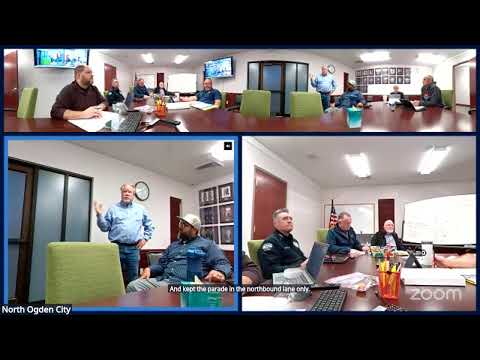
At a work session, John, a city staff member, told the council that the administration is projecting a modest rise in revenue but cautioned that sales-tax receipts are volatile and building-permit income is lagging. “If we're not comfortable with a 3.16% increase in sales tax because of trends we're seeing, then we need to dial that back,” John said. He identified the May 13 meeting as the target for adopting a tentative budget and said the final budget must be adopted before the June statutory deadline.
The nut graf: staff asked the council to decide how conservative to be with revenue assumptions because those assumptions shape choices about salary adjustments, transportation funding, and capital projects. Without council direction, staff said it cannot finalize the operating spending plan.
Staff presented the major revenue lines and risks. John said the current draft treats general taxes as the largest revenue source, with property tax and sales tax accounting for roughly 32% and 52%, respectively, of general-tax receipts in the model presented. He noted the draft budget assumes a roughly $170,000 increase in property-tax revenue “based on new structures, not an increased property-tax rate,” and a roughly 3.16% increase in sales-tax revenue over the amount budgeted for the prior year.
Staff flagged three specific revenue risks: - Building permits are running low: through three quarters they were only at about 63% of projected receipts for the year, and permit activity depends heavily on interest rates and broader market conditions. - Sales-tax timing and concentration: monthly collections arrive with a lag and one large month can materially change the annual total; staff reminded the council that the worst historical decline in sales tax was about 20% year-over-year during the 2008 downturn. - Growth limits: North Ogden is growing slowly compared with nearby fast-growing municipalities, which can reduce the city’s share of state allocations tied to population.
On expenditures, staff emphasized an emerging gap on salaries and benefits. John said the city used a regional compensation database (TechNet) and that market movements in surrounding jurisdictions have pushed the city’s pay averages upward. “My worst fear is that that number is double that,” John said when discussing the potential cost to bring pay up to market; the draft budget currently anticipates about $170,000 for compensation increases but staff said the true need could be much higher.
Council members asked questions about scale and funding options. John noted staff’s policy advice that one-time fund-balance dollars should not be used to fund ongoing salary increases. He reiterated the council’s existing fund-balance policy (a target no lower than 15% and a statutory cap of 35%) and described how prior-year surpluses are usually transferred into capital projects if the fund balance would otherwise exceed policy targets.
Roads and a proposed transportation fee were another focus. John previewed a longer discussion planned for May that would recommend a $10 monthly transportation fee to help address a backlog of pavement preservation needs. He said roughly 10% of the city’s streets have less than five years of life remaining and that bringing the road network to a 20-year life would cost roughly $107 million (total network reconstruction estimate). The $10-per-month recommendation is staff’s minimum starting point to address long-term needs.
Staff also reminded the council of the timetable and role of the citizen budget committee, which has met multiple times and will provide recommendations on department budgets as the process continues.
Ending: Staff asked the council to provide direction on how conservative to be with revenue estimates, whether the $10 transportation fee is acceptable as a starting point for discussion, and how aggressively the council wants to pursue salary adjustments. The council will return to these topics in upcoming work sessions and at the May 13 tentative-budget meeting.
Quotes used in this article are taken from meeting remarks by John (staff member) and other council members during the North Ogden City Council work session.