Get Full Government Meeting Transcripts, Videos, & Alerts Forever!
Get email alerts on the No Treatment Weeds topic
No spam. Unsubscribe anytime.
Noxious-weed director briefs commissioners on 2024 report, Tordon return and no‑spray zones
Summary
Noxious Weed Director Daryl White updated the commission on the annual weed-control report, said the county will return to using Tordon this season, that contract sprayers will begin around May 1, and explained the no‑spray sign policy and mapping tools for landowners.
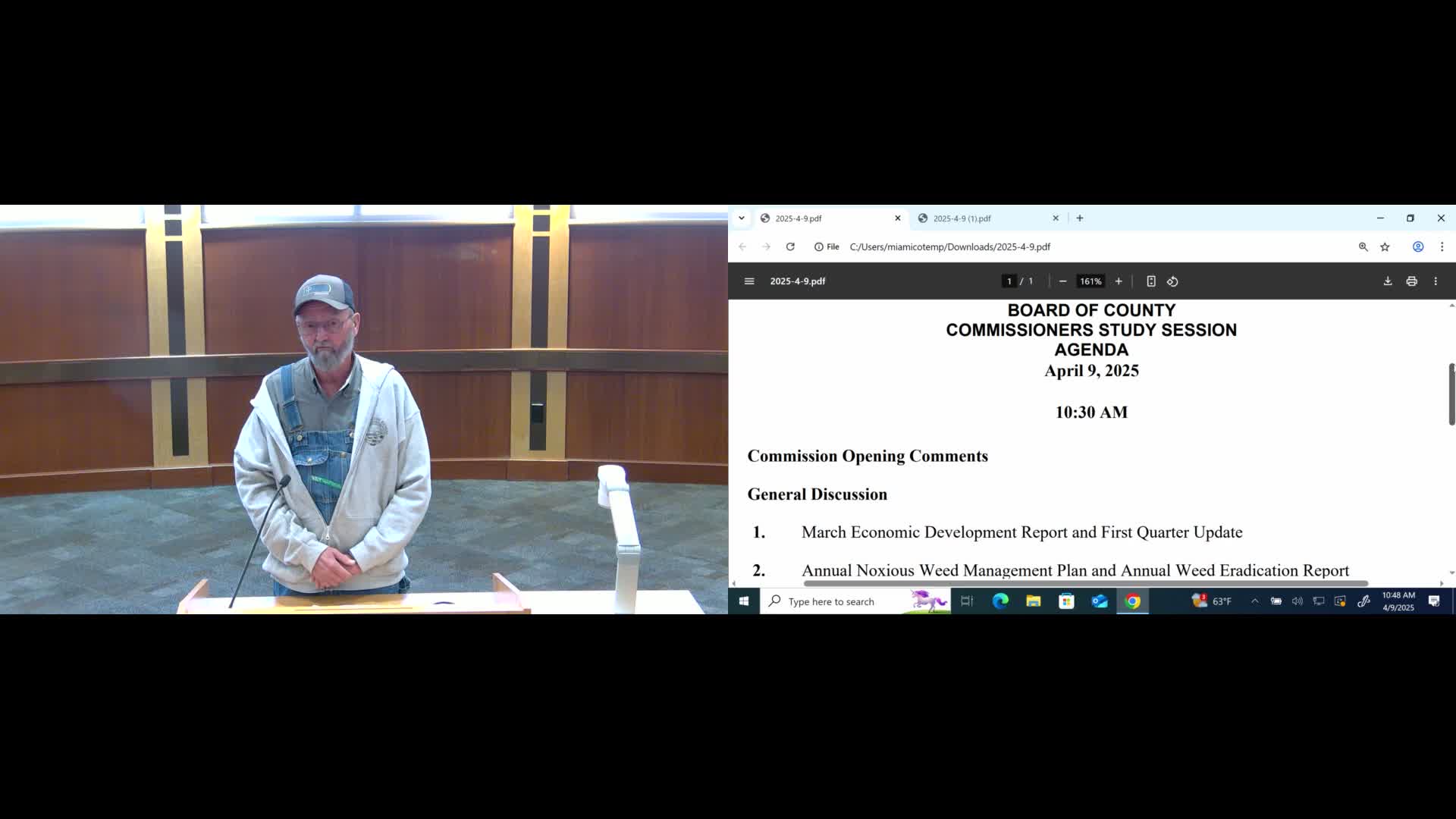
Daryl White, Miami County Noxious Weed Director, presented the annual noxious‑weed management plan and eradication report and briefed commissioners on operational details for the 2025 season.
White said the county completed brush cutting in March and expected contract sprayers to begin about May 1. "We're going back to Tordon again, so, yep," White said when asked which herbicide the county will use. He told commissioners that the county's contract spraying company has been cooperative and, because of the specialized equipment required, there are relatively few vendors able to perform large‑scale spraying.
White described the county's no‑spray sign program and recordkeeping: property owners that sign a no‑spray form are retained in the county's mapping system and staff urge landowners to check the on‑line map so contractors know which parcels are exempt. "When we see that sign, then we just don't spray that," White said, adding that the county will contact landowners if maintenance does not occur and may spray later if conditions warrant.
Commissioners asked about specific species control and treatment strategies in wooded areas; White said some species such as Sericea lespedeza are common in fields and woods and that control options in difficult terrain sometimes require aerial, drone or off‑road application by contractor. He also explained the county's spray prioritization: safety issues and roads scheduled for asphalt or chip seal work are serviced first to avoid damage to machines and improve visibility.
White told the commission the department has about 20 cost‑share agreements so far this year (last year 24) and that staff would present the formal plan and the contractor renewal on the afternoon consent agenda. He said the current contractor's agreement allows the county to renew for a third year and commissioners asked that any contract numbers be included in the formal agenda motion.
Why it matters: The annual plan sets operational priorities for weed and brush control that affect road safety, private property management and conservation objectives. The no‑spray policy and mapping tools inform landowners and contractors how exemptions are handled.
What's next: The noxious‑weed report and a proposed contractor renewal will be presented to the commission for formal approval in the afternoon meeting; staff will begin spraying and mowing operations as scheduled.