Get Full Government Meeting Transcripts, Videos, & Alerts Forever!
Get email alerts on the Road Rehabilitation topic
No spam. Unsubscribe anytime.
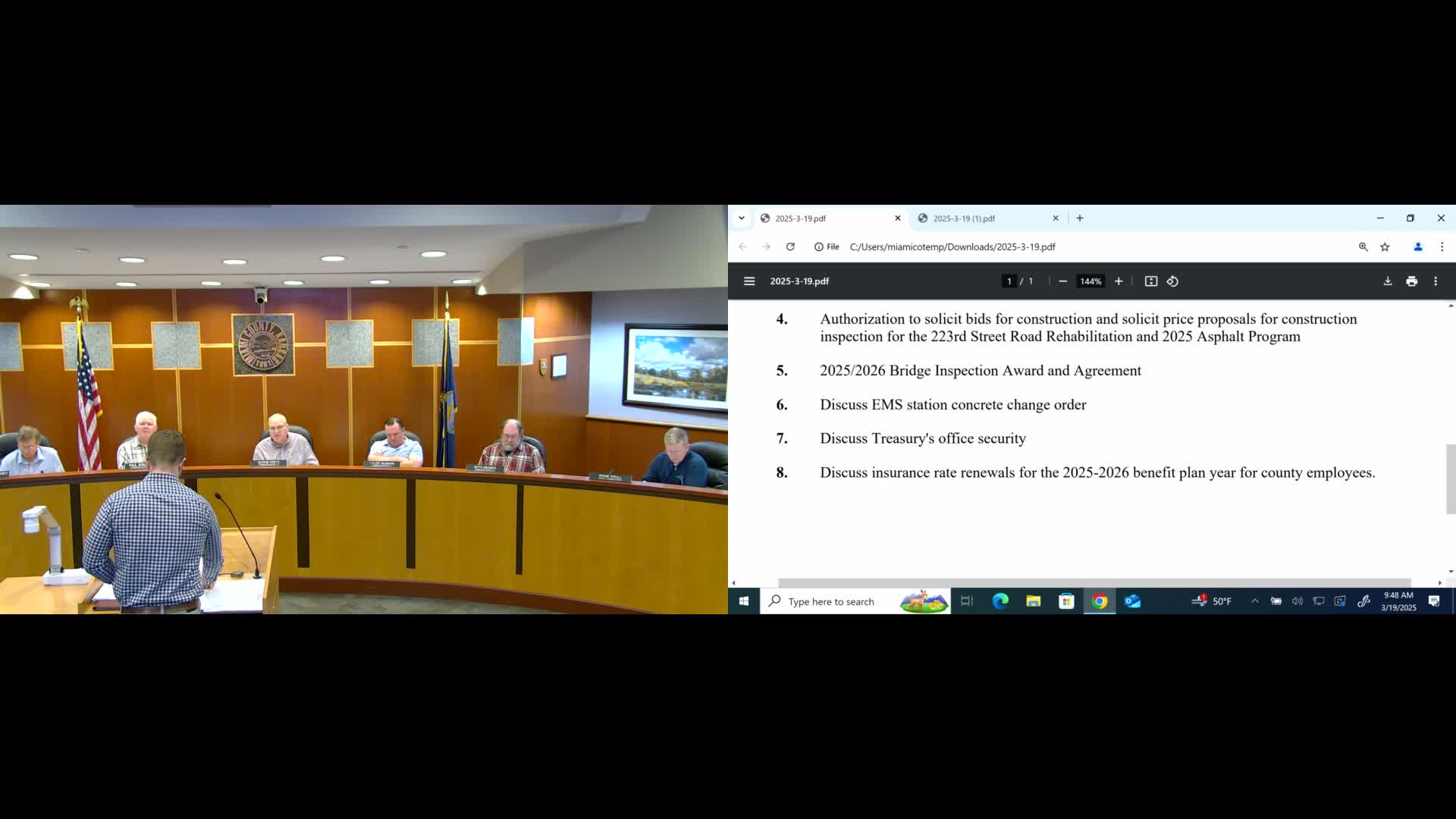
County plans partial deep‑patch rehab of 220 Third Street; $5.6 million program funds available
Summary
Engineering staff outlined a targeted rehabilitation plan for 220 Third Street and Metcalf Road that includes full‑depth patching, milling and a layered hot‑mix asphalt resurfacing across about 2.6 linear miles of problem areas; the county has approximately $5.6 million available from sales tax and road‑and‑bridge budgets.
County engineering staff presented the scope, method and financing for a rehabilitation project concentrated on 220 Third Street (and sections of Metcalf Road). The plan calls for localized full‑depth repairs: milling 2 inches, then removing up to 12 inches in problematic patches and replacing with 4 inches of crush and run and hot‑mix asphalt surfacing to achieve roughly 8–10 inches of structural section where necessary.
Staff said the areas needing full‑depth repair add up to about 2.6 linear miles. The goal is to stabilize the roadway and delay a more permanent (and far costlier) corridor reconstruction for 10–15 years. Staff warned that unforeseen deeper pavement or subgrade issues might increase the work if they surface during milling.
Financing presented: roughly $1.6 million from the county’s quarter‑cent sales tax and about $4.0 million from the 2025 road and bridge budget (asphalt and projects lines), for an approximate total program budget of $5.6 million. Staff explained contingencies if bids exceed estimates: either use a hybrid approach (county crews finish some overlays) or reduce Metcalf lane miles to keep 220 Third in the program.
Staff flagged traffic control challenges on an eight‑mile corridor with narrow lanes and farm traffic; they said the contract allows temporary lane closures if necessary but expects contractors to reopen lanes at the end of each workday. The commission asked staff to help coordinate with landowners and harvest traffic to reduce disruption.
Ending: Staff will solicit proposals/inspectors and prepare bid packages; commissioners were briefed on phasing, potential schedule windows (May–August starts) and the need to preserve the limited sales‑tax funding for other planned intersection projects.