Get Full Government Meeting Transcripts, Videos, & Alerts Forever!
Get email alerts on the Utilities Gru topic
No spam. Unsubscribe anytime.
Judge splits ruling in GRU charter referendum challenge; city attorneys recommend appeal, commissioners weigh rerun or negotiation
Summary
After a March hearing, Circuit Judge Wright granted summary judgment to the City on whether the City may call a charter-changing referendum but ruled for the Gainesville Regional Utilities Authority (GRUA) on the ballot summary language; city attorneys recommended the commission preserve appellate rights and consider a clarified re‑referendum.
A circuit court ruling on the legal challenge to November's charter referendum produced a split decision that leaves the issue unresolved as the Gainesville City Commission considers whether to appeal or run a clarified ballot measure.
City Attorney Dan Nee told commissioners that after an extensive hearing Judge Wright announced he would grant summary judgment to the city on the central home‑rule question — that the elected city commission may call a referendum proposing amendments to the city charter — but would rule for the Gainesville Regional Utilities Authority on a challenge to the ballot language, finding the summary could mislead voters. The court accepted the city's position on the separate business‑impact estimate challenge.
Why this matters: The court’s split ruling means the November referendum — which passed with nearly 73 percent of city voters — is vulnerable because the judge found the ballot summary problematic. If either side appeals, the question will likely be tied up in appellate courts for a year or more. Commissioners face two main paths: appeal the ruling now or revise and re‑run a cleaner, court‑resistant ballot question for voters.
What the judge said and why it matters Judge Wright decided the case on competing summary‑judgment motions, meaning the court treated the matter as a legal question not requiring further factual finding. On the central statutory issue — whether the state’s special act that created the GRU authority removes the commission’s ability to call its own charter amendment referendum — the court sided with the city, finding the electorate retains authority to amend the charter by referendum.
However, the judge also said the one‑sentence ballot summary the city used could be read in a way that misleads voters (he focused on grammatical construction where the modifier “elected” placed before “city commission” might be read to modify both “city commission” and “charter officer,” implying elected charter officers). The court said the ballot summary failed the standard that the chief purpose of a proposed amendment be explained without misleading voters.
City attorney’s recommendation and timing Nee advised commissioners to direct the attorney’s office to preserve appellate rights and prepare to pursue all available appellate remedies if the commission so chooses. He outlined the procedural steps and timing: the judge will issue a written order (the court asked both sides for proposed orders), then a 30‑day window to file a notice of appeal begins. Appellate briefing and possible oral argument could take roughly a year, depending on extensions and scheduling.
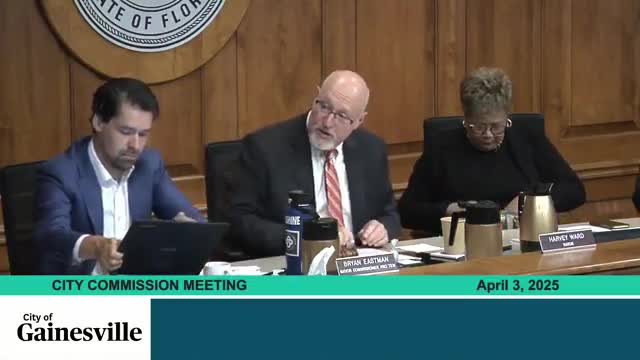
Commissioners’ reactions and options - Several commissioners, including Commissioner Chestnut and Commissioner Eastman, praised the victory on the home‑rule issue but said the ballot‑language ruling undercuts the overall result. Commissioner Eastman and others urged trying diplomacy with GRUA first — to negotiate ballot language or other solutions that would avoid prolonged litigation and provide stability for the utility. - Commissioner Willets and others favored re‑running a clarified ballot question in a special election rather than immediate appeal; they said the electorate had clearly expressed its preference and that a corrected summary should produce the same outcome. - Commissioner Engle said the commission should prepare to appeal while simultaneously preparing for a possible re‑referendum, calling for both tracks to remain open.
Public comment and community response At least one public commenter (Janice Gary) urged the commission to continue pursuing the change and noted the Legislature appears uninterested in intervening. Commissioners also reported conversations with stakeholders on both sides, including rate‑payers and GRU representatives; GRU held a board meeting the same evening.
Next steps recorded by staff City staff will wait for the written order and proposed orders from the court before filing further motions. The commission has roughly 30 days after entry of the written order to file a notice of appeal if it chooses that path. Staff recommended the commission decide on a strategy after receiving the written order and after learning whether GRUA intends to pursue any appeals of its own.
Ending note The circuit court’s split finding keeps the central policy dispute alive. The city prevailed on a core home‑rule principle but lost ground on the specific language that carried voters’ intent into the record. Commissioners signaled both readiness to defend the result on appeal and interest in returning the question to voters with clarified ballot language if litigation proves unproductive or protracted.