Get Full Government Meeting Transcripts, Videos, & Alerts Forever!
Get email alerts on the Lodging Tax Reallocation topic
No spam. Unsubscribe anytime.
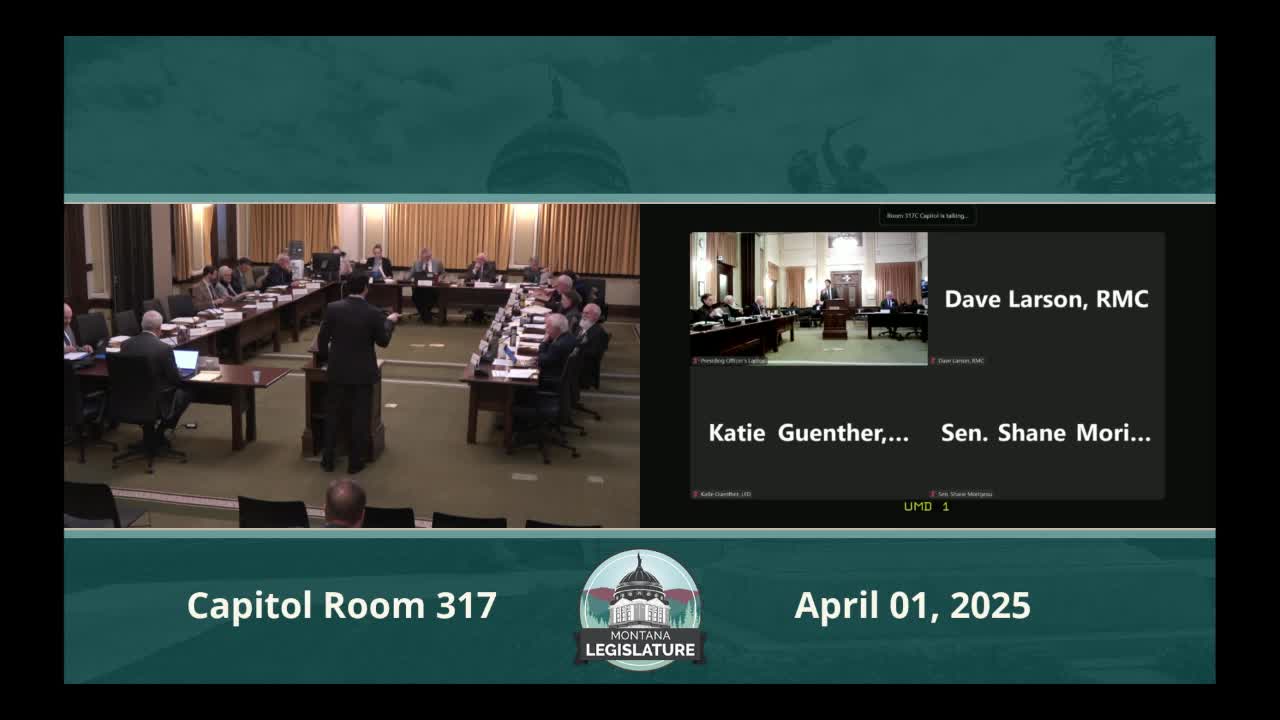
Senate committee reviews bill to reallocate Montana lodging-tax revenue, boost victim recovery fund
Summary
The Senate Finance and Claims Committee on Senate Bill 409 heard testimony about a proposal to change how Montana allocates lodging-facility (bed) tax revenue, including a larger share for emergency lodging and recovery for victims of domestic violence and human trafficking and adjusted percentages for tourism marketing, rural tourism grants and heritage preservation.
The Senate Finance and Claims Committee on Senate Bill 409 heard testimony about a proposal to change how Montana allocates lodging-facility (bed) tax revenue, including a larger share for emergency lodging and recovery for victims of domestic violence and human trafficking and adjusted percentages for tourism marketing, rural tourism grants and heritage preservation.
Senator Daniel Zolnikoff, sponsor of SB 409, told the committee the bill replaces a confusing 63% sub-allocation that auditors flagged and sets explicit percentage “buckets” to guide spending. “There was no plan. There was no vision. There were no buckets,” Zolnikoff said, explaining the bill’s intent to clarify and reallocate existing bed-tax revenue rather than create a new tax.
The bill would move the statutory allocations so that, as written in the draft discussed in the hearing, 24.5% of the statutory lodging-use tax would be designated for Department of Commerce tourism media and advertising; 16.5% for what Zolnikoff described as “real tourism” seed grants for under‑visited areas; 15.5% for tourism-related emergency services and tourism grants; and 2.5% for the Office of Economic Development for regional tourism assistance. A previously small (0.1%) emergency-lodging line for victims would be increased to 2.5% to support lodging and short-term recovery services, Zolnikoff said.
Why it matters: supporters said clearer buckets let the state target marketing and grants to spread visitation and fund emergency lodging and short-term recovery services without drawing on the general fund. Opponents on the committee pressed how the change would affect existing programs such as the Made in Montana program, trade offices, the Institute for Tourism and Recreation Research (ITRR) at the University of Montana and historic-preservation work.
Acting Director Mandy Rambo, Montana Department of Commerce, urged a do-pass and described the departmental view of shifts among line items. “The department of commerce supports this bill; we support the fiscal note,” Rambo said. She told senators the bill addresses an audit issue by splitting buckets at the point of collection rather than after collections are tallied, and that the department already has an internal spreadsheet showing the new allocations. “I already have an excel spreadsheet that I created internally,” she said when asked for a clear breakdown.
Rambo outlined specific program changes the department expects: roughly $890,000 in reductions to wayfinding/signage and tourism marketing costs attributable to vendor changes and more targeted digital buys, an increase of about $1.9 million for the rural under‑visited/tribal tourism pilot communities, and about $1.1 million more for agritourism and tourism event grants. She also said the department and industry support expanding the emergency lodging and recovery line for victims.
Industry and victim-service advocates testified in favor. Chris Avrel of the Montana Lodging and Hospitality Association said the changes support spreading visitors away from highly visited Western Montana areas into rural communities that currently receive less tourism spending. “Out of state tourists spent $5,500,000,000 in Montana last year and the tourism industry supports 66,000 jobs for Montanans,” Avrel told the committee.
Kelsen Young, executive director of the Montana Coalition Against Domestic and Sexual Violence, and Stephanie Bacus, co‑founder of a regional human‑trafficking task force, both supported the bill’s larger recovery funding. Young said the emergency lodging-and-recovery work is already operating at the Department of Justice and that the bill expands support “to additional support” for recovery after emergency shelter is provided. Bacus said the existing emergency lodging pool “has been working very well,” and urged lawmakers to extend and expand it.
Higher-education and historical‑preservation officials described expected impacts. Shauna Lyons, director of budget and planning at the Office of the Commissioner of Higher Education, said the money that flows to OCHE and then to the Institute for Tourism and Recreation Research would be “reduced by roughly $300,000,” and ITRR would need to prioritize which research projects to fund. Molly Krukenberg, director of the Montana Historical Society, said she was available to answer fiscal‑note questions about heritage accounts and preservation work in Virginia City, Nevada City and Readers Alley.
Committee members pressed for clarity on dollar amounts and timing. Senator McGillivray asked whether the allocations are percentages of a fixed base and what that base would be. Rambo and others pointed to the state revenue estimate used for budgeting: “according to HJ 12 for the next fiscal year… it’s $64,144,000,” Rambo said when members sought a concrete starting number. Senators also asked for a line‑by‑line comparison to last session’s allocation (Senate Bill 540) and asked staff to provide a side‑by‑side “bucket chart.”
Several senators expressed concern about cuts to the Made in Montana program, trade offices and university research funding. Rambo replied that the bill reduces some marketing and wayfinding funding but increases pilot and grant lines for rural tourism and agritourism; she also emphasized cost savings from a new in‑state marketing vendor and a shift to more targeted digital buys.
What the committee directed: no final vote was taken on SB 409 during the hearing. Committee members asked Commerce staff to provide a written breakdown of the new buckets and any related materials (the department agreed to produce a spreadsheet/chart), and the committee chair said executive action would be scheduled at the next executive-action session. “That closes hearing on Senate Bill 409,” the chair said, and asked the department to provide the “bucket drawing” for the record.
Notes and limits: the hearing record shows discussion, testimony and questions but no final committee action on SB 409 in this session. Allocation percentages and dollar figures above are taken from witness testimony in the hearing; projected amounts depend on the base revenue estimate (HJ 12) and will vary with actual collections.
Ending: The committee left SB 409 without a vote and asked department staff to return a detailed allocation chart. Committee members said they would take executive action on the bill at a later meeting after receiving that information.