Get Full Government Meeting Transcripts, Videos, & Alerts Forever!
Get email alerts on the Public Defender Family Defense topic
No spam. Unsubscribe anytime.
House Judiciary hears bill to create public‑defender family defense units for parents and children
Summary
Sen. Dennis Lehi and Office of State Public Defender witnesses told the House Judiciary Committee that Senate Bill 151 would create dedicated Office of Public Defender units to represent parents and children in dependency and neglect cases, shifting work from contract attorneys to in‑house FTEs over a multi‑year transition.
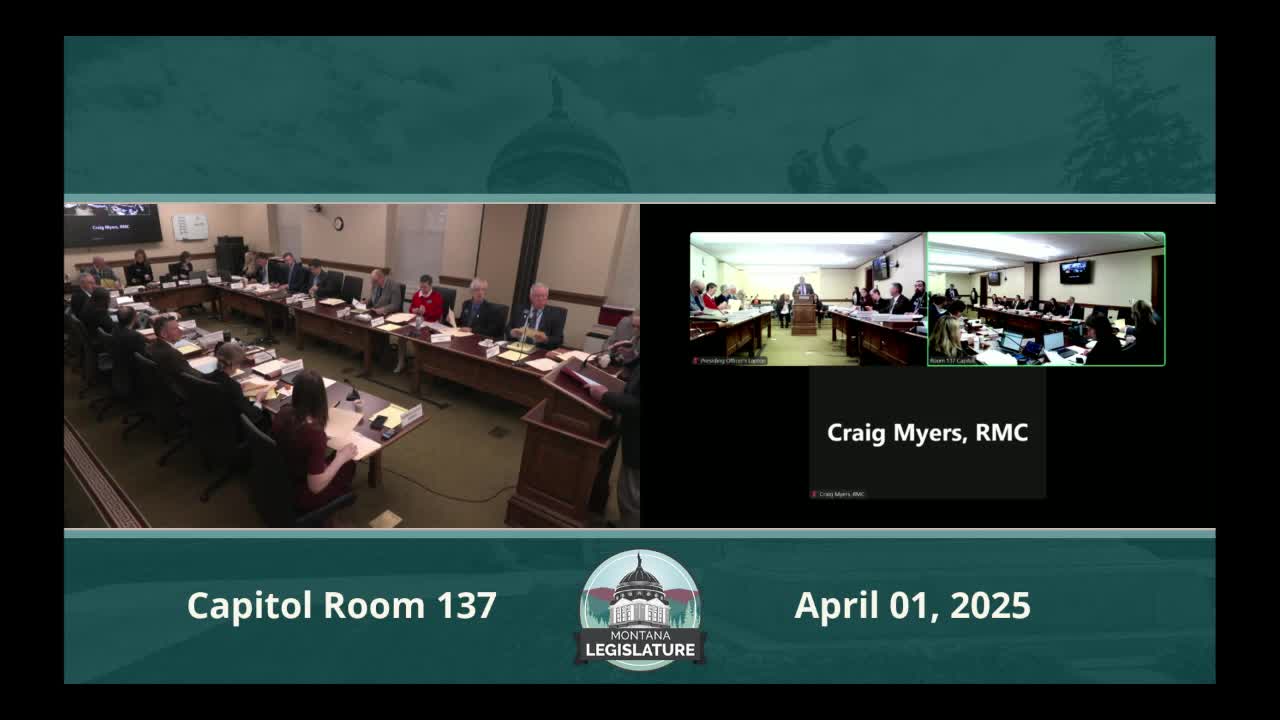
Senator Dennis Lehi, sponsor of Senate Bill 151, told the House Judiciary Committee on April 1 that the bill would direct the director of the Office of State Public Defender (OPD) to establish discrete organizational trial units to provide counsel to parents and children in dependency and neglect proceedings.
The change is intended to move representation away from the mixed contract model toward state-employed attorneys who would follow standardized practices developed by OPD’s family defense bureau. "What this bill does is direct them to provide no more than 2 organizational trial units, provide counsel to parents, and on line 9, establish organizational trial units, provide counsel to children," Lehi said during his opening remarks.
Why it matters: Committee members heard that dependency and neglect (DN) cases often require quick assignment and specialized handling. Witnesses from OPD said their staffed units assign attorneys faster and provide consistent, specialized representation statewide — a difference supporters say improves timely advocacy at emergency protective services (EPS) hearings and beyond.
Brett Shandelson, director of the Office of State Public Defender, told the panel the OPD operates a mixed model that uses both state-employed defenders and private contractors. He said the bill would allow OPD to continue the centralized FTE structure it used after 2023 policy changes and extend it to represent children and conflicted parents. "This bill would ensure that that that can continue into the conflict parent representation and children representation, as well," Shandelson said.
Kelly Driscoll, Family Defense Bureau chief at OPD, gave data on assignment speed: the bureau’s FTE‑managed cases averaged one day from notice to assignment, while contractor‑assigned lead counsel averaged six days. "Within 1 day of our office being notified that there's been a removal we open the case, we run a conflict check, and we assign counsel," Driscoll said, describing why OPD considers FTE staffing better for fast, consistent representation.
Committee members asked about costs and the fiscal note. Lehi and OPD witnesses described a multi‑year transition that initially appears to double‑staff as contract work phases out and in‑house positions are phased in. Senator Lehi said the fiscal note’s first two years are conservative to reflect that overlap and that by fiscal year 2028 the net cost stabilizes. OPD witnesses also said federal 4E reimbursement plays a role in offsetting some costs.
Several committee members pressed about geography and specialization. Driscoll said OPD’s family defense bureau operates statewide with attorneys in Kalispell, Missoula, Butte, Helena, Billings and Great Falls and that the new units would be carved out organizations with managing attorneys and specialization limited to DN work.
The hearing included informational witnesses from the Department of Public Health and Human Services; staff answered committee questions about EPS hearings and distinctions among DN, DI, and other proceedings.
Next steps: The bill remained in committee for possible amendment and later action; committee deliberations did not produce a formal vote during the hearing.