Get Full Government Meeting Transcripts, Videos, & Alerts Forever!
Get email alerts on the Student Technology Policy topic
No spam. Unsubscribe anytime.
Cell phone working group weighs 'off‑and‑away', pouches and implementation hurdles for Wayland schools
Summary
Committee members and staff heard a working‑group update March 26 on phone policies. Presenters described neighboring districts' approaches—off‑and‑away, Yonder pouches and pouches/devices—stressed implementation questions and said hard data on academic or social impacts is limited.
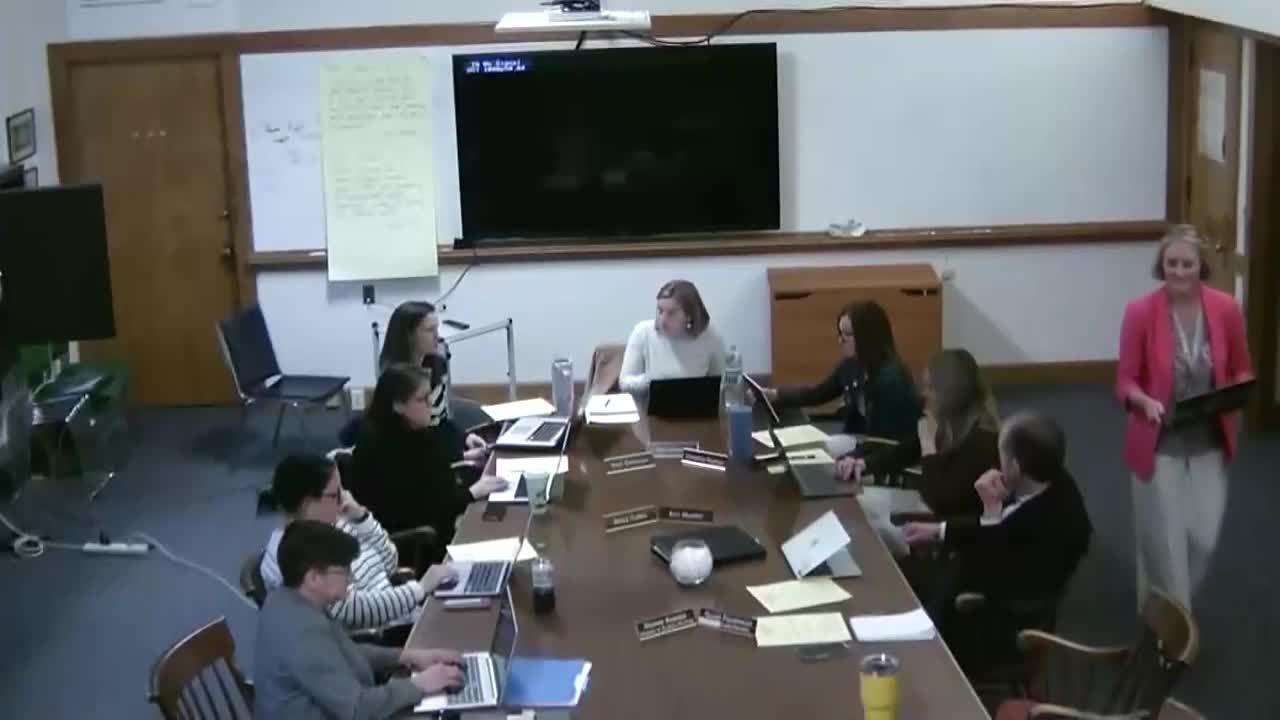
The Wayland School Committee on March 26 heard a detailed update from its cell phone working group outlining options for restricting student access to phones and other smart devices during the school day.
Kate, a staff member who presented the group’s findings, said the group invited middle‑school principals from Natick, Wellesley and Newton to describe their policies and implementation experience. The principals described three distinct approaches: “off‑and‑away” storage in homeroom or lockers (Natick), a cautious working‑group approach with pouches being considered (Wellesley), and assigned Yonder pouches (Newton) that initially required extra staffing but now report benefits.
Why it matters
Committee members were focused on implementation — staffing at entrances, consistent enforcement and community buy‑in — rather than just choosing a policy. Presenters emphasized that a policy’s success depends on predictable, uniform application across students and buildings and clear communication to families.
Implementation details and evidence
Presenters described Newton’s experience using Yonder pouches: the first week was “rocky,” they staffed three entrances with two adults each (about six staff for the morning entry period) initially, and staff reported students adapted and social interactions increased. Wellesley is considering pouches because voluntary “off‑and‑away” rules produced inconsistent enforcement. Natick’s model permits either lockers or leaving phones off and away in backpacks and retains some flexibility to avoid confiscating private property.
The working group reported limited hard data on learning outcomes or behavior change; most district reports cited so far are anecdotal. Presenters said Framingham is collecting bathroom‑use data through an app and that some schools have reported reduced bathroom trips and fewer class disruptions, but hard, comparative academic measures were not available.
The group also discussed technology options such as hardware “bricking” devices (a small device that can disable apps) but noted current products are individual‑user programmed and not yet broadly deployable at the building level. Working‑group members said recommendations due April 30 aim to include implementation steps for any options presented.
Next steps
The working group plans two meetings in April to refine guiding principles and finalize recommendations for the April 30 meeting, and members said they will try to include concrete implementation steps and cost estimates in the report.