Wayland outlines expanded student services, plans elementary co-teaching and new 18–22 transition program
Loading...
Summary
District staff reviewed this year's special-education work — new IEP and PowerSchool rollout, building-based special-education leadership, a shift to skills-based classrooms — and described plans to start elementary co-teaching and a local program for students aged 18–22 next school year.
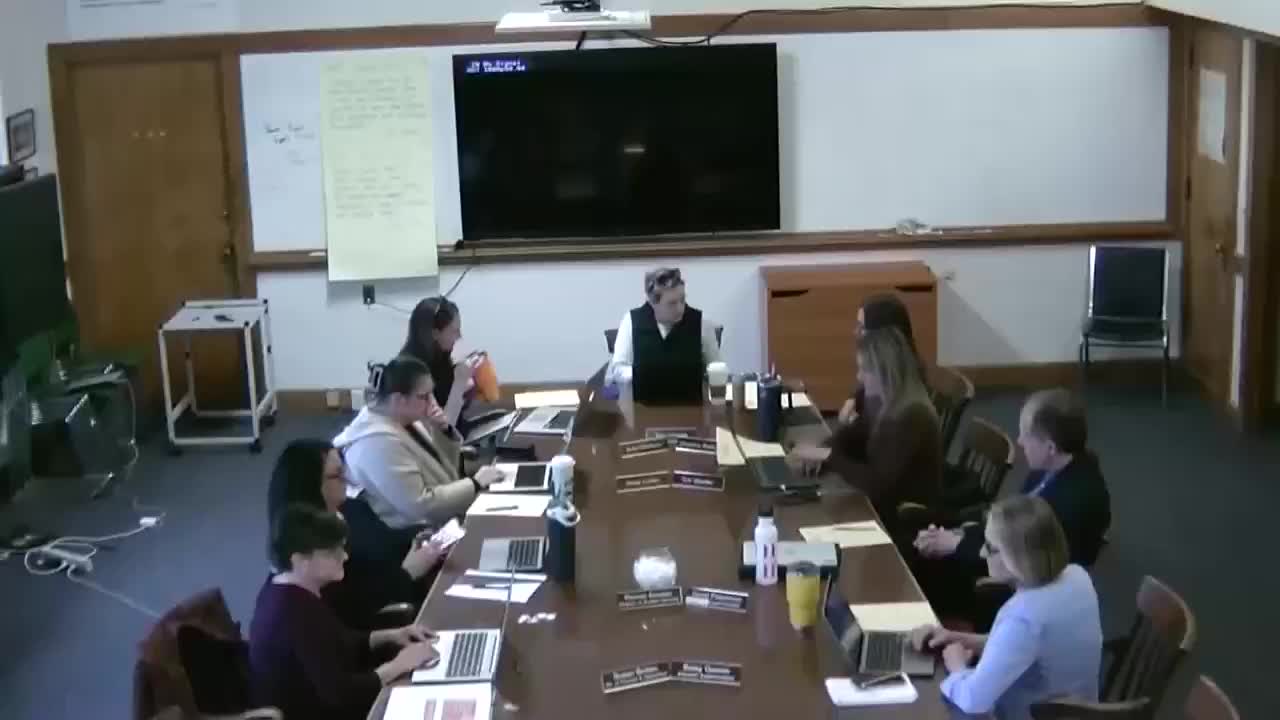
Wayland School Committee members heard a broad update April 9 on the district's student services work, including program changes this year and two initiatives planned for 2025–26: rolling out co-teaching in elementary classrooms and opening a local transition program for students ages 18–22.
The update, delivered by Ronnie, a student-services staff member, summarized this year's priorities: expanding language-based programming at the high school, shifting middle- and high-school services from “org skills/LRT” toward a targeted skills‑based model, completing a districtwide migration to PowerSchool and adopting a new IEP format. Ronnie said the district will add a second teacher for the high-school language-based program and extend that program through 11th grade next year.
District officials framed the skills shift — moving from more general work-completion support to instruction targeted at students' Individualized Education Program (IEP) goals — as necessary but fast for some families. "Some of the feedback was maybe we could have started it slow," Ronnie said about the rollout; committee members said the district has adapted and will use lessons learned for future changes.
Administrators described building-based special-education leadership as a sustained change. The district has designated building-based leaders for each school to improve consistency in eligibility determinations, IEP writing and timelines; staff said the change sped decision points such as Extended School Year (ESY) planning and improved communication with families.
On data systems, staff reported district staff and service providers have begun using the new IEP form and are transitioning more widely to PowerSchool; the district received a state grant and said it will use local funds and the grant for additional professional development and goal-writing supports.
The committee spent significant time on two next‑year initiatives:
- 18–22 transition program: Ronnie described a planned in‑district program at the high school for students who remain eligible for special-education services through age 22. The program is intended to teach transition skills — laundry, cooking, money management, travel training, social and vocational skills — in the students' home community rather than sending them to more distant, out‑of‑district placements. "It is not a TCW," Ronnie said in response to a misreporting earlier; she emphasized the program will be based at Wayland High School and staffed by existing teachers with transition experience. The initial cohort is small: staff said the program would start with two or three students and grow over time. Staff said they plan partnerships with neighboring districts and agencies (for example, MassBay and local employers) to broaden student opportunities and, eventually, to consider incoming tuition students from other towns after the program establishes a track record.
- Elementary co-teaching rollout: The district will pilot co-teaching in elementary grades next year, pairing a general-education teacher and a special-education teacher, often with a teaching assistant present. Administrators described six co-teaching models (team teaching, station teaching, parallel teaching, one-teacher-one-assist, alternative teaching and one teaching while the other observes) and said those models should be used flexibly depending on lesson goals. The district plans a staggered rollout (initially targeting upper elementary grades such as grades 3–5), summer and fall professional development, and consulting support from Aspire for classroom observation and feedback. Staff stressed co-teaching classrooms remain general-education settings with targeted accommodations rather than separate special-education classrooms.
Committee members asked about practical matters including identification of partner teachers, impact on pullouts for specialized instruction (staff said pullouts would be reduced but not eliminated), screening and tiered instruction, and how the district will partner with local businesses for vocational experiences. Ronnie and other staff said they had sufficient existing staffing to begin the phased pilot and that teacher volunteers had stepped forward.
Why it matters: The initiatives reflect twin goals administrators repeated across the presentation — increasing in‑district capacity so students can receive transition and vocational programming closer to home and integrating special-education supports into general-education settings to reduce stigma and loss of instructional time.
The committee and staff said further outreach will follow: informational sessions for CPAC and families, continued professional development for teachers and progress reports as the programs begin in 2025–26.