Get Full Government Meeting Transcripts, Videos, & Alerts Forever!
Get email alerts on the Budget topic
No spam. Unsubscribe anytime.
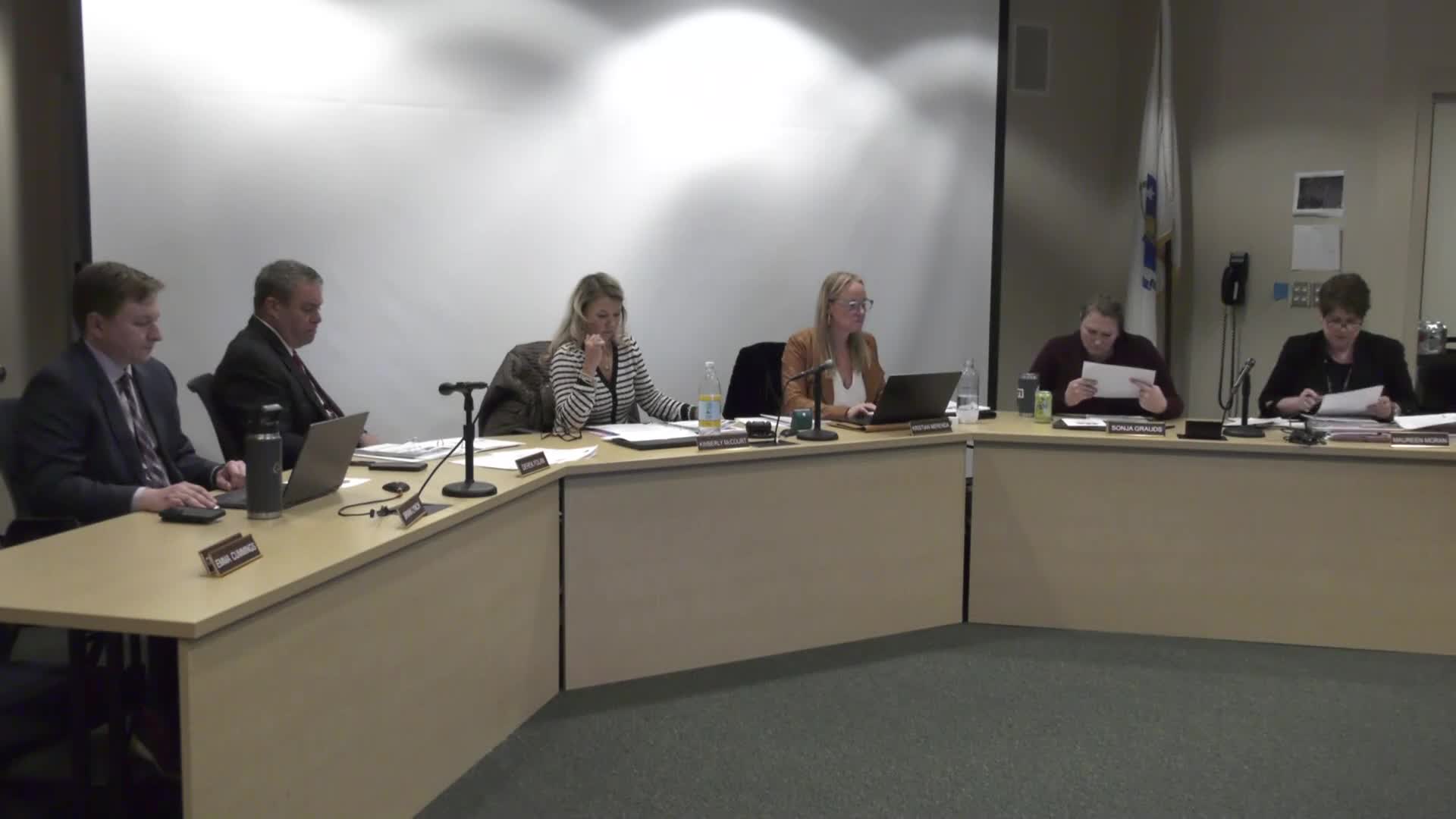
Canton school committee holds public budget hearing, approves FY26 operating budget and opts out of school choice
Summary
The Canton School Committee on March 13 held a public budget hearing and voted to forward a bottom-line FY26 operating budget to the town after public comment and staff discussion about special-education funding risks.
The Canton School Committee on March 13 held a public budget hearing and voted to forward a bottom-line operating budget for fiscal year 2026 to the town, after more than an hour of public comment and detailed staff discussion about special-education costs and revenue assumptions.
The hearing drew several Canton teachers who urged the committee to seek a budget large enough to reduce class sizes and special-education caseloads. “One of the most effective ways to ensure high quality education is to reduce class sizes and caseloads for service providers,” said Amanda Capozzi, a fourth-grade teacher at Hanson School, during public comment. Heather Lazaro, a health teacher at Luce School, described handling “25 and at times 26 kids at once” in specials and said larger groups reduce what specialists can offer students.
Why it matters: The committee’s bottom-line number will go to the town’s finance process (Fincom and town meeting). Staff said several statewide and federal funding streams—most notably Massachusetts’s special-education “circuit breaker” reimbursement and federal IDEA grants—are materially uncertain and could affect final school financing after the committee’s vote.
During the public hearing the district’s finance staff described how they built the proposed budget. “The proposed amount for this line item is reflective of what our renewals for all of the technology infrastructure that we require are projected to cost,” said Mr. Lynch, a district finance staff member, explaining a re‑sizing of technology and payroll allocation lines. Lynch said the business office performed a three‑year look‑back on expenditures and “right‑sized” many account lines to match recent actual spending and to improve real‑time tracking.
Special-education financing and risks featured heavily in discussion. Officials said the district’s out‑of‑district tuition and transportation expenditures total roughly $10 million annually; the budget presentation assumes roughly $5 million of that will be covered by state and federal reimbursements (circuit breaker and IDEA and related grants). Lynch told the committee the district used a conservative assumption for circuit‑breaker transportation/reimbursement levels when projecting FY26 revenue. He also said the district has used the town’s special‑education reserve in recent years to address large, unexpected cost spikes and that the reserve is intended for extraordinary, not recurring, uses.
Public comment and committee questions repeatedly asked for greater transparency into personnel and contract costs. One committee member reiterated a request for an itemized view of personal‑service contracts and the “total compensation package” for those contracts so the committee can better forecast pressure points in future years. Staff said those totals are included in the district’s internal planning materials and offered to provide additional breakdowns during follow-up meetings.
Votes at a glance: - FY26 operating budget—motion to approve the district’s FY26 operating budget bottom line (amount recorded in the meeting materials and discussion as approximately $59 million; transcript contains two inconsistent mentions: $59,033,748 and $59,333,748). The committee voted to approve the bottom-line budget and forward it to Fincom and town meeting. Outcome: approved. - Out‑of‑country travel—the committee approved a faculty‑led educational trip to Paris for students enrolled in French for the 2025–26 school year (planned travel during April vacation; trip operator ACIS; estimated cost per student approximately $4,200; chaperone ratio 1 adult per 8 students; priority given to French students). Outcome: approved. - School choice—the committee voted to opt out of Massachusetts School Choice for the 2025–26 school year, citing space and enrollment pressures. Outcome: approved. - Consent agenda—the committee approved warrants and routine consent items including accounts‑payable and payroll warrants and a $500 Special Olympics grant (see meeting packet). Outcome: approved.
What the vote does (and does not): The committee’s vote approved the bottom-line operating number to send to the town’s finance process and does not lock in every detailed line item. Committee members and staff confirmed the district retains some flexibility to adjust individual account lines as the town and state final‑ize revenues and as additional grant or reserve funds are appropriated.
What promoters and critics said: Teachers at the hearing urged a larger budget to address class sizes and caseloads. “We want to ensure that every student receives the individualized attention that they deserve,” said Liz Lyden, a fifth‑grade teacher at Hanson School. Committee members and finance staff repeatedly cautioned that several revenue streams remain uncertain and that the district must plan conservatively.
What’s next: The bottom‑line number approved by the committee will go to Fincom for review; Fincom’s meeting calendar was discussed in the hearing. Town meeting and state budget finalization remain the next steps that could change available funds and require the district to request additional appropriations or use reserve money for one‑time needs.
Ending: Committee members and staff said they will continue quarterly coordination meetings with the town’s finance committee to monitor special‑education costs and state/federal reimbursement levels and to reduce the risk of mid‑year surprises.