Get Full Government Meeting Transcripts, Videos, & Alerts Forever!
Get email alerts on the Student Opportunity Act topic
No spam. Unsubscribe anytime.
Canton district reports small gains for targeted groups, shifts next-year focus to tier‑1 instruction
Summary
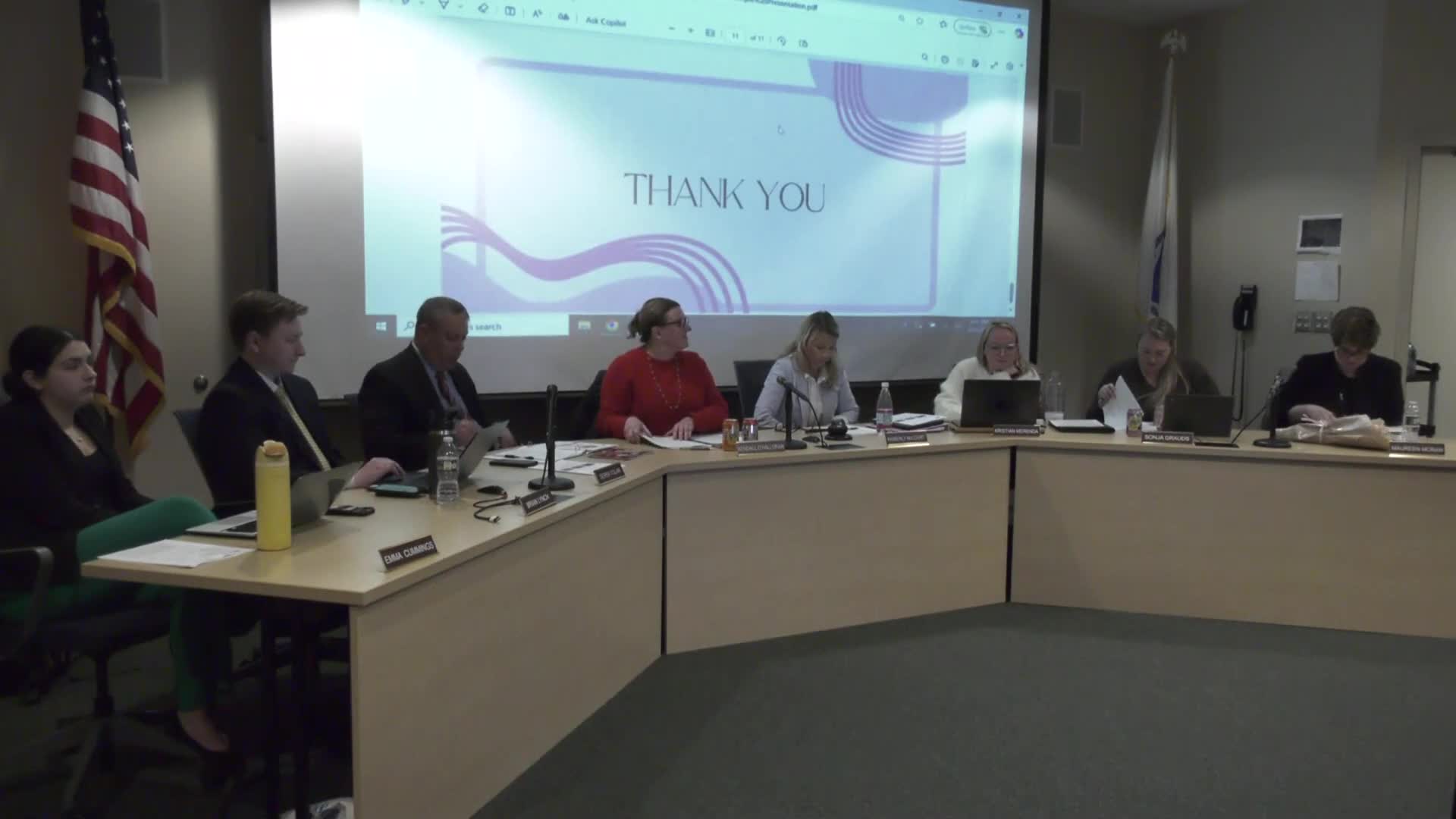
Superintendent Follin and Assistant Superintendent Lauren Rooney reported to the Canton School Committee on March 27 that the district’s Student Opportunity Act (SOA) progress update shows modest, measurable gains for several targeted subgroups and an adjusted plan for year two because of tight finances.
Superintendent Follin and Assistant Superintendent Lauren Rooney reported to the Canton School Committee on March 27 that the district’s Student Opportunity Act (SOA) progress update shows modest, measurable gains for several targeted subgroups and an adjusted plan for year two because of tight finances.
The report said the district’s chosen evidence‑based practices remain “effective student support systems” and “comprehensive tiered supports.” Rooney told the committee the district saw 2–6 percentage‑point increases from fall to winter for Black and Hispanic/Latino students on diagnostic measures, and an average 7 percentage‑point increase for students with disabilities.
Why it matters: the SOA requires districts to plan how state education dollars will be used to support the students who need the most help; the update is an annual checkpoint that the state expects. Canton tied its SOA plan to district goals and used STAR and IXL diagnostic data to track progress going into MCAS season.
Focal findings and next steps - The district continued professional development this year on educational equity and maintained school‑level student support team processes, Wayfinder implementation and culturally responsive practices, Rooney said. - Universal screening at elementary (STAR) and expanded diagnostics at the middle school were used to identify students for intervention; the district added ELA diagnostics at the middle school this year. - Rooney reported the district purchased supplemental math materials for substantially separate middle‑school math classes to align with Reveal Math. - For year two, leaders plan to prioritize professional development on co‑teaching and differentiated Tier 1 instruction in every building so fewer students require Tier 2/Tier 3 supports; they also plan more focus on teacher collaboration time, particularly at middle and high school where schedules complicate co‑planning.
Budget limits and implications Rooney and Follin said the district planned to hire a high‑school instructional coach and to continue previously ESSER‑funded middle/high school math interventionists, but constrained budgets make those hires unlikely for next year. The district will instead refine MTSS implementation, strengthen Tier 1 instruction and seek grants where possible.
Family and community outreach Rooney highlighted family learning nights at the elementary schools with translation and outreach, expanded English Learner Parent Advisory Council (ELPAC) participation, and targeted events for families of students with significant special needs. She said the district will use parent and staff feedback to shape next year’s professional development.
What the committee asked Committee members asked for clarification about how the district defines equity (Rooney described it as ensuring each student gets the supports they need to reach a common standard) and about links between diagnostic gains and MCAS targets. Rooney said the district has three‑year growth targets in its improvement plans and will compare MCAS results to those benchmarks when state scores are released.
Superintendent Follin said the state Department of Elementary and Secondary Education advised Canton to “stay the course” with the chosen evidence‑based practices and focus on strengthening core instruction.
A spokeswoman summarized, “The district will prioritize Tier 1 instruction improvements, co‑planning time and teacher coaching where feasible; staffing additions remain contingent on budget and grant funding.”
Ending Rooney and Follin said they will return with a year‑two SOA update next March and will continue to use STAR/IXL diagnostics and MCAS outcomes to evaluate whether the district’s strategy closes achievement gaps.