Get Full Government Meeting Transcripts, Videos, & Alerts Forever!
Get email alerts on the Public Health Preparedness topic
No spam. Unsubscribe anytime.
Pierce County health officials review five years since COVID‑19, urge sustained investment and tailored communication
Summary
Public health directors and the Washington Public Health Advisory Board (FAB) reviewed local COVID outcomes and proposed policies to strengthen preparedness, data systems and community-integrated response planning.
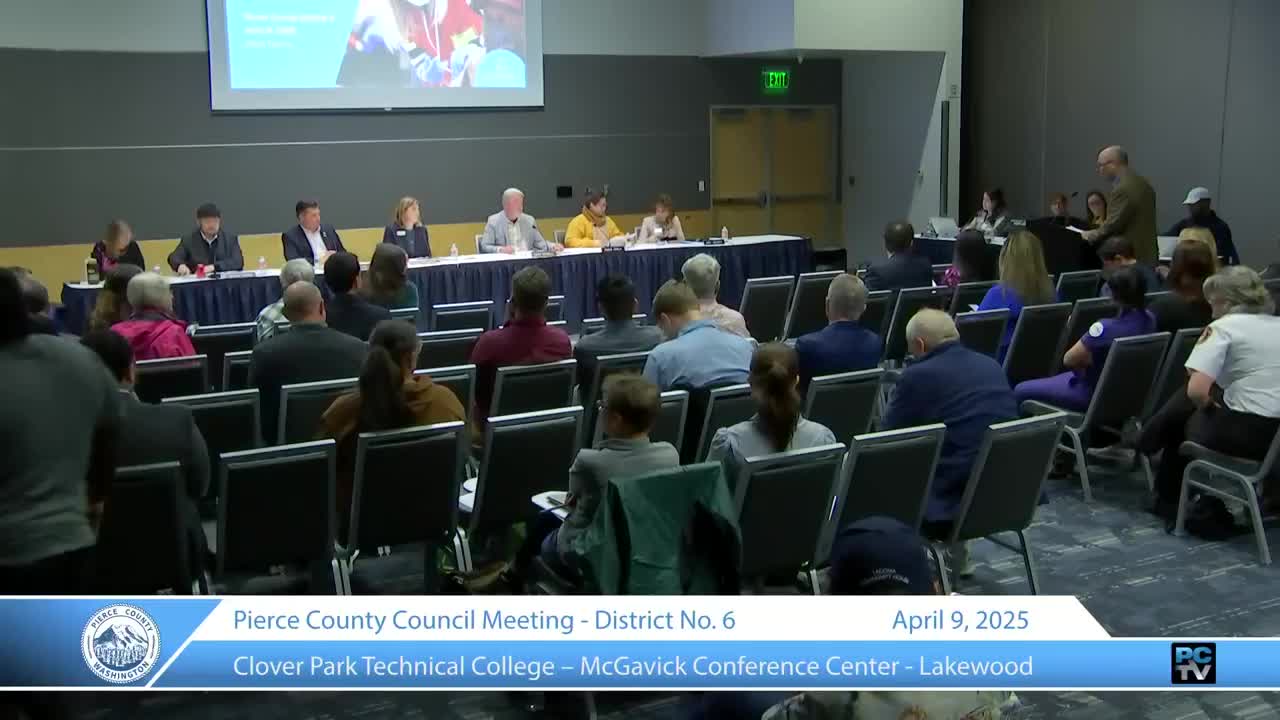
Nigel Turner, division director for disease prevention and management at the Tacoma-Pierce County Health Department, told the council on April 9 that the county’s COVID-19 response was unprecedented and highlighted both measurable outcomes and persistent challenges.
Turner said Pierce County recorded 1,789 deaths attributed to COVID‑19 and that the county and its partners distributed “over three-quarters of a million” test kits, hired more than 600 people to support the response, conducted millions of calls and texts to cases and contacts, and administered roughly 1.8 million vaccinations during the pandemic response.
Why it matters: County officials and the state advisory board used the five-year milestone to underscore that tailored messaging, durable funding, tribal data sovereignty and flexible supply chains are necessary to shorten response times and reduce inequitable impacts in future public-health emergencies.
Turner described the public-health response timeline, noting early community testing at the Tacoma Dome, the first local vaccine clinic on Dec. 26, 2020, and the end of unified command and the county emergency proclamation in 2022. He emphasized lessons learned including the need for early, clear and empathetic communication and for planning that recognizes variable access among cultural and ethnic groups.
Representatives from the Washington State Public Health Advisory Board (FAB) — including Alice Fong and physician Bill Horota — presented the board’s recommendations after reviewing after-action reports and community testimony. FAB recommended sustainable funding for foundational public health services, streamlined and tribal-honoring data and communications systems, and community-integrated emergency planning that preserves supply-chain resilience and expands telemedicine and equitable access to care.
Fong said the FAB prioritized relationship-building with marginalized communities and reengaging tribal and immigrant voices to produce recommendations that reflect local needs. Horota summarized the FAB’s view of foundational public health services and pointed to a 2018 transformation assessment that found inconsistent implementation across local health jurisdictions, an issue the board says requires predictable funding and shared services.
Council members asked about measles and vaccine hesitancy; FAB and health-department presenters noted kindergarten MMR coverage in Pierce County had declined from about 95 percent to roughly 91 percent and urged continued community engagement and access work.
No council action was taken; presenters requested continued collaboration between the county, local providers and state partners to implement the FAB recommendations and to preserve ARPA funds already directed to preparedness work.
Quotes are attributed to presenters who spoke during the April 9 meeting.