Get Full Government Meeting Transcripts, Videos, & Alerts Forever!
Get email alerts on the Fairgrounds Operations topic
No spam. Unsubscribe anytime.
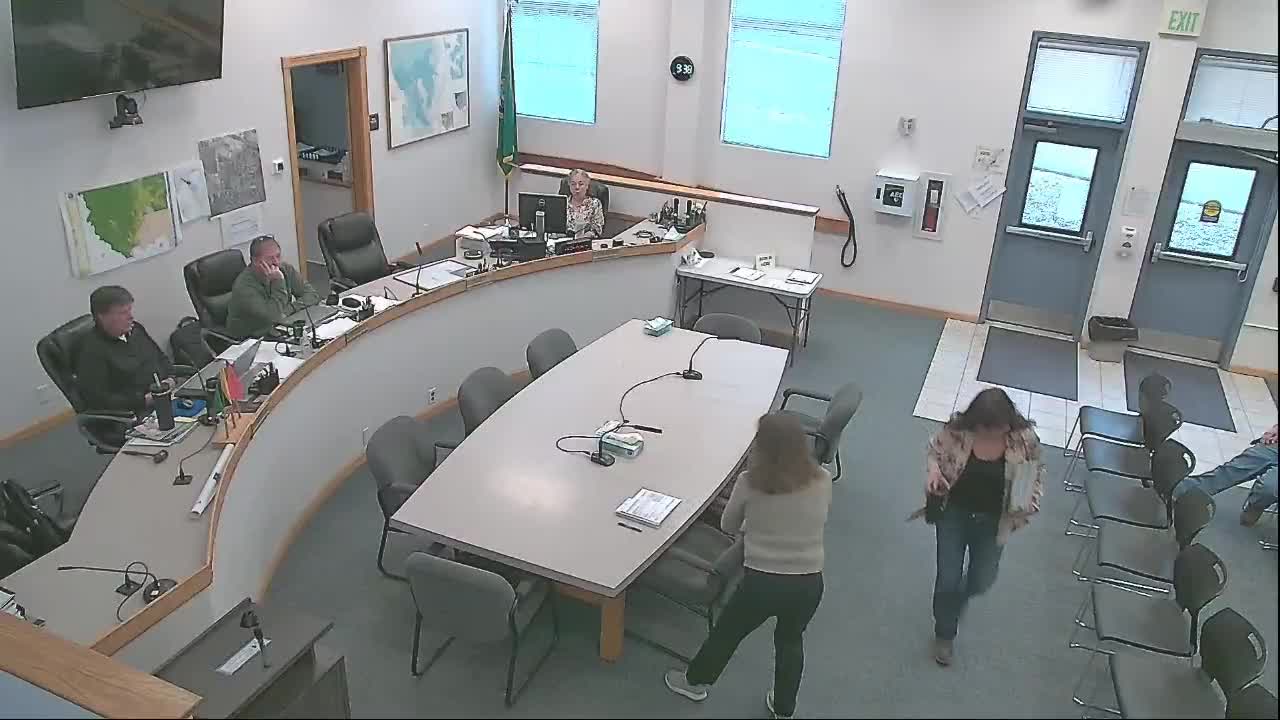
Commissioners discuss fairgrounds volunteer background checks, rentals and repairs; no final vote
Summary
Commissioners and staff clarified a previously adopted resolution on background checks for fairgrounds volunteers and superintendents, discussed accepting WSU checks, debated a Rotary proposal for a sound system trade worth about $50,000, and reviewed multiple maintenance and contract issues at the fairgrounds.
Commissioners and staff used a regular meeting segment to review the county’s fairgrounds operations, focusing on volunteer background checks, rental contracts, a Rotary Club proposal to upgrade a sound system, and multiple maintenance issues.
Background checks: The county earlier adopted a resolution requiring background checks for fair-related volunteers in some roles. At the meeting, commissioners and staff said the intent had been to require checks for people in roles involving frequent contact with youth — for example, superintendents and Fair Advisory Committee (FAC) members — not for every occasional volunteer. Commissioners discussed clarifying the resolution so the county will accept background checks done by outside entities (for example, Washington State University for 4‑H leaders) if those checks are “equal to or greater than” the county’s process. The county said it will update the resolution language to allow acceptance of current background-check documentation from outside organizations and to clarify which volunteer categories are covered.
Sound system proposal: Commissioners discussed a Rotary Club proposal to replace the fairgrounds’ sound system with a new system valued at roughly $50,000. The Rotary asked for a county contribution of roughly $25,000 in usage credits rather than cash. Commissioners said they appreciated the Rotary’s work but could not justify committing that level of county revenue without a business plan showing weekday usage and projected revenue that would offset lost rental income; one commissioner asked for a plan demonstrating how weekday capacity would be built and how much revenue the upgrade would generate. No final pledge or vote was recorded; commissioners asked the Rotary to return with a usage plan and discussed negotiating a better split of the credit.
Maintenance, contracts and infrastructure: Fairgrounds staff described recent operational problems: a water line failure damaged piping and left the Burke Building without water; staff explained how multiple valves and lines interact in the RV and rodeo areas and said the repair plan will reroute and eliminate problematic sections. Staff also reviewed rental-contract changes that separate north-end facility rentals (Agriplex, rodeo grounds, pace track) from other building rentals, and noted updates to race-gate hitch repairs and signage proposals. The FAC asked to post “no pets except service animals” signs at gates and ticket booths; staff described sign sizes and suggested aluminum or laminated cardstock options.
Other items: The Museum Advisory Committee requested modest supply funding; commissioners said planning’s budget could likely cover small expenses such as pencils or materials. Staff also reported on a new sandstone cornerstone replacement at the courthouse and asked whether any time capsule within the cornerstone should be opened; commissioners said they had no definitive record and would ask the contractor for guidance.
What happened next: Commissioners asked staff to draft clarifying language for the background‑check resolution (including acceptance of outside background checks where equivalent), asked the Rotary for a usage/revenue plan on the sound-system proposal, and directed maintenance staff to proceed with repairs and to document contract and punch-list items for vendor payments.