Get Full Government Meeting Transcripts, Videos, & Alerts Forever!
Get email alerts on the Coastal Resilience Fellowship topic
No spam. Unsubscribe anytime.
County to apply to host Washington Sea Grant Coastal Resilience fellow to study shoreline vulnerability
Summary
Clallam County staff asked permission to apply to host a two-year, non-monetary Washington Sea Grant Coastal Resilience Fellowship to inventory coastal vulnerabilities (including 3 Crabs, Diamond Point and Balding Beach), improve outreach and inform regulatory and programmatic responses to shoreline hazards.
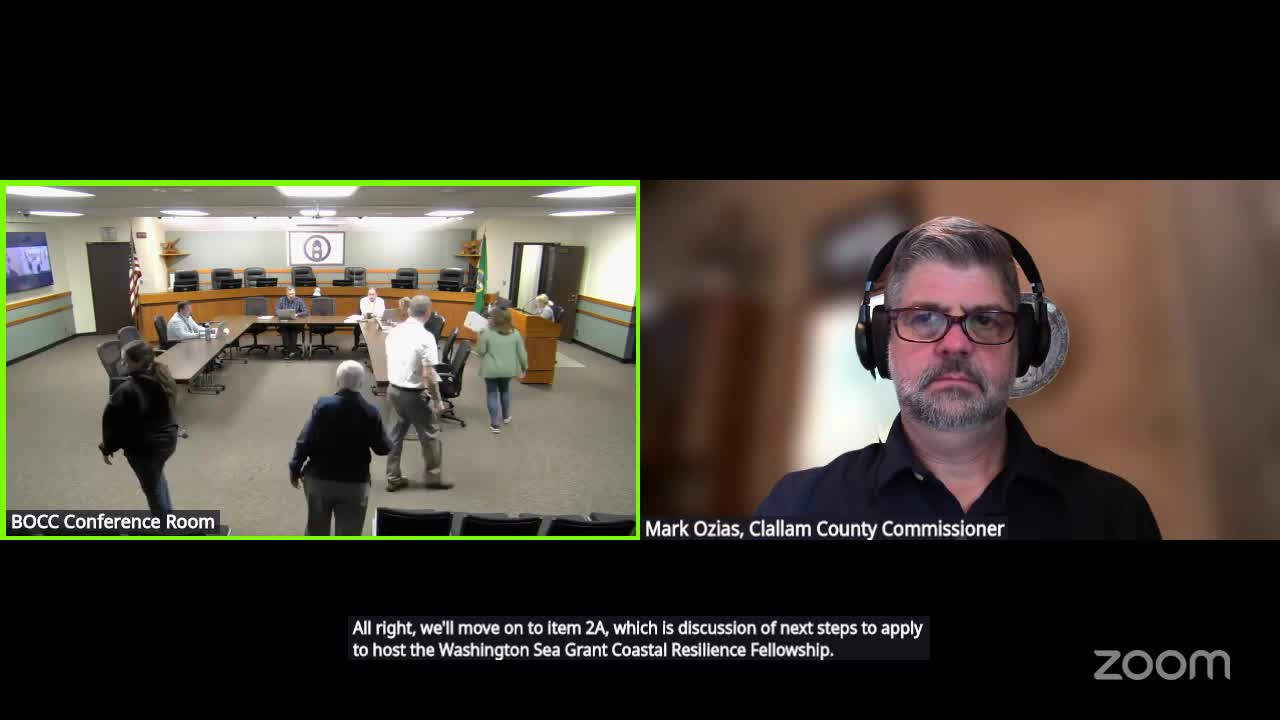
Clallam County commissioners agreed April 14 to apply to host a two-year Washington Sea Grant Coastal Resilience Fellowship that would place a master’s-level fellow with county staff to inventory shoreline vulnerability and support public engagement.
The fellowship is a non-cash, two-year placement: the fellow and Sea Grant supply the person and some technical supervision while the county provides mentorship and modest staff time. Staff said the project could include channel migration and shoreline-elevation vulnerability assessments, public outreach after high-tide or storm events, and code-compliance education—work the county noted would help in areas that have experienced erosion and unauthorized shoreline work, such as 3 Crabs.
Presenters said the fellowship would allow Clallam County to complete vulnerability assessments and outreach without the administrative burden of managing a cash grant; the project would produce applied analysis (a white paper or similar deliverable) and fund public-engagement activities that county staff reported are difficult to undertake with existing resources.
Commissioners asked about mentorship time, IT needs and personnel issues. Staff said fellows can work hybrid or remotely, Sea Grant can supply logistics, and the county would likely assign the mentor role to natural-resources or shoreline staff; staff also said they would check county policy on internships and background checks if the county is selected.
Why it matters: The fellowship would give the county two years of project capacity to assess coastal hazards and expand outreach—helpful in shorelines with recent king-tide events and erosion complaints.
What’s next: Staff will submit the application this week and, if the county is selected, finalize staffing to mentor the fellow and confirm any required background checks and orientation steps.