Get Full Government Meeting Transcripts, Videos, & Alerts Forever!
Get email alerts on the Floodplain Management topic
No spam. Unsubscribe anytime.
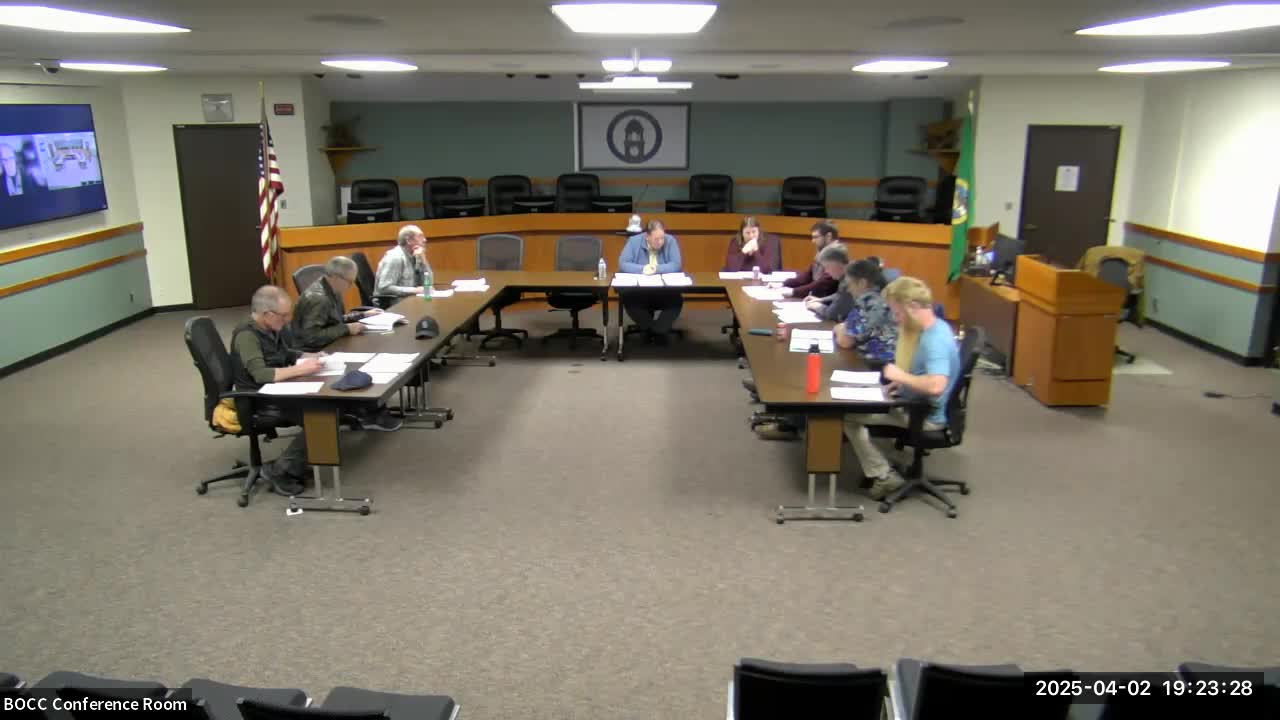
Commission reviews emergency floodplain ordinance after FEMA map updates; staff seeks public hearing
Summary
Planning staff briefed the Clallam County Planning Commission on a proposed update to the county's floodplain-management ordinance intended to comply with new FEMA flood-insurance rate maps (FIRMs) and FEMA-required language in the Washington State model ordinance; staff recommended an emergency ordinance to avoid a lapse in flood-insurance coverage.
Planning staff briefed the Clallam County Planning Commission on a proposed update to the county's floodplain-management ordinance intended to comply with new FEMA flood insurance rate maps (FIRMs) and FEMA-required language in the model ordinance. A staff presenter told the commission FEMA's new firm maps were scheduled to become effective April 23 and recommended an emergency ordinance so the county would remain in compliance and preserve flood-insurance eligibility for property owners.
Why it matters: Staff emphasized that losing compliance with FEMA requirements could cause a loss of flood-insurance eligibility and affect lending and disaster-assistance eligibility. The emergency ordinance is proposed as an interim measure to prevent a coverage gap while the county conducts a public review and adopts a final ordinance.
Key points from staff presentation and commission discussion
- Emergency ordinance timeline and public process. Staff said the county asked the Board of County Commissioners to adopt an emergency ordinance and schedule a public hearing (staff noted an emergency hearing was set for April 15). If adopted as an emergency measure, staff said the county would have approximately 60 days to complete the ordinary public-review process and adopt a final ordinance before the emergency measure lapses. Staff proposed concurrent planning-commission outreach and a planning-commission public hearing in May so the public could comment while the emergency ordinance provided continuity.
- Mandatory FEMA requirements. Staff presented the Washington State model floodplain ordinance and the FEMA checklist that identifies mandatory textual elements (definitions, duties of a floodplain administrator, permit criteria). Staff warned that some language is mandatory and cannot be reduced without risking noncompliance. As an example, staff said Clallam County's prior practice of allowing a 1-foot freeboard above base flood elevation would not meet FEMA's current requirement in this update; staff said FEMA was requiring use of the agency's model definitions and minimum language in certain places.
- Designation of floodplain administrator. The draft makes explicit who in county government is the floodplain administrator (the director of the department or that person's designee is named in the draft). Staff said this explicit designation supports continuity and provides a named authority for permit review and appeals.
- Relationship to building codes and local discretion. Staff explained that the International Building Code and International Residential Code remain the technical standards for building elevation and design; the floodplain ordinance cross-references those building codes. Commissioners were reminded the county can add standards that are more restrictive than FEMA's minimums (for example, additional freeboard or local requirements) but cannot reduce the FEMA-mandated minimum requirements if it wants to remain an eligible participating community in the National Flood Insurance Program.
- Maps and public effects. Staff said the new digital FIRMs replace an older set and that some areas of the county saw expanded mapped flood areas. Staff recommended clear public notices explaining which changes were imposed by FEMA/state and which were county policy choices.
Quotes from the meeting
"FEMA has been working on new firm maps, and, they're ready to publish. They're ready to get them active, as of April 23," a staff presenter said while explaining the need for an interim ordinance. The same presenter warned: "We do not wanna have a gap in that coverage." (Staff member.)
Open questions and policy choices
Commissioners asked staff to identify which sections were strictly FEMA- or state-mandated versus where the county had discretion to adopt additional protections. Several commissioners recommended the public notice and staff reports explicitly mark which changes are federally required and which are county recommendations to reduce confusion during public hearings.
Staff also noted practical implementation items to confirm: whether the floodplain administrator should be the elected director or an appointed official; how to handle parcels where temporary worker housing or RVs intersect with floodplain rules; and whether the county should provide public-alert guidance for residents in newly mapped areas.
Next steps
Staff asked the commission to schedule a public hearing in May and to provide guidance on any county-specific provisions the commission wants to consider beyond FEMA's minimums. Staff will prepare a public-oriented summary that flags federally required changes and local options, and the commission asked staff to propose specific hearing dates and notices consistent with the emergency-ordinance timeline.
Ending: The commission did not amend or adopt the ordinance at the meeting; staff said the county had asked the Board of County Commissioners to consider an emergency ordinance on or before April 15 and would return the full draft to the commission for a public hearing in May.