Get Full Government Meeting Transcripts, Videos, & Alerts Forever!
Get email alerts on the Workforce Housing Land Bank topic
No spam. Unsubscribe anytime.
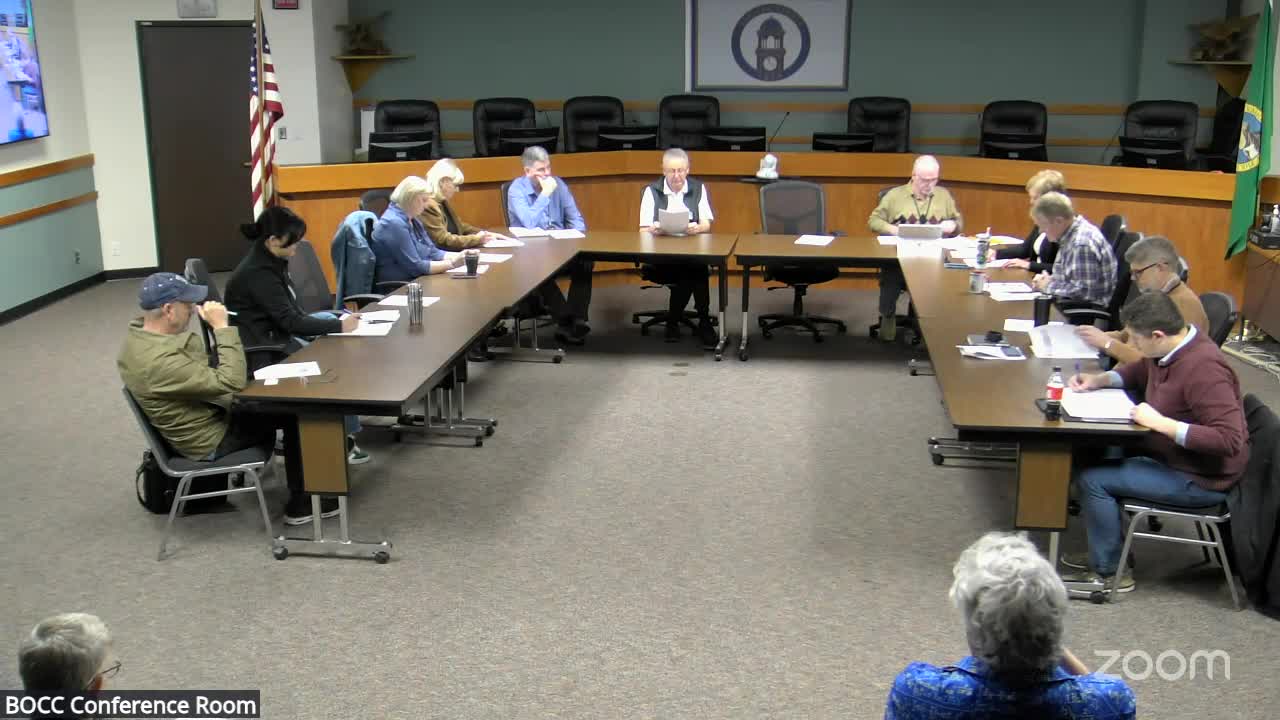
Clallam County committee discusses land bank, funding and barriers to build workforce housing
Summary
County housing committee debated creating a land bank and using $15.90 funds to acquire parcels for housing for households at or below 60% of AMI, while members flagged prevailing‑wage, financing and build‑cost barriers and asked staff for pro formas and clearer targets.
Clallam County officials and members of the county’s workforce housing committee discussed using public funds to acquire land for affordable and workforce housing and asked staff to produce financial models and clearer targets for future action.
Committee members said land acquisition using the county’s $15.90 funding category could preserve parcels near services and transit for future affordable development but cautioned that the funding carries income and use restrictions. Committee members also raised administrative hurdles such as appraisals, public bidding and potential prevailing‑wage triggers if the county contributes public dollars to construction rather than only the land.
Why it matters: committee members and participants argued the county faces an acute shortage of housing at lower income levels, which local businesses say already constrains hiring. Buying land now, the committee heard, could reduce future acquisition costs and create sites suitable for nonprofit developers or ground‑lease arrangements to produce housing affordable to low‑ and moderate‑income households.
Discussion highlights included: the limits of the $15.90 funding category (which the committee said is eligible for land acquisition and typically supports housing for households at 60% of area median income or below), the difficulty of getting private financing for manufactured homes or lots, and the practical differences between land trust models, ground leases and outright sale to a developer. Members urged staff to provide more detailed demand data and pro forma spreadsheets comparing models (land trust versus developer ownership with subsidy) to show how fees and costs change under each approach.
Several committee members described potential projects that could be built on banked land if sites were acquired: senior cottage villages, modular or manufactured cottage clusters, and small multifamily buildings. Members emphasized that developers for deeply affordable rental housing are usually nonprofits that will use multiple funding sources (housing trust fund, federal grants, housing finance mechanisms) and that combining several funding streams is typically necessary to make projects pencil out.
Barriers identified included: high upfront site costs (members cited examples of raw site costs reaching tens of thousands of dollars per lot), rising construction costs driven by energy‑code and HVAC changes, scarcity of sewer‑served parcels in some unincorporated areas, and limits on financing for manufactured homes located in rental parks. Members also noted that prevailing‑wage rules are commonly triggered when public funds pay for construction rather than only land, which can significantly increase project costs.
Next steps directed by the committee were procedural: staff were asked to work with Bruce’s department to prepare demand estimates by income band, produce pro forma comparisons for land‑bank versus developer/grant models, and identify candidate parcels in urban growth areas that match likely developer needs. The committee did not take formal action to purchase land at the meeting and did not adopt a policy; the discussion was advisory and intended to guide staff and commissioners.
Ending: Committee members agreed to return the topic to a future meeting after staff supply the requested financial models and parcel recommendations, so the group can weigh tradeoffs between lease, trust and sale approaches and determine whether to recommend acquisition to the board of county commissioners.