Get Full Government Meeting Transcripts, Videos, & Alerts Forever!
Get email alerts on the Substance Use Recovery Ecosystem topic
No spam. Unsubscribe anytime.
Former Kentucky governor lays out Recovery Kentucky model at Burke County forum
Summary
Former Kentucky governor Ernie Fletcher described Recovery Kentucky
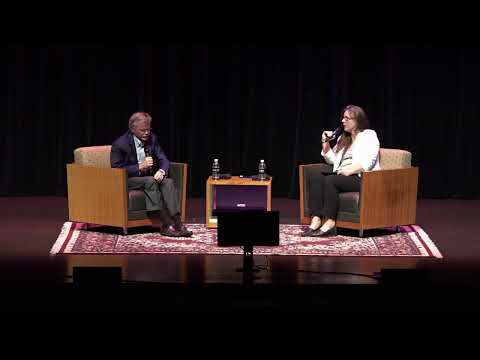
Former Kentucky Governor Ernie Fletcher described the Recovery Kentucky model and a broader "recovery ecosystem" at a community forum hosted in Morganton by Olive Branch Ministry and Burke County Public Health.
Fletcher, founder of the Fletcher Group, told the audience that the Recovery Kentucky network pairs residential recovery housing with employment, education and other social supports. "Culture will eat strategies lunch any day," he said, arguing community culture and coordinated supports matter as much as clinical care.
The model Fletcher described includes residential centers that typically accommodate about 100 to 120 people, with program stays he said ranging from roughly six months to two years. He said Recovery Kentucky ultimately built 14 centers, that roughly 60% of beds were reserved for people entering from the criminal justice system, and that the University of Kentucky Center on Alcohol and Drug Research has collected 13 years of outcome data on the program.
Why it matters: Fletcher and panelists framed substance use disorder as a community-level problem that requires a continuum of services beyond short-term clinical detox: housing, stable employment, transportation, child care and peer support. Fletcher said those links are the difference between short-term survival and long-term recovery and economic reintegration.
Fletcher described how the program pairs residential recovery housing with training and employer partnerships. He related a program example placing people in thoroughbred care and grooming positions: after training, participants advanced into supervisory roles and, Fletcher said, employers came to trust them with high-value animals. He said "meaningful employment" builds what he called "recovery capital" and helps prevent relapse.
On housing and financing, Fletcher said Recovery Kentucky centers were funded through a mix of low-income housing tax credits, project-based HUD vouchers, opioid-abatement and foundation grants, Economic Development Administration grants, philanthropic donations and other sources. He said the centers were built debt-free using that mix and urged communities to be creative with funding while winning local political support.
Fletcher also emphasized peer support and social-recovery models. He said many recovery programs rely on peer specialists with lived experience and advocated professionalizing and certifying peer roles so they can be reimbursed and integrated into hospitals, emergency departments and clinics.
On criminal justice policy, Fletcher argued for diversion and deflection programs that provide treatment options in lieu of incarceration when appropriate. "It's stupid to lock up people whose lives can be transformed," he said, while also noting that accountability remains part of public safety.
Speakers at the event included Michelle, executive director and co-founder of Olive Branch Ministry; Gary Paxton, president and CEO of UNC Health Blue Ridge; Dr. Cathy Colville, associate dean for community engagement and outreach at the University of North Carolina Chapel Hill School of Social Work; and Governor Ernie Fletcher.
Panelists recommended several policy directions for state and local policymakers: expand reimbursement for long-term social recovery and peer-support services, develop certification and outcomes standards for recovery housing, and scale criminal-justice diversion/deflection agreements between prosecutors, judges and treatment providers.
Local reaction: Fletcher said he was encouraged by Burke County participants and local leaders who are already engaged in planning and harm-reduction work. The forum concluded with Fletcher and local organizers thanking attendees and the interpreting team.
Notes on sourcing and limits: The forum was a public conversation and not a legislative meeting. No formal votes or binding commitments were recorded. Several program figures (14 centers; 100——————————————————————————————————————————————————————————————————————————————————————————————