Get Full Government Meeting Transcripts, Videos, & Alerts Forever!
Get email alerts on the Public Comments Sewer Water Accountability topic
No spam. Unsubscribe anytime.
Residents press Clallam County on sewer bills, water projects, state land transfers and county accountability during public comment
Summary
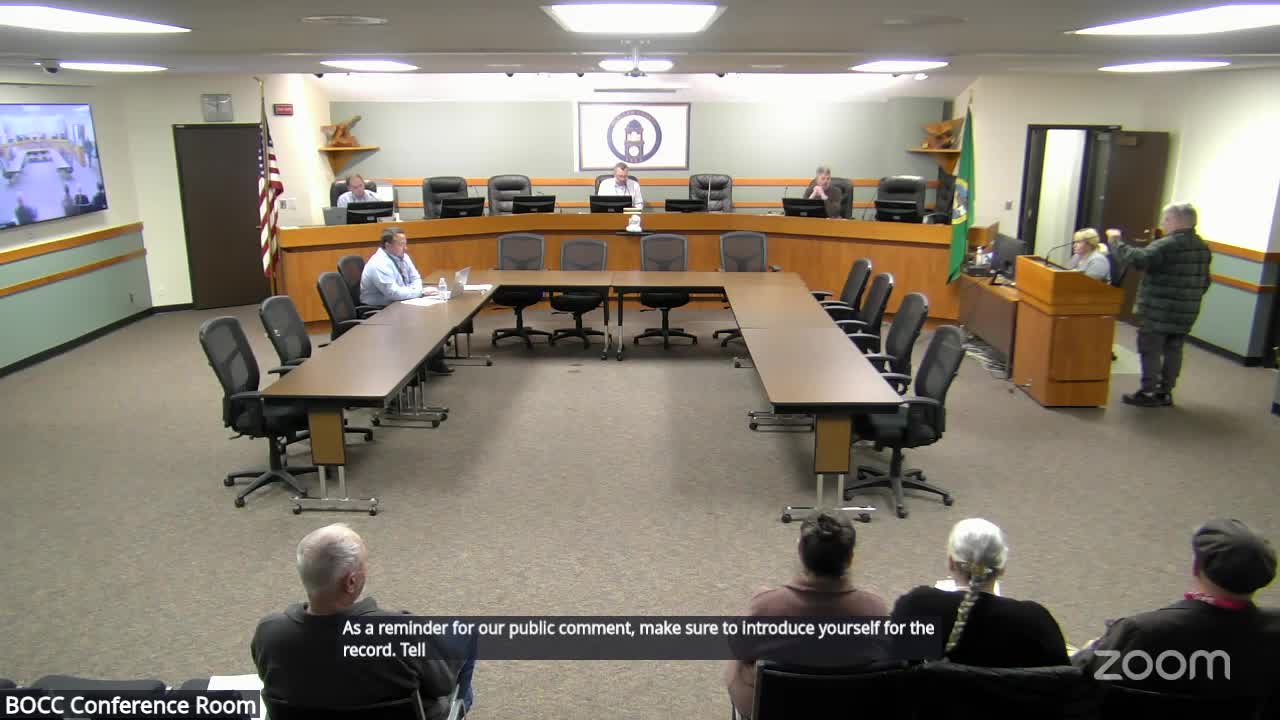
During public-comment periods at the April 8 meeting of the Board of Clallam County Commissioners, residents pressed the county about steep sewer-billing increases for a mobile-home court, questioned state land transfers to tribes and pressed for stronger public engagement and statements from commissioners.
CLALLAM COUNTY, Wash. — Multiple residents used the Board of Clallam County Commissioners' April 8 public-comment periods to press the county on sewer billing, water and watershed work, state land transfers, and demands for greater transparency and public accountability.
Why it matters: Public comment signaled local concern on matters that affect property owners, tribal-land questions reflected by a capital-budget item referenced by a commenter, and community calls for county statements against antisemitism and for better elected-official responsiveness.
Notable public comments
- Sewer billing and mobile-home park rates: A mobile-home-court owner identified in the record as Moody said county billing changes now charge $56.50 per hookup for 22 hookups plus overage; he said his annual bill rose from roughly $6,000 to about $23,000 and asked county staff what options exist. County staff replied they would follow up with the speaker after the meeting.
- Noxious-weed grant and meeting notices: Resident Ed Bowen raised a series of items across both public-comment periods. He objected to the noxious-weed amendment (item 2d) that returns $6,000 of unused funds to the Washington Department of Agriculture because of staffing shortfalls, questioned why some tribal projects would be funded outside Bureau of Indian Affairs channels, and asked which commissioners will attend upcoming community meetings. Bowen also commented during the public hearing about draft wording in the permit timeline matrix, urging that "should" be changed to "shall." County staff agreed to the change.
- Water projects and transfers to tribes: Several commenters—among them Bowen and other attendees—asked about Dungeness River and Elwha watershed work. One resident asked why the capital budget would include a study item (the speaker referenced a line he identified as an Elwha Watershed study for $350,000) and questioned transfers of state forest lands to tribes. The county did not take action on the capital-budget questions during the meeting; they were raised as public comment for commissioners to pursue through their legislative channels.
- Public safety and extremism concerns: Multiple speakers asked the commission to condemn antisemitic or violent speech observed at local demonstrations and to issue statements. A commenter said she saw signs advocating violence and urged the commission to call it out; another speaker asked for letters asserting biological sex definitions and support for girls' sports. Commissioners did not vote on any statements during the meeting; these were requests made during public comment.
- Charter review and accountability: Jeff Tozer, speaking on behalf of public attendees at Charter Review Commission town halls, urged stronger ethics rules, regular public engagement, and said residents are proposing charter changes to require accountability and more direct engagement from commissioners.
Other public concerns raised in brief comments included geoengineering petitions, local arts funding advocacy, and a property-owner request under public-records disclosure about whether the county had previously asserted claims on a specific parcel.
What the county said: Staff acknowledged some items and offered follow-up. For the sewer-billing complaint, a county representative asked the speaker to provide contact information and said staff would follow up outside the meeting. On the permit-timeline ordinance, staff agreed to the requested wording change from "should" to "shall." No formal county action was taken on the capital-budget or tribal-land transfer questions at the meeting.
Next steps: Commissioners and staff did not schedule formal responses to all public concerns on the agenda. Several speakers asked for written follow-up (for example, on billing and on a public-records question). Those follow-ups will depend on staff workload and subsequent requests from the speakers.