Get Full Government Meeting Transcripts, Videos, & Alerts Forever!
Get email alerts on the Chiropractic Prescribing topic
No spam. Unsubscribe anytime.
Committee advances bill giving some Montana chiropractors limited prescriptive authority after hours of testimony
Summary
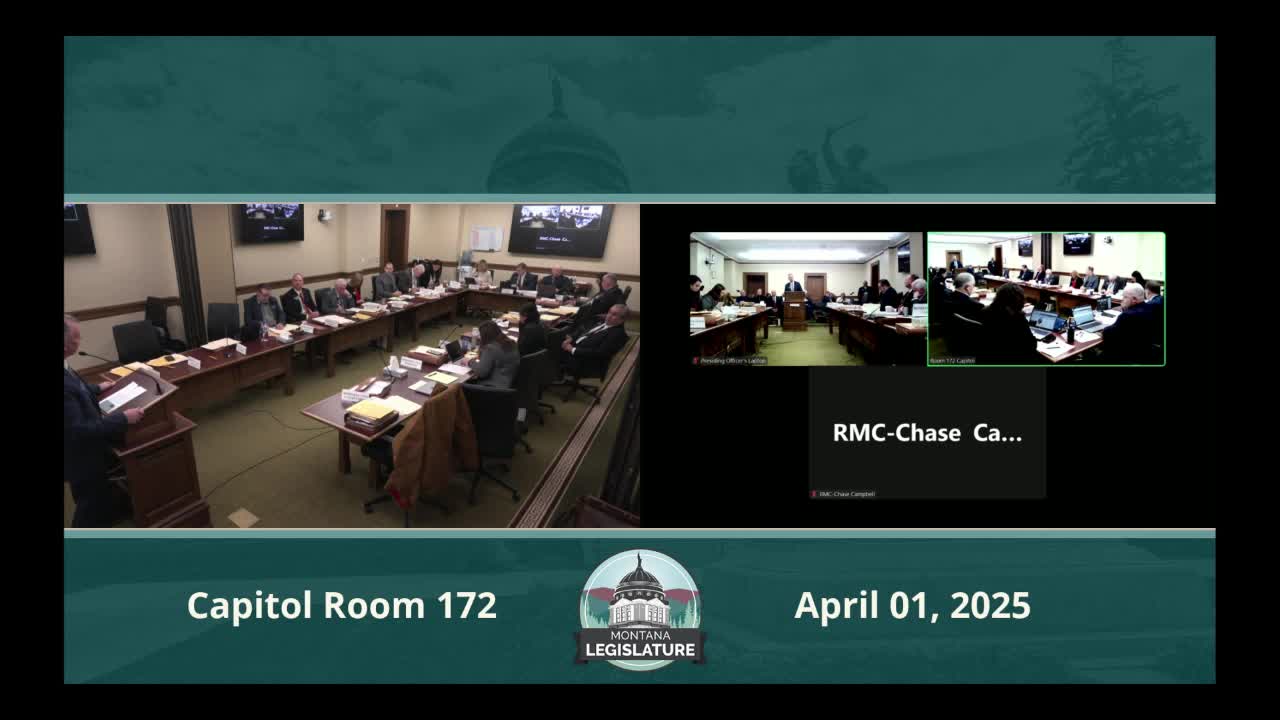
After nearly four hours of testimony for and against, the House Business and Labor Committee voted to advance House Bill 929, which would allow an optional, board‑regulated endorsement giving chiropractors limited authority to prescribe certain non‑controlled medications.
Representative Greg Oblander, sponsor: "This is a % optional to any doctor of chiropractic in the state." (opening remarks)
The House Business and Labor Committee advanced House Bill 929 on a 17‑3 vote after an extended hearing that drew dozens of proponents and opponents and detailed exchanges about training, patient safety and oversight. The bill would create a voluntary license endorsement, subject to rules set by the Board of Chiropractic and the Department of Labor and Industry, that would allow chiropractors who meet specified education and continuing‑education requirements to prescribe a limited formulary of non‑controlled medications for diagnostic and therapeutic purposes.
Why it matters: Supporters say the measure will shorten patient wait times for acute musculoskeletal care and avoid duplicate visits when chiropractors already diagnose problems and could immediately provide short‑term medicines. Opponents, including physicians, medical organizations and many chiropractors, warned the committee that even short courses of steroids and certain anti‑inflammatories can have serious side effects and that chiropractic education and clinical training do not match the experience physicians receive in medical school and residency.
What supporters told the committee: Brad Griffin, executive director, Montana Chiropractic Association, testified the Montana Board of Chiropractic "is in full support of this bill." Dr. Ryan Oblander, vice president, Montana Chiropractic Association, framed the change as "a streamlined approach to musculoskeletal health care" and said limited prescription rights would let chiropractors provide faster relief and reduce disability for working patients.
What opponents told the committee: Dr. Ron Oberstein, president of Life Chiropractic College West, said "our current academic training does not prepare chiropractors to prescribe medication" and warned malpractice rates would rise if prescriptive authority were expanded without extensive additional clinical training. Jean Branscum, CEO of the Montana Medical Association, argued the bill does not include physician or pharmacist oversight on a formulary committee as New Mexico's model did and said the lack of clinical residency training made the change unsafe for patients.
Board and administrative oversight: Kevin Bragg, bureau chief for professional licensing, told the committee the chiropractic board had not taken an official position at the time of the hearing. The bill would require the Board of Chiropractic to adopt rules for initial and continuing pharmacology education and for application procedures for the endorsement.
Formal action: In executive action the committee voted to advance the bill to the floor (motion: do pass; mover: Vice Chair Seekins Crowe). Committee tally: yes 17, no 3. Outcome: approved by committee. The committee also recorded and discussed the concerns opponents raised and directed interested parties to work with the board on rule details.
What's next: If the bill passes the House, rule and training details will be developed by the Board of Chiropractic and the Department of Labor and Industry before any chiropractor could receive the endorsement. The bill, as written, makes the endorsement optional for individual chiropractors rather than mandatory.
Ending note: The hearing logged strong, organized opposition from physicians and many chiropractors who said the profession itself remains divided; proponents said the change would be limited, optional, and tightly regulated.