Get Full Government Meeting Transcripts, Videos, & Alerts Forever!
Get email alerts on the Public Safety Fire Trucks topic
No spam. Unsubscribe anytime.
Flandreau council amends budget to buy brush truck after two rigs became inoperable
Summary
The Flandreau City Council approved Resolution No. 20 25 0 4 to transfer funds for a replacement brush truck after both of the city’s brush trucks were reported inoperable; funding will come from $30,998.67 in liquidated-damages proceeds and $5,000 from the vehicle replacement reserve.
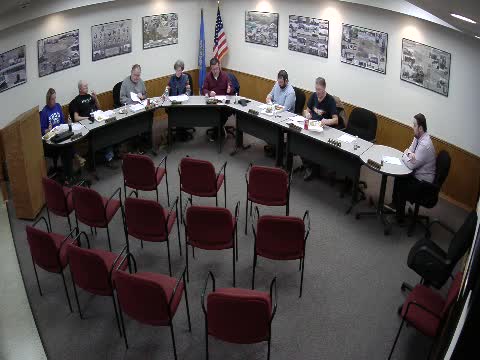
Flandreau City Council on an emergency-called meeting approved Resolution No. 20 25 0 4 to amend the Feb. 2025 fiscal budget and transfer funds to purchase a replacement brush truck after both brush trucks used for rural grass and pasture fires were reported inoperable. The motion to approve the resolution was made by Alderman Yeaton and seconded by Alderman Tufte; the council voted to approve the measure by voice vote.
The move responds to short-term equipment gaps the council said could leave rural areas of the city vulnerable during a dry spell. City staff and volunteer fire members told the council that Brush 1 is under warranty and receiving engine repairs expected to take about two weeks, while Brush 2 has no warranty and is currently not running due to engine problems. City staff said the department plans to transfer several serviceable components from the older unit to a new chassis where appropriate.
Cole (staff member) outlined procurement and financing options the city considered. He said the preferred procurement route is to use a state bid or existing competitive contracts recognized by South Dakota, because local dealers often require adherence to those processes and the city’s $50,000 informal bid limit makes it hard to source a truck otherwise. Cole gave cost examples from vendor quotes in the council packet: a Ford F-550 chassis base price (excluding a custom flatbed) at $58,220 and a crew-cab package at about $62,515. He said typical dealer lead time for a custom-ordered unit is six to eight weeks.
Don and Chase, speaking for the fire department, said the department previously approved a planning figure of $30,000 per truck and $5,000 per bed and that used vehicles at auction were commanding $55,000–$60,000 for lower-mileage units. Don said pump and related components that were recently replaced on the older truck can be transferred to a new chassis and that volunteer shops available to the department can perform that work, minimizing additional cost.
To fund the unbudgeted purchase, council members approved using $30,998.67 currently held in a liquidated-damages account from an H and W settlement and $5,000 from the vehicle replacement reserve. Cole said the vehicle replacement reserve balance is $292,263 before allocations, with roughly $200,000 already spoken for (a tow truck and a pumper purchase), leaving about $92,263 available; he proposed taking a $5,000 contribution from that account for the brush truck purchase. The council also discussed that FEMA reimbursement funds from 2019 (about $43,000) remain available for council allocation if desired at a later time.
Council members and staff emphasized the purchase is intended to maintain rural fire protection while minimizing borrowing costs. The resolution gives the mayor and designated staff authority to sign a purchase order and move forward once the department finalizes cab/bed preferences; the fire department planned an internal meeting the same evening to decide between a regular (two-door) or crew (four-door) cab, citing trade-offs in maneuverability and carrying capacity.
The council did not record a roll-call vote in the transcript; the motion passed by voice vote after the series of council members signified “aye.” The council adjourned after the vote.