Get Full Government Meeting Transcripts, Videos, & Alerts Forever!
Get email alerts on the Downtown Revitalization topic
No spam. Unsubscribe anytime.
Glens Falls officials unveil Market Center, housing and phase timelines from DRI-funded downtown overhaul
Summary
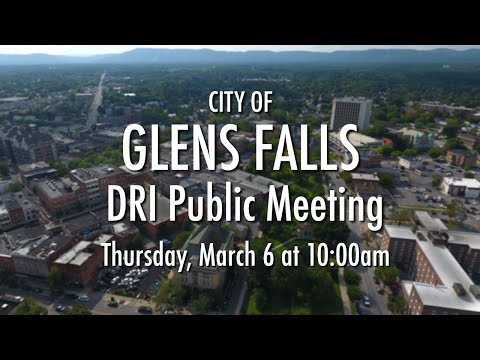
Glens Falls City officials and development partners on Saturday delivered a progress report on the city’s Downtown Revitalization Initiative (DRI), outlining near-term openings, construction timelines and the mix of public and private investment that has accompanied South Street redevelopment.
Glens Falls City officials and development partners on Saturday delivered a progress report on the city’s Downtown Revitalization Initiative (DRI), outlining near-term openings, construction timelines and the mix of public and private investment that has accompanied South Street redevelopment.
Mayor Collins and project partners said the DRI-funded Market Center pavilion and associated projects will host the farmers market by June 1 and that a community ribbon-cutting is planned as the city completes final work. City presenters said the DRI’s original $10,000,000 award has spurred additional public and private investment and described a set of completed and in-progress projects that include a commercial kitchen and incubator at 36 Elm Street, three renovated historic buildings on South Street, and new workforce rental units.
The DRI matters because city officials said it has functioned as a catalyst for broader downtown investment: presenters cited a total development figure they put at roughly $48 million tied to the DRI and said that the city’s long-term stake is about $3.6 million, or about 7.5 percent of that amount. The program also supported small-business assistance, facade grants and arts projects that officials and developers said have helped attract new restaurants, cultural organizations and residential tenants to downtown.
City economic development director Jeff Flagg described the Market Center as the DRI’s “capstone” project for South Street. Planners redesigned the original concept — once a single 20,000-square-foot building — into a more flexible footprint that, according to the presentation, will accommodate the farmers market, festivals, performances and year-round vendor space. Officials showed renderings and said the design prioritizes low operating costs, flexible indoor/outdoor vendor areas and circulation that can expand into Elm and South streets for larger events.
Venaccio/Bonaccio Development (presenters referred to the firm in varying spellings) is leading rehabilitation of three historic buildings at 41, 45 South Street and 36 Elm Street. Company representatives described extensive stabilization, hazardous-material abatement, window restoration (to meet historic-tax-credit conditions) and structural framing work. They said phase 1 for those buildings is under way with finishes to follow and that they expect phase 1 occupancy in the fall; a separate phase 2 closing with the state is being coordinated and could allow an early-spring ground-breaking.
Judy (LDC) said the Greater Glens Falls Local Development Corporation has a 10-year lease on 36 Elm’s first floor, which will house a 4,600-square-foot incubator that includes a commercial kitchen, vendor space, a local makers market and public restrooms. The incubator is intended to support the Market Center’s operations (storage and catering for events) and to provide a demonstration/teaching space that presenters said could be used in conjunction with SUNY Adirondack’s culinary programming and Cornell Cooperative Extension partnerships.
Presenters also reviewed smaller DRI-supported efforts: a GF Drive small-business competition that officials said aided 13 businesses (owners contributed at least 20 percent of project costs), facade grants for two buildings, HVAC replacement at the Wood Theater supported by DRI funds (presenters said the Wood project received about $225,000 in support), and new streetscaping and stormwater/sewer improvements on Elm, Exchange and Park streets.
Officials gave a timeline and use details: Mayor Collins and partners said the farmers market should be operating in the Market Center by June 1; Venaccio/Bonaccio noted phase 1 of the three-building rehab aims to finish in the fall, with phase 2 dependent on an upcoming state closing; city staff said a ribbon-cutting and community celebration is planned (the presentation listed a 3–5 p.m. event window for the ceremony). Presenters repeatedly emphasized the DRI as a multi-administration effort and credited prior elected officials, county and state partners and private investors for the long-running effort.
While the briefing emphasized positive economic indicators and developer timelines, presenters also flagged usual construction uncertainties: rising construction costs during and after the pandemic, permitting and street-closure coordination for work on a busy corridor, and the practical challenges of restoring and rehabbing older, deteriorated structures while meeting historic-tax-credit requirements. The city said it has invested in subsurface sewer and stormwater upgrades beneath recent streetscape work so the new surface improvements will not need to be repeatedly disturbed.
Officials closed by inviting the public to inspect the site, attend the ribbon-cutting and noted that private redevelopment already underway and approved in downtown will add to the DRI’s impact. “We’re at the finish line,” one presenter said, urging residents to take pride in the multi-year effort.
The presentation was informational; no formal votes or council actions were taken during the segment.