Get Full Government Meeting Transcripts, Videos, & Alerts Forever!
Get email alerts on the Ems Ambulance District topic
No spam. Unsubscribe anytime.
Flandreau council directs staff to model city takeover or district for ambulance service
Summary
After weeks of task force work and public comment, the Flandreau City Council voted to ask city staff to prepare a written business model by June 1 for the city to operate the ambulance service and authorized a formal response to Moody County by Feb. 28 explaining the city’s process and timeline.
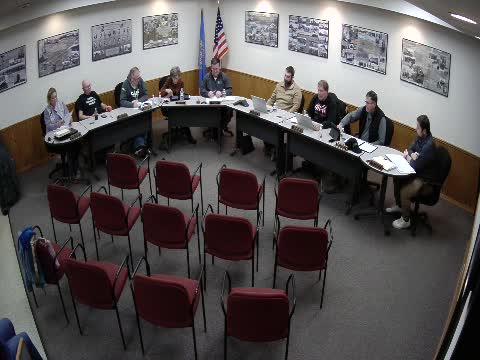
Flandreau Mayor Dan and the City Council voted Monday to ask city staff to prepare a business model and timeline for assuming local ambulance service or for alternatives, including an ambulance district, and to send Moody County a written response by Feb. 28 explaining the city’s process.
The council’s move follows a four-meeting ambulance task force that recommended the city assume responsibility for the ambulance service after the county gave the city a Feb. 28 deadline for a response. City Administrator Cole was authorized to prepare a model for how the service would operate under city control and to show alternative structures; the council asked for the results at or before its June 1 meeting so the proposal could be considered during the next budget cycle.
Why it matters: Moody County signaled it could transfer or discontinue the existing county-run ambulance service without a local commitment. Council members and several residents described ambulance service as essential to public safety and said the community needs a clear, sustainable funding and staffing plan rather than short-term subsidies.
Council discussion centered on three paths outlined by Mayor Dan: reject the task force recommendation and leave service with the county; accept the task force recommendation and have the city assume service; or pursue an ambulance district or other regional funding model. Several council members and public commenters urged more detailed financial modeling before the city commits to operational control.
City Administrator Cole told the council ambulance-district formation is governed by state statute and that a district can levy property taxes (described in the meeting as up to 60¢ per $1,000 of assessed valuation for operations plus additional capital levies) and can be created either by county and municipal resolutions or by petition of registered voters. Cole said petition formation would require signatures from 20% of registered voters within the proposed district, after which the proposal would go to voters.
Public commenters and council members pressed operational and financial details: Roxy (a longtime emergency services commenter) warned that modern EMS requires significant, ongoing investment in equipment, staff pay and training and said volunteer-style fundraising is no longer adequate. Alderman Berkey and other council members recommended that any interim financial help from the city to the county be targeted — for staffing, equipment or facility needs — rather than an unrestricted subsidy. Several speakers suggested an ambulance district might spread costs across the county and other partners (hospital, tribe) and reduce the per-household tax impact.
Formal actions: the council carried a motion to charge city staff (Cole) with developing a detailed business model for a city-run ambulance service and to return with findings by the June 1 meeting; the council also authorized the mayor and city administrator to draft and send a letter to Moody County by Feb. 28 stating the city’s work plan and timeline. Both votes were voice votes and recorded as “motion carried.” The motions did not include a recorded roll-call tally in the public record.
What’s next: Cole will convene staff and local partners to produce a written model that compares (at minimum) a city-run ambulance operation and an ambulance district, including staffing plans, estimated annual operating costs, revenue assumptions (including current subsidies reported from the county, hospital and tribe), and projected impacts on the city budget. The council said it expects those materials by the June 1 meeting to allow inclusion in the 2026 budget process.
The council and commenters repeatedly emphasized that any final change in governance or funding — whether the city takes operations, a new ambulance district is formed, or the county retains service — must address staffing shortages and the long-term funding gap identified by the task force.