Get Full Government Meeting Transcripts, Videos, & Alerts Forever!
Get email alerts on the Downtown Revitalization topic
No spam. Unsubscribe anytime.
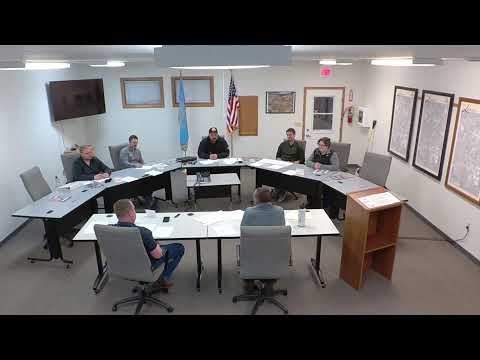
Planning Commission discusses 'placemaking' and a Main Street strategy for downtown
Summary
The Planning Commission discussed a multi-pronged approach to revitalize the downtown: focus on the Central Business District, define a Main Street boundary, pursue property-owner outreach and education, coordinate with the Local Area Development Council (LADC), and consider incentives or incubator space to attract businesses.
The Planning Commission held an extended discussion about revitalizing downtown and methods to stimulate occupancy and activity on Main Street, focusing on placemaking strategies, clearer permitted-use language, and owner outreach.
Commissioners asked staff for direction and materials to guide future action. A staff member introduced placemaking concepts and handed commissioners an article and materials about Main Street activation, saying placemaking involves “using public spaces to create vital, vibrant, and livable communities.” Commissioners debated whether the commission's role should be enforcement or facilitation and whether outreach and incentives would be more effective than adding new regulations.
Several commissioners emphasized focusing on the Central Business District (three or so blocks identified as core downtown) and drawing a clear boundary for ‘Main Street’ to target education and incentives. Commissioners discussed tools used by other cities, mentioning Sioux Falls’ vacancy enforcement as an example of a stronger vacancy control, but questioned enforceability and legal defensibility. One commissioner said, “If we don't do something, we have to try something,” arguing for intentional efforts to shape the downtown’s character.
Participants suggested a mix of approaches: encourage the Local Area Development Council (LADC) to lead outreach and business-networking events, pursue education for property owners about permitted uses, and review zoning text to update permitted and conditional uses so desirable modern businesses are explicitly allowed. Planning staff agreed to prepare a presentation explaining what each zone allows and recommended letting administrative staff or the LADC do one-on-one outreach rather than the Planning Commission conducting direct property-owner visits because the commission is a quasi-judicial body.
The commission also discussed practical measures: creating an informational guide for property owners, holding regular follow-up meetings with downtown stakeholders, and exploring incubator or multi-tenant spaces that lower the startup cost for new retail or food-service businesses. The LADC is starting a business-networking initiative, and commissioners said coordinating with that effort could provide a structure for monthly outreach. No formal votes were taken on policy changes; commissioners directed staff to prepare educational materials and a zoning-permitted-uses briefing at a future meeting.
Kyle, the building-report presenter, reported eight permits so far this year (six miscellaneous, two twin-home permits) and listed recent code-enforcement complaints logged between Jan. 22 and Feb. 21 (one exterior building-condition violation, one parking-on-grass, one unsightly-trash-and-junk, and one notable-vehicle complaint).