Get Full Government Meeting Transcripts, Videos, & Alerts Forever!
Get email alerts on the Parks Master Plan topic
No spam. Unsubscribe anytime.
Stockwell Engineers proposes citywide parks master plan for Lennox; consultant estimates $70,000, 6–9 month timeline
Summary
David Locke, a landscape architect with Stockwell Engineers, presented a proposed citywide parks and trails master plan to the Lennox Parks and Recreation Board, describing a phased public‑engagement, inventory and recommendation process and estimating roughly $70,000 and six to nine months to complete the plan.
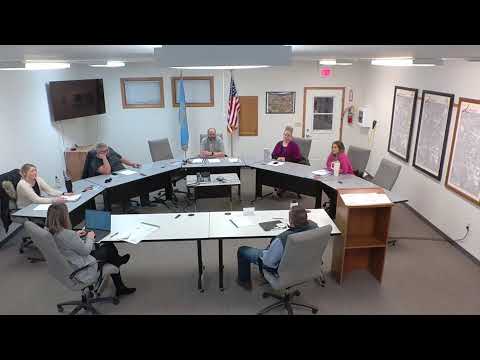
David Locke, a landscape architect with Stockwell Engineers, presented a proposal for a citywide parks and trails master plan to the Lennox Parks and Recreation Board during the meeting. The firm proposed a phased process that includes kickoff and stakeholder meetings, a statistically valid community survey, a full inventory and condition assessment of parks, and an ordered list of short-, mid- and long-term recommendations tied to approximate costs.
Locke said the consultant team would run three stakeholder meetings (user groups, community/business interests and city staff), visit and catalog each park’s equipment and condition, and administer a statistically valid survey targeted to the school-district population. He told the board that the consultant expects a sample large enough to produce a +/-5% margin of error and said, “Now altogether, the cost of that is approximately $70,000 for us to put that together.”
Why it matters: a master plan creates a single roadmap for capital improvements, accessibility upgrades and grant applications. Stockwell’s proposal ties community input to capital improvement planning (CIP) so board and city council funding requests can cite documented public priorities, cost estimates and timelines.
Key elements described in the presentation included: - Public engagement: three stakeholder meetings plus a statistically valid survey of residents in the Lennox school district; the consultant said the survey administration and question refinement would take several weeks and the overall survey work about a month. - Inventory and condition assessment: on-site cataloging of park assets (play equipment, benches, trash receptacles, etc.) and photographic documentation. - Accessibility and standards: the consultant recommended an accessible parking space and accessible route to main park elements at each park, and at least one accessible play piece in parks where feasible. - Geographic / system analysis: GIS mapping of park distribution with quarter-mile service radii to identify gaps and priority areas as the town grows. - Order-of-magnitude cost guidance: example figures cited were roughly $25 per square foot for accessible play surfacing and about $400 per square foot for restroom construction; the consultant said the master plan provides ballpark estimates to distinguish minor projects from multi‑hundred‑thousand‑dollar or larger projects.
Stockwell said the full program would run about six to nine months depending on scheduling and stakeholder availability; Locke summarized the timeline to the board: “It’s about a 6 to 9 month process.” He warned scheduling stakeholder meetings is often the longest delay. The consultant cited recent work in Sioux Falls, Dell Rapids, Watertown and Livingston, Mont., and described follow-up steps they can take — for example, developing concept plans or working on grant applications for higher-priority projects.
Board members asked about frequency of updates and how the plan would be used. The consultant recommended a five‑year update cadence as a common rule of thumb so cost estimates and priorities can be refreshed. City staff present noted Stockwell’s existing familiarity with town facilities would shorten the inventory phase.
No hiring decision or formal contract award was recorded in the meeting; the consultant presented the scope and answered questions. The board did not take a formal vote to commission the plan during this session.
The presentation also noted practical constraints: the consultant said reuse or placement of donated benches along state highway corridors may be limited by South Dakota Department of Transportation restrictions; the firm cited a DOT moratorium on benches along some highway rights-of-way and walking trails in town.
Next steps described in the presentation included refining scope and survey questions with staff, scheduling stakeholder meetings, and producing an initial draft of goals and recommendations for board review.