Get Full Government Meeting Transcripts, Videos, & Alerts Forever!
Get email alerts on the Mattakees Site Reuse topic
No spam. Unsubscribe anytime.
Yarmouth business leaders, planners weigh indoor sports, housing and events for 70‑acre Mattakees site
Summary
At a February meeting, Town of Yarmouth staff and local business leaders discussed ideas for reusing the 70‑acre Mattakees middle school site, prioritizing indoor/outdoor athletic facilities, event space and seasonal housing while noting constraints including wetlands, Zone 2 drinking‑water protection and potential need for sewer extension.
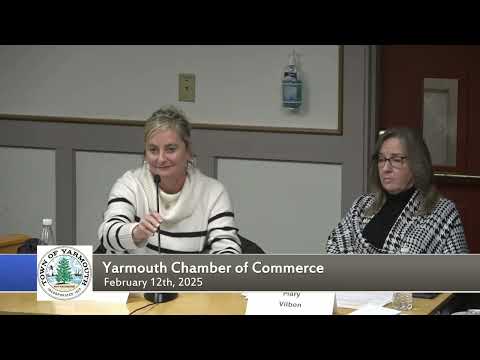
Assistant Town Administrator William Scott convened a meeting of local business leaders, the Chamber of Commerce and planning consultants to solicit economic‑development ideas for the 70‑acre Mattakees middle school site, highlighting both opportunity and constraints for redevelopment.
Consultant Alexis Zanzalata of Barrett Planning Group asked attendees to “think big” in the first of a three‑meeting public process and said the input will be narrowed into three concepts, then a preferred program, and eventually used to shape requests for consultants and developers. The group identified three recurring concepts: an indoor/outdoor athletic complex to attract year‑round and shoulder‑season visitors, mixed‑use or dormitory‑style housing to support seasonal workers and tournaments, and a flexible event/convention space that could bring larger regional shows to Yarmouth.
The nut of the discussion centered on balancing commercial revenue goals with resident needs and environmental limits. “Our primary concern here is obviously water protection,” William Scott said, noting multiple municipal wells and well‑protection buffers near the property. Staff and speakers repeatedly flagged the site’s wetlands and a Zone 2 drinking‑water designation; consultants also noted the property is currently zoned R‑40, which limits commercial uses without zoning changes or overlays such as Chapter 40B or a 40R‑style incentive overlay.
Recreation staff described active community use of parts of the site and provided attendance figures for activities run in the school auditorium and gymnasium: 245 participants in spring programs, 72 in summer basketball/open gym, 275 in the fall and 485 in winter programs. “We run basketball leagues from pre‑K through adult, indoor soccer, pickleball, vacation‑week programs and dozens of weekly uses,” the staff member said, emphasizing that parts of the existing building and fields remain in use and contribute local value.
Business owners and organizers at the meeting argued a regionally competitive indoor sports facility paired with outdoor tournament‑quality fields could capture youth and adult tournaments now traveling off Cape, bringing hotel stays, restaurant sales and shoulder‑season visitors to town. Paul Nizwicki, CEO of the Cape Cod Chamber of Commerce, said a flexible indoor complex “could really bring a lot of business to town” and called out demand for year‑round programming that would fill hotels outside July and August.
Several participants proposed mixed operational models to improve financial viability and community benefit: dormitory‑style short‑term housing for J‑1 and other seasonal workers and tournament participants; multipurpose event spaces that could host conventions, sports tournaments and cultural events; and segmented public‑private partnerships so different parcels or buildings could be developed for housing, recreation and commercial uses.
Speakers acknowledged likely infrastructure needs. Staff and consultants said sewer extension and other utilities may be required for larger commercial or residential projects to protect the water supply and to meet operational demands; Scott said that running sewer “is our problem” to analyze further and that grant and private funding options will be explored. Consultants also noted wetlands, critical habitat areas and topography that will shape where development is feasible on the parcel.
No formal decisions or votes were taken at the session. The town’s Community and Economic Development Committee (CEDC) will hold a parallel public meeting and the teams will reconvene to narrow concepts: the CEDC was scheduled for a February meeting and the combined chamber/CEDC meeting to produce three concepts was set for March 31. Staff said those options will be refined before the Mattakees reutilization committee produces a recommended preferred program and solicits developers or consultants for implementation.
The conversation underscored both market interest and constraints: attendees repeatedly framed the project as an opportunity to grow Yarmouth’s commercial tax base and extend the shoulder season, while staff emphasized environmental protections and the need to evaluate the existing school building’s condition and the cost to bring it to current code. The meeting concluded with organizers asking participants to submit written ideas for the record and encouraging attendance at upcoming CEDC sessions.