Get Full Government Meeting Transcripts, Videos, & Alerts Forever!
Get email alerts on the Zoning Procedures topic
No spam. Unsubscribe anytime.
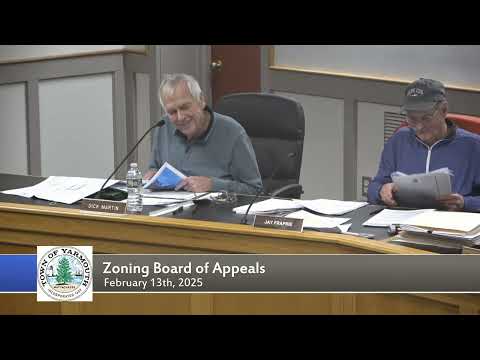
Board dismisses camping-variance petition after filing errors, co‑owner opposes appeal
Summary
A variance petition for year‑round occupancy of camping equipment at Route 28 (16 Denver Drive) was dismissed because it was filed under the wrong owner and one 50% co‑owner said he opposed proceeding; the board advised obtaining legal advice before refiling under the correct corporate owner.
The Yarmouth Board of Appeals dismissed without hearing a petition Feb. 13 seeking a variance to allow camping equipment to be occupied year‑round at Route 28/16 Denver Drive because the petition was not submitted in the name of the recorded owner and because co‑owners were not in agreement.
Petitioner Stephen Wilson appeared by Zoom and said he sought a variance to allow a camper to be used as a residence for approximately two years. The board’s preliminary review found that deed records list the owner as Mellow Wilson Cranberry Corporation, not Stephen Wilson personally. The board said Massachusetts law and the town’s practice require a petition to be filed in the name of the property owner or by an authorized agent with written authorization.
At the hearing, co‑owner Brian Wilson said he was a 50% owner and opposed proceeding with the variance; board members told the petitioners that the board could not properly grant relief when an equal co‑owner opposed the request. Several board members recommended that the owners obtain an opinion from a land‑use attorney clarifying whether the board could hear the petition if one co‑owner objected and whether a filing under the corporate owner would be procedurally correct.
Chairman Sean Igoe told the Wilsons the petition was dismissed on procedural grounds and that they could refile correctly under the corporate owner; the board noted that dismissal left open the possibility the court or other bodies might act. No substantive merits of the variance were considered because the hearing did not proceed past the filing issue.