Get Full Government Meeting Transcripts, Videos, & Alerts Forever!
Get email alerts on the Housing Affordable Housing topic
No spam. Unsubscribe anytime.
Planning board reviews state ADU regulations and implications for Yarmouth bylaw
Summary
Planning staff and board members reviewed recently promulgated state regulations on accessory dwelling units (ADUs), identifying areas where local zoning can retain controls and areas where state rules preempt prior local limits such as owner-occupancy restrictions.
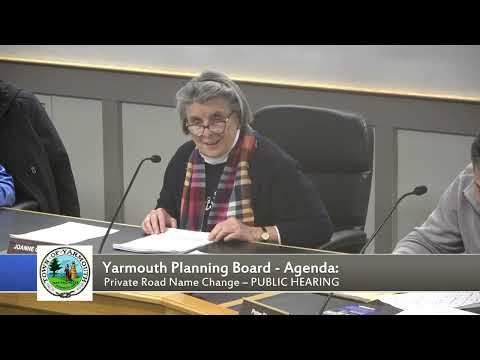
Planning Board members and staff spent an extended portion of the Feb. 19 meeting reviewing the Commonwealth's newly promulgated ADU regulation (CMR 71) and discussing how it will affect Yarmouth's accessory-apartment bylaws.
Town Planner Kathy Williams walked the board through the state’s redlined regulatory text and highlighted several clarifications and changes: garages are excluded from gross floor area calculations; modular units must be affixed to foundations; municipalities may not require minimum lot sizes for protected-use ADUs; and certain occupancy restrictions previously used by towns—such as owner-occupancy and family-only occupancy—may no longer be enforceable for protected ADUs. Williams characterized some edits as "wins" for towns (for example clarifying that gross floor area excludes garages) and others as significant constraints on local control.
Board members pressed staff to clarify key points they said remain uncertain, including whether only one ADU per lot may be a "protected use ADU," whether recorded deed covenants or registry-level family restrictions could be superseded by the state definition, and how the town should treat dimensional nonconformities. Williams said those items will be discussed with town counsel and with Mark Grylls, the town’s building commissioner, who will enforce the rules. She noted the regulation specifically preserves the applicability of building code, Title 5 septic rules and other state and federal safety and environmental standards.
Board members discussed the potential local impacts. Several members expressed concern that the state rule could invalidate owner-occupancy requirements and parking minimums the town previously adopted. Williams said towns retain some flexibility to impose "reasonable" dimensional conditions in local bylaws, to require special permits for additional ADUs beyond the protected unit, and to prohibit short-term rentals within ADUs (Yarmouth’s existing short-term rental rules exclude ADUs from eligible short-term rental status).
Kathy Williams said other open questions remain and recommended bringing proposed conforming edits back for a future Planning Board meeting and eventual town-meeting action in the fall. She said staff will work with the building commissioner and town counsel to prepare a redlined zoning section that references the CMR while enumerating exceptions Yarmouth considers "not unreasonable" to regulate locally.