Get Full Government Meeting Transcripts, Videos, & Alerts Forever!
Get email alerts on the Behavioral Health Services topic
No spam. Unsubscribe anytime.
Outer Cape Health Services presents behavioral health, recovery and navigator programs to Yarmouth Board of Health
Summary
Outer Cape Health Services outlined its primary care, behavioral health, OBAT recovery services, community resource navigators and school-based programs, emphasizing local partnerships and services available to Yarmouth residents.
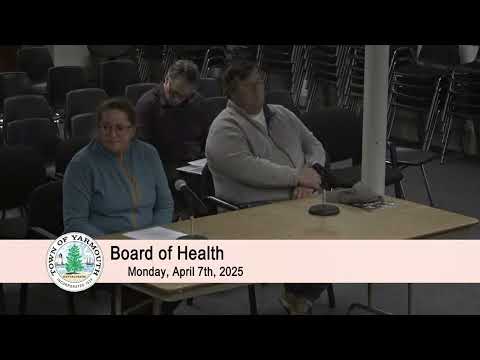
Outer Cape Health Services presented an overview of services to the Town of Yarmouth Board of Health on April 7, describing primary care, behavioral health, recovery-treatment programs and a community resource navigator program that helps residents connect to social services and supports.
"I am the director of behavioral health at Outer Cape Health Services," said Bree (also introduced as Brynn), who presented the slide deck and described services across clinics in Harwichport, Wellfleet and Provincetown. She said Outer Cape is a federally qualified health center offering primary care including pediatrics and one midwife, psychiatry and psychotherapy, collaborative care, and a range of recovery services including an OBAT (office-based addiction treatment) program. "We have about 200 patients that are in our OBAP program," she said.
Bree described an intensive outpatient (IOP) day-treatment program at the Wellfleet wellness center and a recovery-coach model funded in part through town opioid remediation funds. She also described a food-as-medicine produce-prescription program that will enroll 75 Cape residents for produce deliveries and a school-based service site at Monomoy High School with a community resource navigator, dedicated therapist and on-site medical appointments.
The presentation emphasized the navigator program's assessment for social determinants of health—food security, housing, transportation, finances and community supports—and outreach through office hours, home visits and partnerships with local law enforcement, councils on aging and other agencies. "We are assessing for social determinants of health," Bree said, describing the program's low-barrier, strength-based referrals and connections to local supports such as the Yarmouth needy fund.
Board members asked about funding and staffing. Bree said federal funding as a federally qualified health center is a significant portion of the center's revenue, supplemented by billing/insurance and development; she said Outer Cape employs roughly 230 staff across services and about 20–35 staff in behavioral health depending on whether psychiatry and nursing staff are counted.
Board members and staff discussed referrals and cooperative case work. The presenter said Outer Cape does not operate methadone clinics but partners with a New England mobile methadone unit that visits a local wellness center to reduce travel burdens for patients. The board thanked Outer Cape for the briefing and welcomed future collaboration on complex cases such as household hoarding and behavioral-health-linked housing instability.
Ending note: Board members said they will follow up with Outer Cape staff on individual cases and potential local collaborations.