Get Full Government Meeting Transcripts, Videos, & Alerts Forever!
Get email alerts on the Cell Phone Policy topic
No spam. Unsubscribe anytime.
District research finds several Oregon districts using bans or lock‑bags; board asks staff to draft plan
Summary
District staff presented research on cell phone and social‑media restrictions, summarized other Oregon districts’ approaches, and proposed stakeholder work groups and a draft policy process.
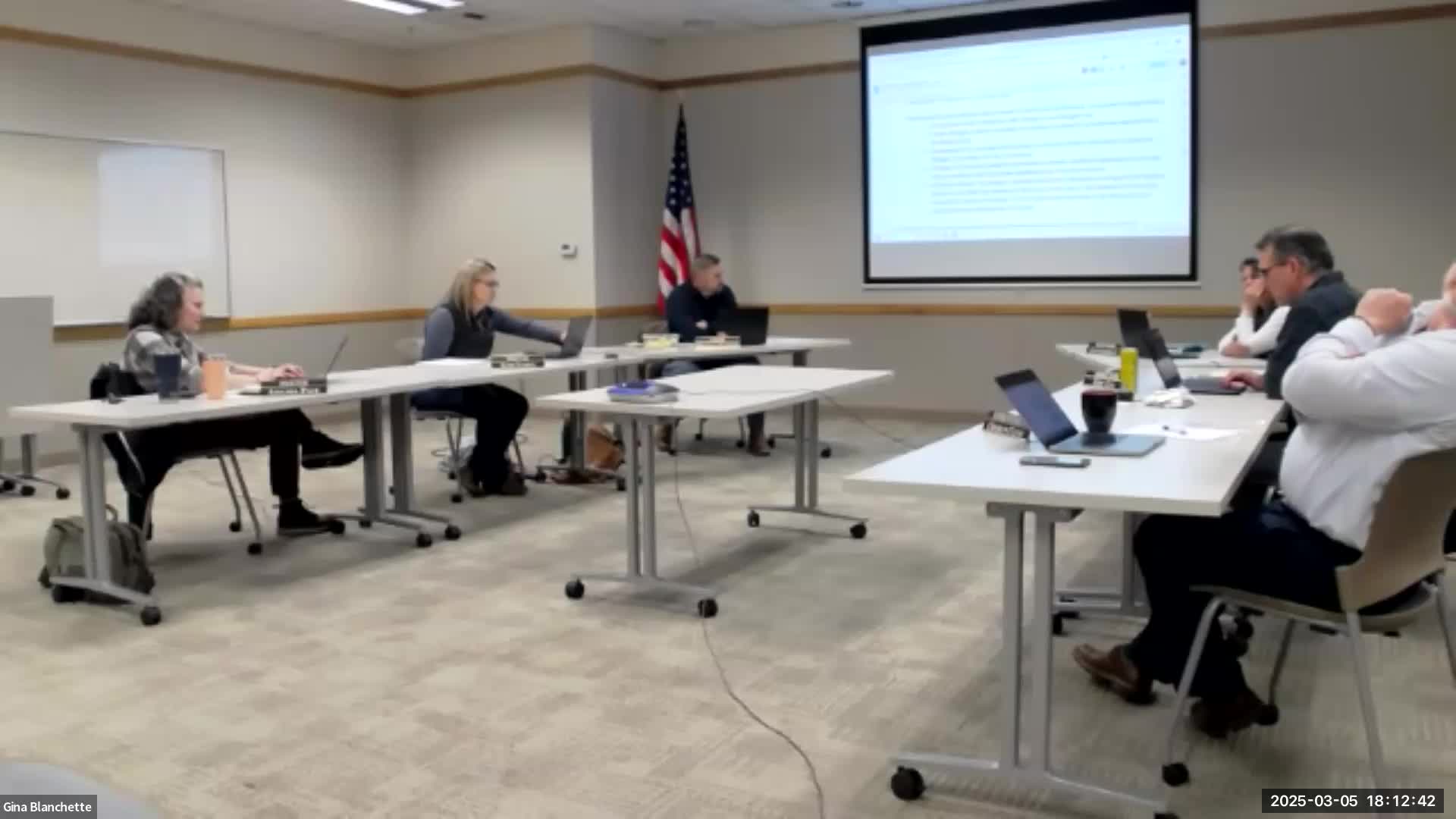
Redmond SD 2J staff briefed the board on research into cell phone and social‑media restrictions and proposed a path forward that includes stakeholder engagement, a principals’ working group, policy drafting, handbook updates and a communication campaign.
A district staff presenter told trustees that at least eight Oregon districts have some form of phone ban or restriction and summarized different approaches: full bans (devices kept in lockers or the school office), restrictions on social media access during school activities, and tiered enforcement that uses locked “Yondr” (phone lock) bags for students who repeatedly refuse to comply. The presenter said parents were consistently the largest source of resistance in other districts because many parents want the ability to contact their children, and that staff enforcement and consistent expectations are central implementation challenges.
The presenter described local practice as mixed: elementary schools generally require phones off and stored away; middle schools vary by building and grade level; and high schools face the most inconsistent enforcement. The superintendent’s student advisory council reported that students use phones for calendars and organization and prefer instruction in responsible use rather than outright restriction, though the students estimated — informally — that roughly 60% of students check phones at least twice during class.
The presenter also noted pending state legislation: a representative has proposed a bill seeking a total ban of student phone use on school grounds and at transportation stops. The presenter said the bill remains in early stages and the legislature has many competing education bills.
After sharing examples from Oregon districts — including Lake Oswego, Salem‑Keizer, Lincoln County and smaller districts that use Yondr bags — the presenter recommended a district‑specific approach: form stakeholder groups that include students, parents, staff and principals; have principals develop enforceable recommendations; draft a policy and revise student handbooks; run a communication and education campaign; and pilot any new enforcement steps. The presenter offered to return with a proposed plan and to compile discipline data related to phone use and social‑media incidents.
Board members discussed trade‑offs: some advocated for a clear, simple ban to ease enforcement and reduce gray areas; others prioritized stakeholder input and teaching responsible use. Several trustees compared the cultural shift to seat belt adoption and emphasized that consistent enforcement and community buy‑in are necessary for success. The board did not adopt a policy at the work session; instead, members asked staff to prepare a plan, collect available disciplinary data on phone use, and return with a draft policy and implementation timeline for board consideration.
Direct next steps recorded during the session: staff will provide disciplinary incident data tied to phone usage where available and bring back a written proposal and draft policy for board review.