Get Full Government Meeting Transcripts, Videos, & Alerts Forever!
Get email alerts on the Board Governance Evaluation topic
No spam. Unsubscribe anytime.
Board debates EL‑4 monitoring format and whether some financial items must be binary pass/fail
Summary
Board members discussed how to evaluate Executive Limitation 4 (financial planning and administration), including whether certain elements (contingency/reserve levels) should be treated as mandatory compliance points rather than averaged into an overall score, and how to structure objective monitoring reports.
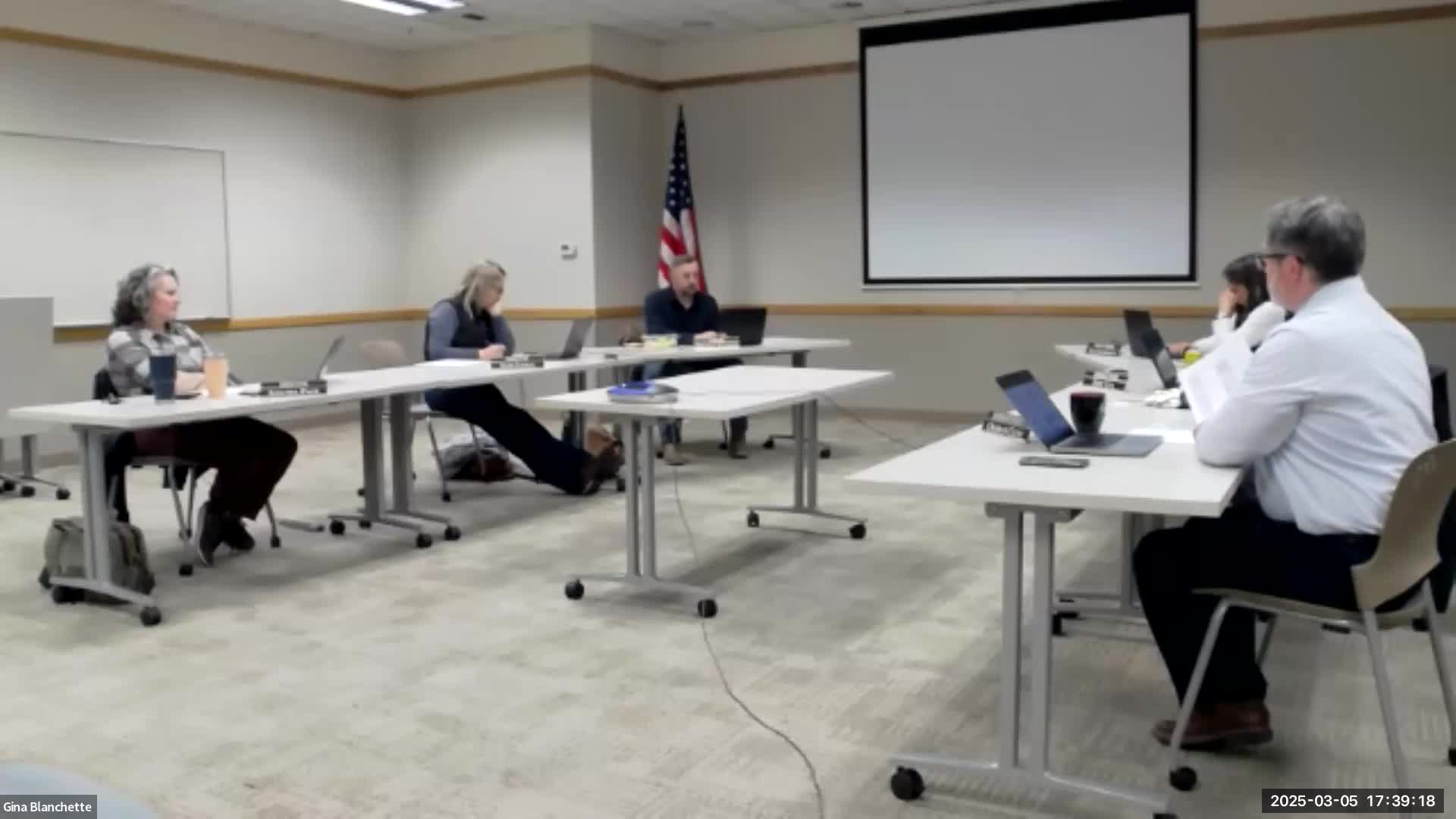
Redmond SD 2J board members debated how to monitor and score Executive Limitation 4, the district’s financial planning and administration policy, arguing over objective scales, pass/fail thresholds and whether certain items should be treated as automatic failure if not met.
During a work‑session review, board members discussed replacing a subjective evaluation form with a consistent, objective scale applied to each bullet point in EL‑4. Several trustees said they prefer a simple compliant/non‑compliant approach for each sub‑item, with optional narrative comments; others supported a 4‑ or 5‑point Likert‑type scale and averaging across items. One board member warned that averaging could mask critical failures: “You can't blow the contingency thing,” a member said, arguing contingency or reserve requirements should be autonomous, binary compliance items because failing them could imperil the district’s ability to finish a fiscal year.
Board members stressed two aims: create an evaluation tool that is evidence‑based and not overly burdensome for staff to compile, and retain a mechanism that flags truly critical failures (for example, failing to meet required reserve/contingency levels). Several members praised a monitoring report that links each EL to embedded evidence (resolutions, budgets, publications) so the board can quickly verify compliance without requiring repeated oral presentations.
Discussion covered practical design choices: whether to score each bullet individually and average the results; whether to require comments if a scorer rates a sub‑item non‑compliant; and whether to adopt the same numerical scale used in the superintendent’s evaluation for consistency. Board members proposed a hybrid: individual bullet ratings (met/not met or a 4‑point scale), a narrative comment field for non‑compliance or extreme scores, and a separate checkbox or mandatory pass/fail line for “shall not fail” items such as legal compliance or contingency/reserve floors.
No formal vote was taken. Board members agreed to test a draft tool and bring completed monitoring reports back for the board to review at a future regular meeting. Staff and board members also discussed timelines for distributing the staff survey and completing the monitoring cycle this school year.