Get Full Government Meeting Transcripts, Videos, & Alerts Forever!
Get email alerts on the Biz Rivertown topic
No spam. Unsubscribe anytime.
Detroit committee pauses Rivertown business improvement zone after mixed public reaction
Summary
A Planning & Economic Development committee hearing on a proposed Rivertown business improvement zone drew sharply divided public comments over who would pay and who would benefit. Committee members voted to continue the hearing for three weeks and asked staff for parcel-level cost details.
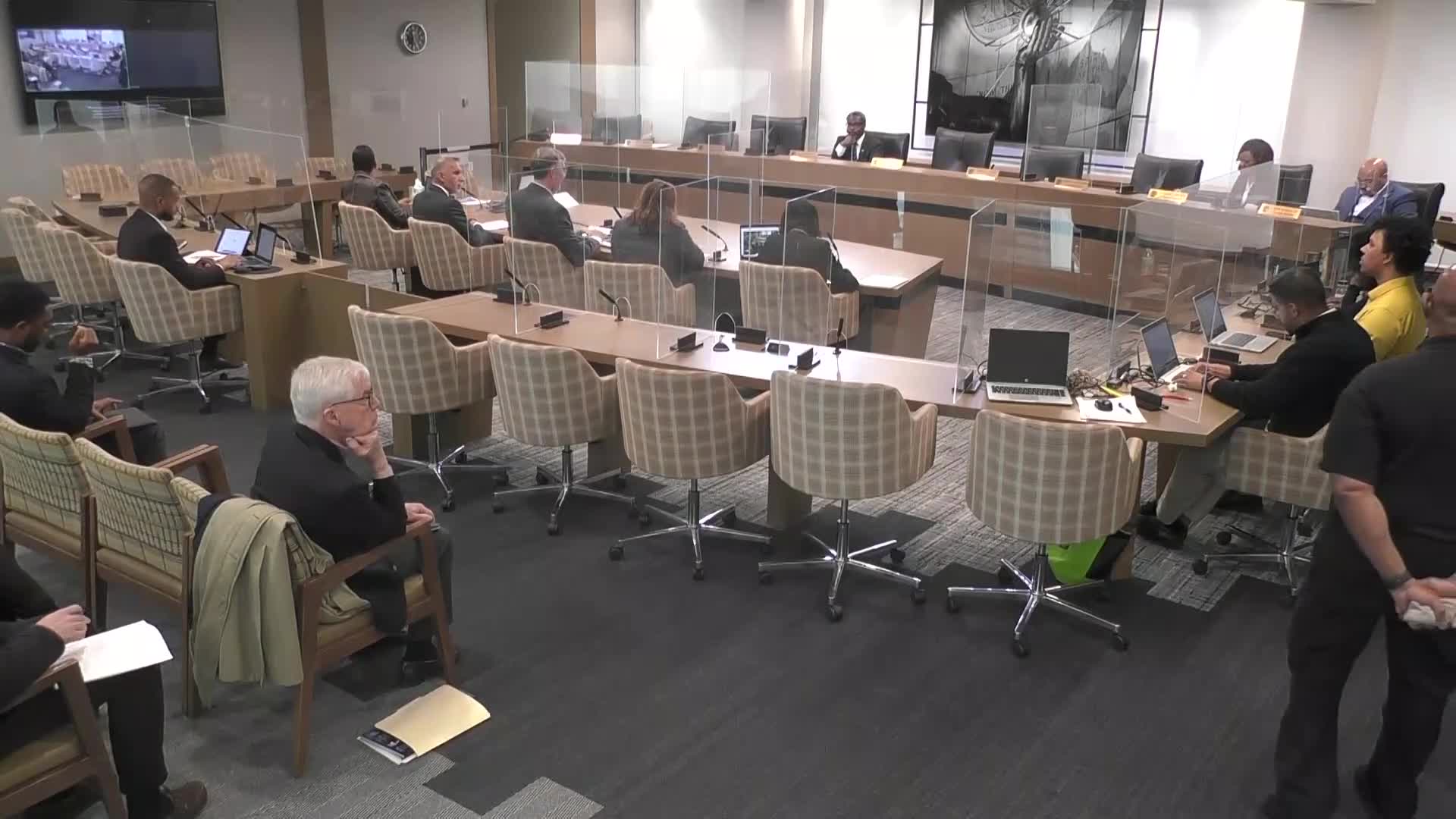
The Planning and Economic Development Standing Committee on Thursday recessed the public hearing on a proposed Rivertown business improvement zone after extended public comment and questions from council members.
The proposal, brought by local property and nonprofit stakeholders and modeled on Detroit’s downtown business improvement zone, would create a special-assessment district to fund “clean, safe and welcoming” services in the Rivertown area. Proponents say the district would create a stable revenue stream for litter removal, safety patrols, hospitality/wayfinding services and marketing; opponents said the assessment would be another tax burden for small, marginal businesses and vacant parcels.
Why it matters: Rivertown’s waterfront, Riverwalk and new businesses have raised demand for public maintenance and safety services, stakeholders said; the business improvement zone (BIZ) would levy a special assessment on commercial parcels that proponents estimate would raise about $859,000 a year under the proposed formula. Opponents said many adjacent property owners (nonprofits, parks and some institutional owners) would benefit without paying, and small operators would shoulder disproportionate costs.
Committee discussion and public testimony
Josh Helling, executive director of Jefferson East Inc., which helped organize the effort, described the BIZ as “a way to come up with a stable funding source to expand services throughout the district.” He and other proponents said the fund would supplement — not replace — city services and would be governed by an elected board of assessable property owners.
Casey Jackson of the Detroit Economic Growth Corporation (DEGC) gave the committee a fiscal snapshot and told the panel that the city’s underwriting shows a net benefit: “The net benefit to the city of Detroit over the life of this project is an additional $286,000,” she said, while noting the 12-year assessment term the statute allows and the requirement that funds augment city services.
Opponents and some local business owners urged caution. Penny Duvall, who said she represents about 52 Rivertown property owners, told the committee, “I’m not supporting this zone. We don’t need it,” arguing that many parcels in the footprint are vacant or tax-exempt and that the proposal would raise costs for existing commercial owners. Michael Noblitz, who owns Moe’s Bait & Tackle, said his business already pays for its own lot maintenance: “We do it ourselves. We provide our own dumpster and pay for that.”
Committee members pressed proponents for more detail. Council Member Leticia Johnson asked for contingency plans if construction or materials costs rise, and for a clearer demonstration of how services and fees would be applied to individual parcels. Staff and the presenters said parcel-level assessments and an online calculator are available and that the petition supporting the notice had reached roughly 44% of the weighted assessment required to advance to a formal vote; state law requires a weighted yes vote of more than 60% of assessed parcels to enact a zone.
Key facts and next steps
- Footprint and scope: The proposed zone covers roughly 0.76 square miles along the Detroit River and includes about 307 commercially assessable properties under state rules; single-family and many tax-exempt parcels cannot be assessed under the Michigan Business Improvement Zone Act.
- Assessment formula and caps: The proposal uses a formula similar to Detroit’s downtown BIZ (a mix of assessed value and floor-area metrics) and was described by presenters as roughly equivalent to an estimated 14 cents per square foot in common examples; individual parcel bills vary widely. The draft plan includes an annual cap (a 3% limit on increases per parcel unless a sale or major renovation “uncaps” the property).
- Revenue and term: Presenters estimate about $859,000 in first-year revenue under the draft formula, with a 10-year term and a 2% annual growth assumption for budgeting. The DEGC said underwrite modeling shows an overall city net benefit across the life of the plan.
- Petition and vote timeline: Petitioners submitted signatures representing roughly 44% of weighted assessable property (above the 30% threshold needed to get a public hearing). If the council approves sending the plan forward, petition organizers said ballots would be mailed and the voting period would be set by statute (the petitioners discussed a possible May 15 election date if the schedule moves quickly). Approval requires more than 60% of weighted votes in favor.
Committee action and directions
After public comment and questions, Council Member Leticia Johnson moved to continue the public hearing for three weeks to allow staff and petitioners to supply parcel-level assessment breakdowns and for additional outreach. The committee approved the motion without recorded roll-call opposition; the hearing was continued and will reconvene in three weeks.
What proponents say: Organizers and local business supporters said a BIZ creates a stable funding source to maintain streetscapes, expand safety and welcome services, and help attract and retain new retail and dining tenants.
What opponents say: Several small-business owners and property representatives said they already pay for maintenance, that many parcels in the proposed footprint are vacant or tax-exempt and that adding a new assessment now would be an undue burden amid economic uncertainty.
What to watch: The petitioners and city staff were directed to provide parcel-level assessment details and a clearer budget breakdown to the committee before the continued hearing. If the committee later votes to send the plan to city council, ballots would be mailed to assessable property owners and the statutory voting period would be scheduled by the clerk.