Get Full Government Meeting Transcripts, Videos, & Alerts Forever!
Get email alerts on the Public Health Demolition Concerns topic
No spam. Unsubscribe anytime.
Residents urge expanded health services and raise demolition concerns at Detroit committee meeting
Summary
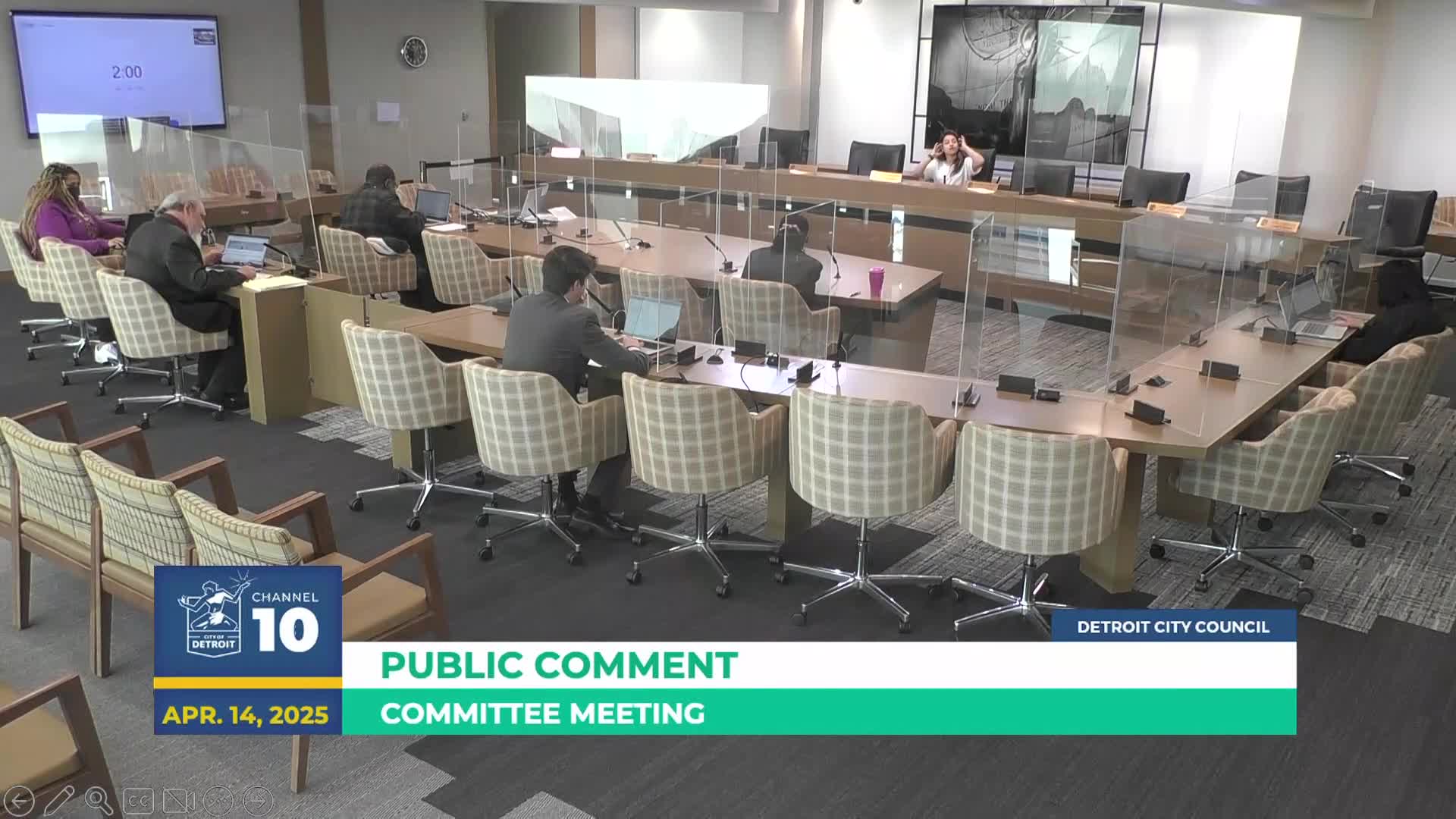
Multiple public commenters at the Detroit Public Health and Safety standing committee on April 14 urged expansion of city health services, better access for seniors, and raised complaints about the demolition process and property handling.
Multiple residents used the public comment period at the Detroit City Council Public Health and Safety standing committee on April 14 to press the city to expand public-health services and to seek clarity and fixes to demolition and blight processes.
Speakers emphasized gaps in access and convenience at the health department and said demolition practices are causing hardship and confusion. The session opened with repeated calls for more satellite health offices, better treatment of seniors and people with disabilities, and attention to environmental pollution and infant mortality.
"The health department can and should be doing a better job," William M. Davis told the committee, saying the city once provided more convenient services and that the current main health site requires paid parking. Betty A. Varner, president of the Sodell's World Black Association, urged residents who need home services to contact the Detroit Area Agency on Aging (D AAA) and described the Choice Waiver program that allows higher income thresholds for home services.
Several speakers described frustrations with demolition and property processes. Sonia Brown said her East Side property was cited for demolition despite her repairs and documentation; she said the notice misstated conditions and that she had arranged repairs to address the cited issues. Brown said she was meeting with her councilman to resolve the matter.
"Stop messing with the residents that are trying to comply and do right," Brown said during her two-minute public comment.
Other callers pressed broader policy issues. Carolyn Hughes and other callers asserted the health department remains "almost dysfunctional" and questioned use of pandemic-era funds; callers also raised concerns about special-revenue designations, property sales, and gentrification.
Committee members acknowledged the concerns and directed callers to the afternoon dangerous-buildings hearings for property-specific appeals. The chair told callers that the committee would review the demolition pipeline and urged residents to provide specific addresses so staff and council members can verify each property's status.
The committee did not take substantive policy action during public comment; several related agenda items later in the meeting (including numerous demolition and emergency-demolition contracts and dangerous-building findings) were considered in new business or deferred for further review.